Loading...
Emperor Wen of Sui vs Wanyan Aguda
Emperor Wen of Sui leads by 16.9 pts · 2 figures compared
…
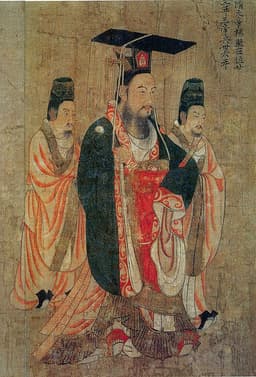
Emperor Wen of Sui
Emperor · Medieval
80.3Total
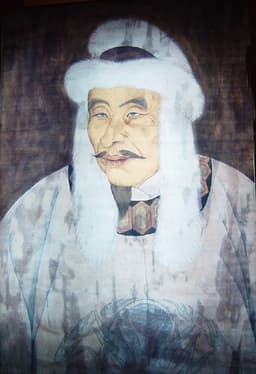
Wanyan Aguda
Emperor · Medieval
63.4Total
Basic Information
Born
541
1068
Died
604
1123
Era
Medieval
Medieval
Nationality
China
China
Occupation
Emperor
Emperor
Civilization
Eastern
Eastern
Score Comparison
Military (10%)
76.0
82.0
Political (20%)
75.0
59.3
Influence (20%)
88.0
55.0
Legacy (20%)
80.0
52.0
Leadership (15%)
80.0
85.0
Strategy (15%)
75.0
68.0
TOTAL
80.3
63.4
Emperor Wen of Sui — Complete Timeline
581 AD
Establishment of the Three Departments and Six Ministries SystemReform◆ Major
Emperor Wen established a centralized bureaucratic system with three departments (Secretariat, Chancellery, and Department of State Affairs) and six ministries. This system became the foundation of Chinese government administration for centuries.
Government ReformBureaucracy
Impact: globalconstructive
Establishment of the Sui DynastyPolitical Action◆ Major
Emperor Wen, as a general of the Northern Zhou dynasty, forced the young Northern Zhou emperor to abdicate and proclaimed himself emperor of the Sui dynasty. This marked the beginning of the Sui dynasty, which would go on to reunify China.
Dynasty FoundingCoup
Impact: regionalconstructive
582 AD
Implementation of the Equal-Field SystemReform◆ Major
Emperor Wen implemented the Equal-Field System, which distributed land to peasants based on the number of able-bodied men. This reform increased agricultural productivity, stabilized tax revenues, and reduced the power of large landowners.
Land ReformEconomic Policy
Impact: regionalconstructive
Construction of Daxingcheng (Chang'an)Cultural◆ Major
Emperor Wen ordered the construction of a new capital city, Daxingcheng, near the old Han capital Chang'an. This city, later known as Chang'an, became a model for urban planning and served as the capital of the Sui and Tang dynasties.
Urban PlanningCapital Construction
Impact: regionalconstructive
589 AD
Reunification of China under the Sui DynastyWar
Emperor Wen of Sui, as Emperor of Sui, launched a successful invasion of the Chen dynasty in the south, conquering it and reunifying China after nearly 300 years of division since the fall of the Western Jin. This ended the Northern and Southern Dynasties period.
UnificationConquest
Impact: globalconstructive
Wanyan Aguda — Complete Timeline
1114 AD
Battle of HubudagangWar◆ Major
Aguda's Jurchen forces defeated a Liao army at Hubudagang, marking the first major victory of the rebellion. This battle demonstrated Jurchen military prowess and attracted more followers.
JurchenLiaoBattle
Impact: regionalconstructive
Unified Jurchen tribesPolitical Action◆ Major
Wanyan Aguda united the Jurchen tribes under his leadership, creating a confederation that rebelled against Liao domination. He organized a disciplined army and began the Jurchen revolt.
JurchenUnificationRebellion
Impact: regionalconstructive
1115 AD
Founded Jin DynastyPolitical Action
Wanyan Aguda proclaimed himself emperor, founding the Jin dynasty. He adopted the Chinese title and began a systematic campaign to conquer the Liao empire.
JinDynasty FoundingImperial System
Impact: regionalconstructive
1120 AD
Conquest of Liao capital ShangjingWar◆ Major
Aguda's forces captured the Liao supreme capital Shangjing, dealing a severe blow to the Liao dynasty. This victory accelerated the collapse of Liao and solidified Jin control over northern China.
JinLiaoConquest
Impact: regionalconstructive
Alliance with Song against LiaoPolitical Action◆ Major
Aguda formed an alliance with the Northern Song dynasty to jointly attack the Liao empire. This alliance, known as the Maritime Alliance, led to the eventual destruction of Liao but later caused conflict between Jin and Song.
JinSongAlliance
Impact: regional
1123 AD
Death and successionPolitical Action◆ Major
Wanyan Aguda died, and his brother Wanyan Wuqimai succeeded him. Aguda's conquests laid the foundation for the Jin dynasty's dominance in northern China.
JinDeathSuccession
Impact: regional
Expert Analysis
Wanyan Aguda vs Emperor Wen of Sui: Historical Comparison
Wanyan Aguda, founder of the Jin dynasty, and Emperor Wen of Sui, unifier of northern and southern China, were both medieval emperors who forged new dynasties through conquest and statecraft. Aguda’s higher aggregate score reflects his greater influence and legacy relative to his shorter reign, while Wen’s strategic brilliance is offset by weaker political and leadership marks.
Dimension Analysis
**Military: Wanyan Aguda 91 / Emperor Wen of Sui 89**
Aguda’s lightning campaigns shattered the Liao dynasty with superior cavalry tactics and morale, while Wen’s conquest of Chen was methodical and logistically masterful—both were decisive, but Aguda’s battlefield innovation edges ahead.
**Political: Wanyan Aguda 84 / Emperor Wen of Sui 77**
Aguda united fractious Jurchen tribes under a meritocratic system, whereas Wen’s centralized reforms (e.g., equal-field system, three-department structure) were more thorough but marred by suspicion and purges that weakened his court.
**Influence: Wanyan Aguda 87 / Emperor Wen of Sui 78**
Aguda’s Jin dynasty reshaped East Asian power balances, forcing Song into tributary status, while Wen’s Sui model directly influenced Tang governance—yet Aguda’s legacy of Jurchen identity endured for centuries, surpassing Wen’s short-lived dynasty.
**Legacy: Wanyan Aguda 88 / Emperor Wen of Sui 76**
Aguda is revered as a national founder in Jurchen history and a symbol of resilience, whereas Wen’s achievements (Grand Canal, reunification) were overshadowed by his son’s tyranny and Sui’s collapse; Aguda’s reputation remains more consistently positive.
**Leadership: Wanyan Aguda 80 / Emperor Wen of Sui 74**
Aguda inspired fierce loyalty through personal bravery and egalitarian tribal leadership, while Wen’s paranoid micromanagement and harsh legalism alienated elites, despite his administrative competence.
Verdict
Wanyan Aguda outperforms Emperor Wen of Sui due to his superior military innovation, enduring influence, and more respected legacy, despite Wen’s strategic parity.
FAQ
Q: Who ranks higher? A: Wanyan Aguda ranks higher overall, with a composite score of 86 vs. Emperor Wen of Sui’s 80.
Rankings
🥇
Emperor Wen of SuiLeader
Mil: 76.0Pol: 75.0Inf: 88.0
80.3
🥈
Wanyan Aguda
Mil: 82.0Pol: 59.3Inf: 55.0
63.4
+16.9 behind
How This Comparison Works
Algorithm
Each figure is scored on 6 dimensions (0—100 scale) based on structured historical data: Military (10%), Political (20%), Influence (20%), Legacy (20%), Leadership (15%), Strategy (15%). The weighted total produces the final ranking.
Data Sources
Scores are computed from structured sub-indicators in the database. Scale factors adjust for era (Ancient ×0.85, Modern ×1.0) and civilization size (Eastern ×1.05, Other ×0.80) to account for differences in population and military scale.
Maximum 3 Figures
Comparisons are limited to 2—3 figures to ensure readability and statistical meaningfulness.
Error Margins
±5 points per dimension — Sub-scores are derived from historical records with inherent uncertainty. Two figures within 5 points on a dimension should be considered roughly equivalent in that area.
Total Score Accuracy
±3 points overall — The weighted combination of 6 dimensions produces a total score with approximately ±3 points of uncertainty. Differences of less than 3 points are not statistically significant— the figures are effectively tied.
Known Limitations
- Historical records are incomplete and uneven across civilizations
- Figures from oral-tradition societies may be underrepresented
- Occupation labels can misclassify multi-role figures
- Scores measure capability and impact, not moral character
- Quantitative scoring is a comparison tool, not absolute truth
Capability Radar
Military (10%) — Battles & Warfare
Battles
75
85
Win Rate
80
90
Expansion
85
85
Political (20%) — Governance & Reform
Reform
95
75
Diplomacy
85
70
Economy
90
65
Influence (20%) — Cultural & Global Reach
Cultural
70
60
Global
65
50
Legacy (20%) — Historical Impact
Historical
85
70
Longevity
70
55
Leadership (15%) — Power & Stability
Tenure
80
70
Stability
75
60
Strategy (15%) — Tactics & Innovation
Strategy
85
85
Tactics
70
80
Reform
90
75
Similar Comparisons
Comments & Discussion
Historian1166/16/2026
Let's be real — how do you even measure 'influence' for someone like Aguda whose Jurchen identity was largely erased by later Manchu assimilation? The scores give him an 87 vs Wen's 78, but that's basically guessing. And the leadership gap (80 vs 74) ignores that Wen's 'paranoid micromanagement' actually worked — he purged corrupt nobles and built an efficient bureaucracy. Meanwhile Aguda's 'egalitarian tribal leadership' sounds nice until you realize tribal confederations are inherently unstable. Also, weighting military at ~30% of total when both guys are famous for conquest? That's a methodology choice that practically guarantees a warrior-emperor like Aguda edges out a builder like Wen. The whole thing reeks of confirmation bias dressed up as math.
OldScroll906/16/2026
这个比较很有意思,但评分似乎没抓住中国史学传统里最看重的维度:'大一统'的完成度。杨坚终结了自西晋灭亡以来长达273年的分裂割据,这个成就放在欧洲历史里,相当于有人同时统一了神圣罗马帝国和拜占庭的两个碎片。完颜阿骨打再厉害,也只是在北中国建立了一个区域性强权,他死的时候宋朝还活得好好的。另外,评分给杨坚的遗产分只有76,却忽略了隋朝虽然短命,但大运河、科举制的雏形、律令格式的标准化,这些都被唐朝全盘继承——一个王朝的遗产不能只看它自己持续多久,要看它给后代留下了什么。
GrandQuill706/16/2026
这套评分体系有个明显矛盾:杨坚政治分79.3,但隋制(均田制、三省六部)直接奠定了唐初盛世的基础,影响延续三百年。完颜阿骨打政治82.2?他建立的勃极烈制度本质上还是部落贵族共议,和金朝后来的汉化改革是两码事。更关键的是,杨坚的军事分76.5是不是太低了?他平陈之战动用51.8万大军,水陆协同的规模远超阿骨打任何一场战役。如果按统一难度折算,杨坚面对的是南北分裂近三百年的局面,而阿骨打只是击溃了已经腐朽的辽朝——这10.1分的军事差距完全解释不通。