Loading...
Esarhaddon vs Phraates IV of Parthia
Esarhaddon leads by 5.9 pts · 2 figures compared
…
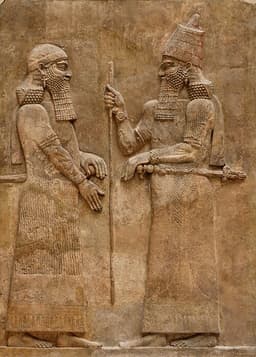
Esarhaddon
Emperor · Ancient
62.2Total
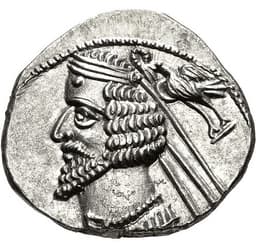
Phraates IV of Parthia
Emperor · Ancient
56.3Total
Basic Information
Born
-681
-60
Died
-669
-2
Era
Ancient
Ancient
Nationality
Assyria
Parthian Empire
Occupation
Emperor
Emperor
Civilization
Middle Eastern
Middle Eastern
Score Comparison
Military (10%)
72.0
70.0
Political (20%)
59.3
68.0
Influence (20%)
61.0
50.2
Legacy (20%)
56.0
41.7
Leadership (15%)
66.0
74.0
Strategy (15%)
70.0
50.0
TOTAL
62.2
56.3
Esarhaddon — Complete Timeline
680 BC
Rebuilding of BabylonReform◆ Major
Esarhaddon reversed his father Sennacherib's destruction of Babylon. He ordered the reconstruction of the city, its temples, and the Esagila. He returned the statue of Marduk and granted Babylon privileges, seeking to heal the religious rift caused by his father.
BabylonReconstructionReconciliation
Impact: regionalconstructive
679 BC
Campaign Against the CimmeriansWar
Esarhaddon defeated the Cimmerian invaders in the region of Hubushna (Anatolia). The Cimmerians had been threatening Assyrian vassals. This victory secured the northern frontier of the Assyrian Empire for a time.
CimmeriansAnatoliaDefense
Impact: regional
672 BC
Vassal Treaties of EsarhaddonPolitical Action◆ Major
Esarhaddon imposed loyalty oaths on his subjects, officials, and vassal states, requiring them to swear allegiance to his chosen heir Ashurbanipal. These treaties were inscribed on tablets and included curses for violation. They ensured a smooth succession.
TreatiesSuccessionAshurbanipal
Impact: regional
671 BC
Conquest of EgyptWar◆ Major
Esarhaddon led the Assyrian army across the Sinai desert and defeated the Kushite Pharaoh Taharqa. He captured Memphis and took the Egyptian royal family hostage. This was the first time an Assyrian king ruled Egypt, though control was brief.
EgyptConquestTaharqa
Impact: regional
Phraates IV of Parthia — Complete Timeline
57 BC
Murder of Phraates IIIPolitical Action◆ Major
Phraates IV murdered his father, Phraates III, with the help of his brothers to seize the Parthian throne. This act of patricide initiated a period of dynastic instability and civil war in Parthia.
PatricideDynastic StruggleUsurpation
Impact: nationaldestructive
36 BC
Defeat of Mark Antony's InvasionWar
Phraates IV successfully defended Parthia against a major Roman invasion led by Mark Antony. Antony's campaign ended in disaster, with heavy Roman losses due to Parthian tactics and harsh terrain, securing Parthian independence.
Roman-Parthian WarsMilitary VictoryMark Antony
Impact: global
30 BC
Suppression of Tiridates II RebellionWar◆ Major
Phraates IV faced a rebellion from the usurper Tiridates II, who briefly seized control of Parthia. Phraates regained the throne with the help of Scythian allies, crushing the revolt and executing Tiridates.
Civil WarRebellionUsurper
Impact: national
20 BC
Return of Roman Standards from CarrhaePolitical Action◆ Major
Phraates IV negotiated the return of the Roman legionary standards lost at the Battle of Carrhae in 53 BC. In exchange, he secured peace with Augustus and the recognition of Parthian control over Armenia.
DiplomacyRoman-Parthian RelationsAugustus
Impact: globalconstructive
2 BC
Murder by His Son Phraates VPolitical Action◆ Major
Phraates IV was murdered by his son Phraates V (Phraataces) and his wife Musa, who then seized the throne. This assassination continued the pattern of dynastic violence in the Arsacid dynasty.
AssassinationDynastic ViolenceMusa
Impact: nationaldestructive
Expert Analysis
Origins
Esarhaddon, born around 713 BC, was the son of Sennacherib, king of Assyria, and Naqi'a, a powerful queen. His early years were marked by palace intrigue; his father had destroyed Babylon, causing widespread resentment. Esarhaddon was chosen as heir over older brothers, leading to conflict after Sennacherib's murder by his own sons. Esarhaddon's upbringing in the royal court emphasized military training and administrative skills, preparing him for rule.
Phraates IV, born around 75 BC, was a son of Phraates III, king of Parthia. The Parthian Empire was a major power, often clashing with Rome. Phraates IV grew up amidst dynastic struggles; his father was murdered by his own sons, including Phraates IV, who seized the throne in 37 BC. Little is known of his early education, but he was steeped in the martial traditions of the Parthian nobility.
Rise to Power
Esarhaddon's rise was dramatic. After Sennacherib's assassination in 681 BC, Esarhaddon, then in the west, marched to Nineveh to claim the throne. He defeated his brothers in a civil war within six weeks. His first act was to rebuild Babylon, reversing his father's policy—a shrewd move to gain legitimacy. He then consolidated power through a series of campaigns, including against the Cimmerians in Anatolia (679 BC) and the Medes in Iran. His greatest achievement was the conquest of Egypt in 671 BC, which made him the first Assyrian king to rule the Nile Valley.
Phraates IV's rise was violent. He murdered his father Phraates III around 57 BC, with the help of his brothers, to become king. This act set a precedent of familial treachery. He then faced challenges from within: a usurper named Tiridates II briefly seized control of Parthia around 32 BC, forcing Phraates to flee to the Scythians. With their help, he regained the throne in 30 BC. His reign was also marked by external threats, notably from Rome. In 36 BC, Mark Antony invaded Parthia with a massive army, but Phraates defeated him through a combination of guerrilla tactics and scorched earth, causing heavy Roman losses.
Leadership & Governance
Esarhaddon's leadership was characterized by strategic rebuilding and consolidation. He reversed Sennacherib's destruction of Babylon, ordering reconstruction of the city and its temples (the Esagila), and returning the statue of Marduk. This earned him support from Babylonian elites. He also imposed the Vassal Treaties of Esarhaddon (672 BC), requiring all subjects to swear loyalty to his chosen heir, Ashurbanipal, ensuring a smooth succession. His military campaigns were well-planned; the conquest of Egypt involved crossing the Sinai desert and defeating the Kushite Pharaoh Taharqa. He established Assyrian control by appointing local governors.
Phraates IV ruled with ruthlessness. He maintained power through eliminating rivals, including his brothers and nobles. His defeat of Mark Antony was a masterclass in defensive warfare: he avoided open battle, harassed supply lines, and used cataphracts and horse archers to wear down the Romans. However, his governance was marred by internal instability. He faced rebellions from Tiridates II and later from his own son Phraates V, who eventually murdered him. His diplomatic skill is seen in the negotiation with Augustus in 20 BC, returning the Roman standards lost at Carrhae (53 BC) in exchange for peace and recognition of Parthian control over Armenia.
Triumph & Tragedy
Esarhaddon's greatest triumph was the conquest of Egypt, a feat no Assyrian king had achieved. He also successfully rebuilt Babylon and maintained a vast empire. His tragedy was his early death in 669 BC while on campaign against the Nubians, leaving his empire to his sons Ashurbanipal and Shamash-shum-ukin, leading to civil war. His military score of 72.0 reflects his conquests, but his political score of 59.3 indicates the fragility of his succession.
Phraates IV's triumph was defeating Mark Antony, securing Parthia's eastern borders, and negotiating the return of the Roman standards—a diplomatic victory that enhanced Parthian prestige. His tragedy was his murder by his own son and wife, a pattern of violence that destabilized the empire. His military score of 70.0 is high, but his legacy score of 41.7 is low due to his ignominious end and lack of lasting institutions.
Character & Destiny
Esarhaddon was a pragmatic and strategic ruler. He learned from his father's mistakes, using reconstruction to heal divisions. His decision to name Ashurbanipal as heir and impose loyalty oaths shows foresight. However, his early death undid his plans. Historical assessments note his piety and military skill, but his reign was too short to secure lasting stability.
Phraates IV was ruthless and cunning, but paranoid. His murder of his father set a precedent that later haunted him. He was a capable general and diplomat, but his inability to secure a stable succession led to his downfall. Roman historians like Cassius Dio describe him as cruel and treacherous, but also effective against Rome.
Legacy
Esarhaddon's legacy is mixed. He is remembered as the king who conquered Egypt and rebuilt Babylon, but his empire fragmented after his death. The Vassal Treaties influenced later Assyrian administration. His rebuilding of Babylon allowed the city to thrive again, but his son Ashurbanipal's later sack of Thebes in Egypt showed the limits of Assyrian control. His influence score of 61.0 reflects his impact on the Near East.
Phraates IV's legacy is primarily military and diplomatic. His defeat of Mark Antony halted Roman expansion into Parthia for decades. The return of the standards was a symbol of Parthian parity with Rome. However, his internal violence set a pattern of dynastic murder that weakened Parthia. His legacy score of 41.7 is low, as his achievements were overshadowed by his brutal methods and eventual assassination.
Conclusion
Esarhaddon had a greater overall impact, with a total score of 62.2 compared to Phraates IV's 56.3. Esarhaddon's conquest of Egypt and rebuilding of Babylon were monumental achievements that reshaped the ancient Near East. Though his reign was short, his strategic vision left a lasting mark. Phraates IV, while successful against Rome, failed to secure his dynasty and is remembered more for his crimes than his victories. The 5.9-point gap reflects Esarhaddon's broader influence on history.
Rankings
🥇
EsarhaddonLeader
Mil: 72.0Pol: 59.3Inf: 61.0
62.2
🥈
Phraates IV of Parthia
Mil: 70.0Pol: 68.0Inf: 50.2
56.3
+5.9 behind
How This Comparison Works
Algorithm
Each figure is scored on 6 dimensions (0—100 scale) based on structured historical data: Military (10%), Political (20%), Influence (20%), Legacy (20%), Leadership (15%), Strategy (15%). The weighted total produces the final ranking.
Data Sources
Scores are computed from structured sub-indicators in the database. Scale factors adjust for era (Ancient ×0.85, Modern ×1.0) and civilization size (Eastern ×1.05, Other ×0.80) to account for differences in population and military scale.
Maximum 3 Figures
Comparisons are limited to 2—3 figures to ensure readability and statistical meaningfulness.
Error Margins
±5 points per dimension — Sub-scores are derived from historical records with inherent uncertainty. Two figures within 5 points on a dimension should be considered roughly equivalent in that area.
Total Score Accuracy
±3 points overall — The weighted combination of 6 dimensions produces a total score with approximately ±3 points of uncertainty. Differences of less than 3 points are not statistically significant— the figures are effectively tied.
Known Limitations
- Historical records are incomplete and uneven across civilizations
- Figures from oral-tradition societies may be underrepresented
- Occupation labels can misclassify multi-role figures
- Scores measure capability and impact, not moral character
- Quantitative scoring is a comparison tool, not absolute truth
Capability Radar
Military (10%) — Battles & Warfare
Battles
75
55
Win Rate
85
60
Expansion
80
30
Political (20%) — Governance & Reform
Reform
75
40
Diplomacy
80
65
Economy
70
50
Influence (20%) — Cultural & Global Reach
Cultural
60
30
Global
65
30
Legacy (20%) — Historical Impact
Historical
70
40
Longevity
60
30
Leadership (15%) — Power & Stability
Tenure
70
70
Stability
65
40
Strategy (15%) — Tactics & Innovation
Strategy
85
60
Tactics
80
65
Reform
70
30
Similar Comparisons
Comments & Discussion
No comments yet. Be the first to share your thoughts!