Loading...
Ferdinand III of Castile vs Muhammad Shah I Bahmani
Ferdinand III of Castile leads by 2.3 pts · 2 figures compared
…
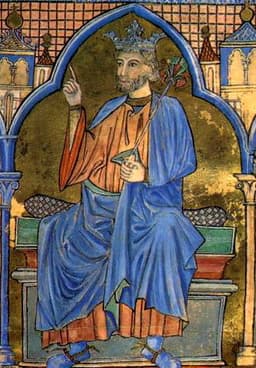
Ferdinand III of Castile
Emperor · Medieval
56.6Total
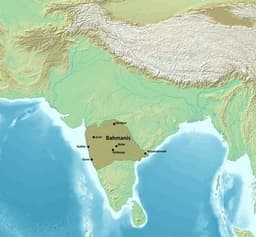
Muhammad Shah I Bahmani
Emperor · Medieval
54.3Total
Basic Information
Born
1199
1358
Died
1252
1375
Era
Medieval
Medieval
Nationality
Castile
India
Occupation
Emperor
Emperor
Civilization
Western
Indian
Score Comparison
Military (10%)
60.0
25.0
Political (20%)
45.0
62.7
Influence (20%)
58.3
60.0
Legacy (20%)
52.0
49.2
Leadership (15%)
72.0
66.0
Strategy (15%)
55.0
51.7
TOTAL
56.6
54.3
Ferdinand III of Castile — Complete Timeline
1230 AD
Union of Leon and CastilePolitical Action
Ferdinand III inherited the Kingdom of Castile from his mother and the Kingdom of Leon from his father, permanently uniting the two crowns. This union created the largest Christian kingdom in Iberia and strengthened the Reconquista.
UnionLeonCastileReconquista
Impact: regionalconstructive
1236 AD
Conquest of CordobaWar◆ Major
Ferdinand III captured the city of Cordoba, the former capital of the Umayyad Caliphate, after a long siege. The conquest brought the Great Mosque of Cordoba under Christian control and was a major symbolic victory in the Reconquista.
ReconquistaConquestCordoba
Impact: regionalconstructive
1248 AD
Conquest of SevilleWar◆ Major
Ferdinand III besieged and captured Seville, the largest city in Moorish Iberia, with the aid of a Castilian fleet. The conquest gave Castile control of the Guadalquivir River and a major port for trade and naval operations.
ReconquistaConquestSeville
Impact: regionalconstructive
Muhammad Shah I Bahmani — Complete Timeline
1360 AD
Reorganization of Bahmani administrationReform◆ Major
Muhammad Shah I Bahmani restructured the Bahmani administration by dividing the sultanate into four provinces (tarafs), each governed by a tarafdar. This system improved tax collection and military organization.
Administrative ReformProvincial System
Impact: regionalconstructive
1365 AD
War with Vijayanagara over Raichur DoabWar◆ Major
Muhammad Shah I Bahmani fought a war against the Vijayanagara Empire for control of the Raichur Doab. The conflict ended with a treaty that temporarily ceded the region to Vijayanagara.
WarVijayanagaraTerritorial Dispute
Impact: regional
1367 AD
Construction of the Jami Masjid at GulbargaCultural
Muhammad Shah I Bahmani commissioned the construction of the Jami Masjid in Gulbarga, a large congregational mosque. The mosque became a center for Islamic worship and learning in the Bahmani capital.
ArchitectureReligion
constructive
1370 AD
Suppression of the rebellion of Bahram KhanPolitical Action
Muhammad Shah I Bahmani crushed a rebellion led by the noble Bahram Khan, who had challenged his authority. The revolt was put down with force, and Bahram Khan was executed.
RebellionInternal Conflict
Impact: nationaldestructive
Expert Analysis
Origins
Ferdinand III of Castile was born in 1199 or 1201, son of Alfonso IX of Leon and Berengaria of Castile. His parents' marriage was annulled by the pope, making his legitimacy initially questioned. He was raised in the court of his mother in Castile, receiving a strong religious education. His early life was shaped by the ongoing Reconquista and the political fragmentation of Christian Iberia.
Muhammad Shah I Bahmani was born around 1320, the son of Bahman Shah, founder of the Bahmani Sultanate. Little is known about his early life, but he was a noble under his father and likely involved in the consolidation of the new sultanate in the Deccan. His upbringing was in an Islamic court with military and administrative training.
Rise to Power
Ferdinand III became king of Castile in 1217 after his mother renounced the throne in his favor. However, his father Alfonso IX contested this, leading to a war between Leon and Castile. In 1230, Alfonso IX died, and Ferdinand inherited Leon, permanently uniting the two kingdoms. This union was a turning point, creating a powerful Christian state in Iberia. He then focused on the Reconquista, launching campaigns against Moorish taifas.
Muhammad Shah I ascended the throne in 1358 after the death of his father. He faced immediate challenges: a rebellion by the noble Bahram Khan, which he suppressed with force. This secured his authority. He then turned to administrative reforms and external wars. His major conflict was with the Vijayanagara Empire over the Raichur Doab, a fertile region. The war ended with a treaty that gave temporary control to Bahmani.
Leadership & Governance
Ferdinand III's leadership style was characterized by piety and strategic patience. He was known for his justice and promotion of Christian institutions. He governed through a feudal system, relying on military orders and nobles. His governance score of 72.0 reflects his ability to maintain unity and lead campaigns. He established the University of Salamanca and promoted the use of Castilian in official documents.
Muhammad Shah I reorganized the Bahmani administration by dividing the sultanate into four provinces (tarafs), each governed by a tarafdar. This decentralized system improved efficiency and allowed regional autonomy while central control was maintained. His political score of 62.7 indicates his skill in administration. He also commissioned the Jami Masjid in Gulbarga, fostering Islamic culture.
Triumph & Tragedy
Ferdinand III's greatest triumphs were the conquests of Cordoba in 1236 and Seville in 1248. These victories gave Castile control over major cities and weakened Moorish power. His canonization as a saint in 1671 recognized his role in the Reconquista. However, his reign saw the failure to conquer Granada, which remained independent until 1492. His military score of 60.0 reflects mixed success; he avoided major defeats but did not complete the Reconquista.
Muhammad Shah I's triumph was the suppression of internal rebellion and the reorganization that stabilized the sultanate. His war with Vijayanagara ended in a stalemate, but he secured a treaty that maintained Bahmani control over the Raichur Doab temporarily. His failure was the inability to achieve lasting territorial gains; the conflict with Vijayanagara resumed after his death. His military score of 25.0 is low, indicating limited success in expansion.
Character & Destiny
Ferdinand III was deeply religious, known for his piety and justice. He refused to wear royal robes, preferring a simple habit, and was said to have prayed before battles. His character shaped his destiny as a saint king, but his cautiousness may have prevented him from finishing the Reconquista. Historians assess him as a unifier and crusader, but not a brilliant strategist (strategy score 55.0).
Muhammad Shah I was pragmatic and administrative. He focused on building institutions rather than personal glory. His suppression of rebellion shows a firm hand, but his war strategy was cautious. His leadership score of 66.0 reflects his ability to manage a diverse realm. His destiny was to consolidate the Bahmani Sultanate, but his legacy was overshadowed by later rulers.
Legacy
Ferdinand III's legacy is enduring: the union of Castile and Leon became the core of a unified Spain. His conquests provided a base for the later conquest of Granada. He was canonized as a saint, and his memory is honored in Spain. His legacy score of 52.0 is moderate because his achievements were built upon by successors.
Muhammad Shah I's legacy is the administrative structure that lasted for decades. The taraf system influenced later Deccan sultanates. His construction of the Jami Masjid remains a landmark. However, his legacy score of 49.2 is slightly lower due to the eventual decline of the Bahmani Sultanate.
Conclusion
Ferdinand III of Castile had a greater impact than Muhammad Shah I Bahmani. With a total score of 56.6 versus 54.3, the gap is small but significant. Ferdinand's unification of Castile and Leon laid the foundation for the Spanish Empire, a world-changing event. Muhammad Shah's administrative reforms were important regionally but did not alter global history. Therefore, Ferdinand III's influence and legacy surpass those of Muhammad Shah I.
Rankings
🥇
Ferdinand III of CastileLeader
Mil: 60.0Pol: 45.0Inf: 58.3
56.6
🥈
Muhammad Shah I Bahmani
Mil: 25.0Pol: 62.7Inf: 60.0
54.3
+2.3 behind
How This Comparison Works
Algorithm
Each figure is scored on 6 dimensions (0—100 scale) based on structured historical data: Military (10%), Political (20%), Influence (20%), Legacy (20%), Leadership (15%), Strategy (15%). The weighted total produces the final ranking.
Data Sources
Scores are computed from structured sub-indicators in the database. Scale factors adjust for era (Ancient ×0.85, Modern ×1.0) and civilization size (Eastern ×1.05, Other ×0.80) to account for differences in population and military scale.
Maximum 3 Figures
Comparisons are limited to 2—3 figures to ensure readability and statistical meaningfulness.
Error Margins
±5 points per dimension — Sub-scores are derived from historical records with inherent uncertainty. Two figures within 5 points on a dimension should be considered roughly equivalent in that area.
Total Score Accuracy
±3 points overall — The weighted combination of 6 dimensions produces a total score with approximately ±3 points of uncertainty. Differences of less than 3 points are not statistically significant— the figures are effectively tied.
Known Limitations
- Historical records are incomplete and uneven across civilizations
- Figures from oral-tradition societies may be underrepresented
- Occupation labels can misclassify multi-role figures
- Scores measure capability and impact, not moral character
- Quantitative scoring is a comparison tool, not absolute truth
Capability Radar
Military (10%) — Battles & Warfare
Battles
65
45
Win Rate
70
50
Expansion
75
40
Political (20%) — Governance & Reform
Reform
70
65
Diplomacy
65
55
Economy
60
50
Influence (20%) — Cultural & Global Reach
Cultural
65
40
Global
55
30
Legacy (20%) — Historical Impact
Historical
70
45
Longevity
65
40
Leadership (15%) — Power & Stability
Tenure
75
60
Stability
70
55
Strategy (15%) — Tactics & Innovation
Strategy
70
45
Tactics
60
40
Reform
55
55
Similar Comparisons
Comments & Discussion
No comments yet. Be the first to share your thoughts!