Loading...
This comparison has not been analyzed yet.
One-time AI generation (~1 minute). Scores and timeline are already available below.
Ganapati Deva vs Nezahualcoyotl
Ganapati Deva leads by 1.2 pts · 2 figures compared
…
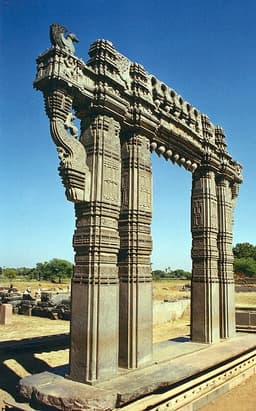
Ganapati Deva
Emperor · Medieval
58.7Total

Nezahualcoyotl
Emperor · Medieval
57.5Total
Basic Information
Born
1199
1402
Died
1262
1472
Era
Medieval
Medieval
Nationality
India
Texcoco
Occupation
Emperor
Emperor
Civilization
Indian
Western
Score Comparison
Military (10%)
65.0
50.0
Political (20%)
53.8
60.0
Influence (20%)
59.0
60.0
Legacy (20%)
50.0
50.0
Leadership (15%)
72.0
72.0
Strategy (15%)
60.7
52.5
TOTAL
58.7
57.5
Ganapati Deva — Complete Timeline
1199 AD
Accession as Kakatiya rulerPolitical Action◆ Major
Ganapati Deva became the Kakatiya king, succeeding his father Mahadeva. He inherited a small kingdom and would expand it into a major power in the Deccan.
KakatiyaSuccessionExpansion
Impact: regionalconstructive
1220 AD
Construction of Warangal FortCultural◆ Major
Ganapati Deva commissioned the construction of the Warangal Fort, a massive stone fortification with four gates. The fort became the symbol of Kakatiya power and a center of administration.
KakatiyaFortArchitecture
Impact: regionalconstructive
1230 AD
Expansion of the Kakatiya kingdomWar◆ Major
Ganapati Deva led military campaigns that expanded the Kakatiya kingdom to include parts of modern Andhra Pradesh, Telangana, and Odisha. He defeated the Velanati Cholas and the Eastern Gangas, establishing Kakatiya supremacy.
KakatiyaExpansionMilitary
Impact: regionalconstructive
1240 AD
Patronage of trade and agricultureReform
Ganapati Deva implemented policies to promote trade and agriculture. He built irrigation tanks and encouraged the construction of temples, which boosted the economy and strengthened his rule.
KakatiyaTradeAgriculture
Impact: regionalconstructive
1262 AD
Death and succession by Rudrama DeviPolitical Action◆ Major
Ganapati Deva died, and his daughter Rudrama Devi succeeded him as the Kakatiya ruler. His death marked the end of his long reign, which had transformed the Kakatiya kingdom into a major power.
KakatiyaSuccessionDeath
Impact: regional
Nezahualcoyotl — Complete Timeline
1430 AD
Construction of the Albarrada de NezahualcoyotlOther◆ Major
Nezahualcoyotl ordered the construction of a 16-kilometer dike across Lake Texcoco to separate fresh water from salt water and prevent flooding in Tenochtitlan. The structure, completed around 1430, functioned as an aqueduct and flood control system, demonstrating advanced engineering.
EngineeringFlood ControlTexcoco
Impact: regionalconstructive
1431 AD
Restoration of Texcoco as a City-StatePolitical Action◆ Major
After the death of his father Ixtlilxochitl I and a period of exile, Nezahualcoyotl reclaimed the throne of Texcoco with support from Tenochtitlan. He reestablished Texcoco as a major city-state within the Triple Alliance, initiating a period of cultural and political revival.
RestorationTriple AllianceTexcoco
Impact: regionalconstructive
1445 AD
Military Campaign against ChalcoWar
Nezahualcoyotl led Texcoco forces in a campaign against the city-state of Chalco, a rival in the Valley of Mexico. The war ended with the defeat of Chalco and its incorporation into the Triple Alliance sphere, expanding Texcoco's influence.
ConquestChalcoTriple Alliance
Impact: regional
1450 AD
Creation of the Texcoco CodexCultural◆ Major
Nezahualcoyotl established a library and sponsored the compilation of historical and legal texts, including the Codex Xolotl and other works. These codices recorded the history, laws, and poetry of Texcoco, preserving pre-Columbian knowledge.
LibraryCodexPreservation
Impact: regionalconstructive
Composition of 'Icuic Nezahualcoyotl'Cultural◆ Major
Nezahualcoyotl composed several poems in Nahuatl, including 'Icuic Nezahualcoyotl' (Song of Nezahualcoyotl), which reflect on the transience of life and the search for truth. These works are among the few surviving pre-Columbian literary texts from Mesoamerica.
PoetryNahuatl LiteraturePhilosophy
Impact: regionalconstructive
1465 AD
Construction of the Chapultepec AqueductOther◆ Major
Nezahualcoyotl oversaw the construction of a second aqueduct from Chapultepec to Tenochtitlan, supplementing the existing one. This project improved the water supply for the Aztec capital, using a dual-pipe system that allowed maintenance without interrupting flow.
EngineeringWater SupplyTenochtitlan
Impact: regionalconstructive
This comparison has not been analyzed yet.
One-time AI generation (~1 minute). Scores and timeline are already available below.
Rankings
🥇
Ganapati DevaLeader
Mil: 65.0Pol: 53.8Inf: 59.0
58.7
🥈
Nezahualcoyotl
Mil: 50.0Pol: 60.0Inf: 60.0
57.5
+1.2 behind
How This Comparison Works
Algorithm
Each figure is scored on 6 dimensions (0—100 scale) based on structured historical data: Military (10%), Political (20%), Influence (20%), Legacy (20%), Leadership (15%), Strategy (15%). The weighted total produces the final ranking.
Data Sources
Scores are computed from structured sub-indicators in the database. Scale factors adjust for era (Ancient ×0.85, Modern ×1.0) and civilization size (Eastern ×1.05, Other ×0.80) to account for differences in population and military scale.
Maximum 3 Figures
Comparisons are limited to 2—3 figures to ensure readability and statistical meaningfulness.
Error Margins
±5 points per dimension — Sub-scores are derived from historical records with inherent uncertainty. Two figures within 5 points on a dimension should be considered roughly equivalent in that area.
Total Score Accuracy
±3 points overall — The weighted combination of 6 dimensions produces a total score with approximately ±3 points of uncertainty. Differences of less than 3 points are not statistically significant— the figures are effectively tied.
Known Limitations
- Historical records are incomplete and uneven across civilizations
- Figures from oral-tradition societies may be underrepresented
- Occupation labels can misclassify multi-role figures
- Scores measure capability and impact, not moral character
- Quantitative scoring is a comparison tool, not absolute truth
Capability Radar
Military (10%) — Battles & Warfare
Battles
65
45
Win Rate
70
50
Expansion
60
45
Political (20%) — Governance & Reform
Reform
65
75
Diplomacy
60
70
Economy
65
65
Influence (20%) — Cultural & Global Reach
Cultural
55
65
Global
40
35
Legacy (20%) — Historical Impact
Historical
55
55
Longevity
50
50
Leadership (15%) — Power & Stability
Tenure
70
70
Stability
60
60
Strategy (15%) — Tactics & Innovation
Strategy
65
60
Tactics
60
55
Reform
55
40
Similar Comparisons
Comments & Discussion
No comments yet. Be the first to share your thoughts!