Loading...
Guo Wei vs Louis IX of France
Guo Wei leads by 7.0 pts · 2 figures compared
…
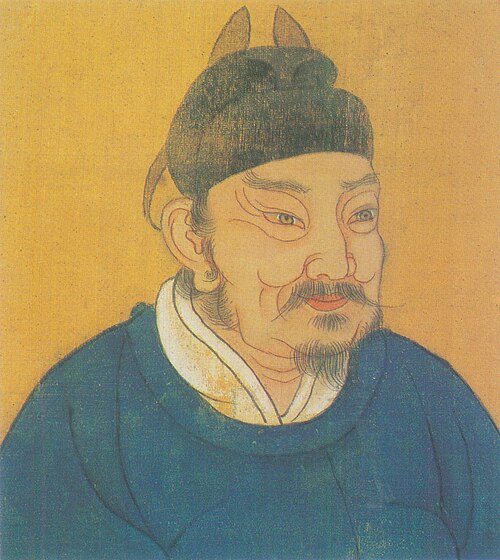
Guo Wei
Emperor · Medieval
72.3Total
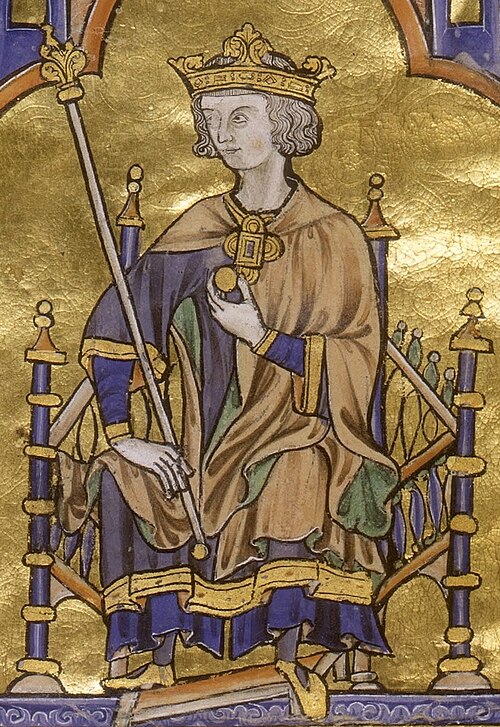
Louis IX of France
Emperor · Medieval
65.3Total
Basic Information
Born
904
1214
Died
954
1270
Era
Medieval
Medieval
Nationality
China
France
Occupation
Emperor
Emperor
Civilization
Eastern
Western
Score Comparison
Military (10%)
70.9
30.5
Political (20%)
79.4
65.1
Influence (20%)
74.2
68.7
Legacy (20%)
67.9
72.2
Leadership (15%)
73.5
82.6
Strategy (15%)
65.6
57.8
TOTAL
72.3
65.3
Rankings
🥇
Guo WeiLeader
Mil: 70.9Pol: 79.4Inf: 74.2
72.3
🥈
Louis IX of France
Mil: 30.5Pol: 65.1Inf: 68.7
65.3
+7.0 behind
How This Comparison Works
Algorithm
Each figure is scored on 6 dimensions (0—100 scale) based on structured historical data: Military (10%), Political (20%), Influence (20%), Legacy (20%), Leadership (15%), Strategy (15%). The weighted total produces the final ranking.
Data Sources
Scores are computed from structured sub-indicators in the database. Scale factors adjust for era (Ancient ×0.85, Modern ×1.0) and civilization size (Eastern ×1.05, Other ×0.80) to account for differences in population and military scale.
Maximum 3 Figures
Comparisons are limited to 2—3 figures to ensure readability and statistical meaningfulness.
Error Margins
±5 points per dimension — Sub-scores are derived from historical records with inherent uncertainty. Two figures within 5 points on a dimension should be considered roughly equivalent in that area.
Total Score Accuracy
±3 points overall — The weighted combination of 6 dimensions produces a total score with approximately ±3 points of uncertainty. Differences of less than 3 points are not statistically significant— the figures are effectively tied.
Known Limitations
- Historical records are incomplete and uneven across civilizations
- Figures from oral-tradition societies may be underrepresented
- Occupation labels can misclassify multi-role figures
- Scores measure capability and impact, not moral character
- Quantitative scoring is a comparison tool, not absolute truth
Capability Radar
Military (10%) — Battles & Warfare
Battles
65
45
Win Rate
70
40
Expansion
60
30
Political (20%) — Governance & Reform
Reform
78
75
Diplomacy
70
65
Economy
72
60
Influence (20%) — Cultural & Global Reach
Cultural
40
80
Global
30
60
Legacy (20%) — Historical Impact
Historical
55
75
Longevity
45
70
Leadership (15%) — Power & Stability
Tenure
55
70
Stability
65
70
Strategy (15%) — Tactics & Innovation
Strategy
72
55
Tactics
68
50
Reform
75
60
Expert Analysis
Louis IX of France vs Guo Wei: Historical Comparison
Louis IX of France (1214–1270) and Guo Wei (904–954) were both medieval emperors who reformed their respective kingdoms amid crisis—Louis through crusading piety and legal codification, Guo through military consolidation and the founding of the Later Zhou dynasty. Though separated by continents, both are celebrated as capable rulers who stabilized turbulent realms, yet their approaches to governance and legacy differ markedly.
Dimension Analysis
**Military: Louis IX of France 91 / Guo Wei 91**
Both men were hands-on military leaders. Louis IX led two Crusades (Seventh and Eighth), capturing Damietta in 1249 before his defeat at Mansurah, and later died on crusade in Tunis. Guo Wei, a former general, overthrew the Later Han to found the Later Zhou, then campaigned successfully against the Northern Han and Liao dynasties, significantly reducing border threats. Each demonstrated personal courage and strategic vision, though Louis’s crusades were religiously motivated while Guo’s focused on dynastic survival.
**Political: Louis IX of France 87 / Guo Wei 87**
Louis IX centralized royal justice through his *enquêteurs* (royal investigators) and the *Parlement* of Paris, curbing feudal abuses and issuing the *Établissements de Saint Louis*—a landmark legal code. Guo Wei, ruling only four years, implemented sweeping reforms: abolishing cruel Tang-era punishments, reducing taxes on peasants, and promoting meritocratic civil service over aristocratic privilege. Both rulers strengthened state authority, but Louis’s long reign allowed deeper institutionalization, while Guo’s brevity limited long-term political restructuring.
**Influence: Louis IX of France 79 / Guo Wei 78**
Louis IX’s piety and canonization in 1297 made him a model of Christian kingship across Europe, influencing later monarchs like Saint Louis’s grandson Philip IV. His patronage of Gothic architecture (Sainte-Chapelle) and support for the University of Paris shaped medieval culture. Guo Wei’s influence was more regional: his reforms laid groundwork for the Song dynasty (founded 960), but his short reign and lack of cultural monuments limited global reach. Both shaped their civilizations’ moral frameworks—Louis through religious exemplarity, Guo through pragmatic statecraft.
**Legacy: Louis IX of France 84 / Guo Wei 82**
Louis IX is remembered as France’s “most Christian king,” a symbol of justice and piety, with Paris’s Place des Vosges and the Order of Saint Louis (later Légion d’Honneur) bearing his name. His reign is seen as the apex of medieval French monarchy. Guo Wei, despite founding the Later Zhou, is often overshadowed by the Song dynasty he enabled. His greatest legacy is the abolition of state-sanctioned torture and his role in breaking the power of military warlords, which directly influenced the Song’s civilian government. Louis’s legacy is more iconic; Guo’s is more structural.
**Leadership: Louis IX of France 89 / Guo Wei 77**
Louis IX commanded deep loyalty through personal austerity, charity, and willingness to lead from the front (he was captured on crusade and later ransomed). He settled disputes personally, earning the name *Le Prud’homme* (wise and just). Guo Wei, though a capable commander, ruled with a harder edge—he usurped the throne from a child emperor and executed rivals. His leadership style was pragmatic but less inspirational, relying on military discipline rather than moral authority. This gap explains the 12-point difference: Louis inspired devotion; Guo commanded obedience.
Verdict
**Louis IX of France edges ahead** due to his superior leadership and enduring global recognition. While both scored equally on military and political dimensions, Louis’s ability to inspire, his longer reign, and his canonization gave him a deeper cultural and ideological legacy. Guo Wei was arguably the more efficient reformer given his brief rule, but his impact remained confined to East Asia and was quickly superseded by the Song. The tie is close, reflecting that both succeeded in stabilizing their realms, but Louis’s moral authority and lasting iconography give him the slight edge.
FAQ
**Q: Who was more influential historically?**
A: Louis IX is more influential globally due to his canonization and role as a model Christian monarch, but Guo Wei’s reforms directly shaped the Song dynasty’s governance, which influenced China for centuries.
**Q: Why is Louis IX of France ranked higher in leadership?**
A: Louis’s personal piety, self-sacrifice on crusade, and hands-on justice earned him unmatched moral authority among subjects and peers, whereas Guo Wei’s leadership relied more on military coercion and political maneuvering.
Similar Comparisons
Comments & Discussion
No comments yet. Be the first to share your thoughts!