Loading...
This comparison has not been analyzed yet.
One-time AI generation (~1 minute). Scores and timeline are already available below.
Guru Tegh Bahadur vs Shah Jahan Begum
Shah Jahan Begum leads by 1.6 pts · 2 figures compared
…
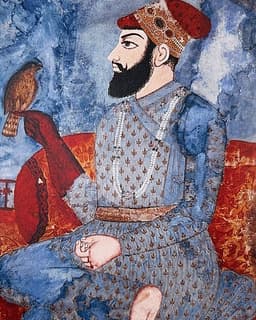
Guru Tegh Bahadur
Emperor · Modern
49.6Total

Shah Jahan Begum
Emperor · Modern
51.2Total
Basic Information
Born
1621
1838
Died
1675
1901
Era
Modern
Modern
Nationality
India
India
Occupation
Emperor
Emperor
Civilization
Indian
Indian
Score Comparison
Military (10%)
41.3
14.9
Political (20%)
39.4
59.3
Influence (20%)
55.0
56.4
Legacy (20%)
55.0
45.8
Leadership (15%)
45.0
78.0
Strategy (15%)
53.0
35.7
TOTAL
49.6
51.2
Guru Tegh Bahadur — Complete Timeline
1664 AD
Appointed Ninth Sikh GuruPolitical Action
Guru Har Krishan appointed Tegh Bahadur as his successor, making him the ninth Sikh Guru. This continued the tradition of guru succession and brought a period of renewed focus on Sikh teachings.
SikhismGuru SuccessionLeadership
Impact: globalconstructive
1665 AD
Founded the City of Anandpur SahibCultural◆ Major
Guru Tegh Bahadur founded the city of Anandpur Sahib in the Shivalik Hills. It became a major Sikh center and later the birthplace of the Khalsa.
City FoundationAnandpur SahibSikhism
Impact: globalconstructive
Traveled and Preached Across North IndiaCultural
Guru Tegh Bahadur traveled extensively through Punjab, Uttar Pradesh, and Bihar, spreading Sikh teachings. He visited many places, including Patna and Dhaka, strengthening the Sikh community's presence.
PreachingTravelSikhism
Impact: regionalconstructive
1675 AD
Executed by Emperor Aurangzeb in DelhiPolitical Action
Guru Tegh Bahadur was arrested and executed in Delhi by order of Emperor Aurangzeb for refusing to convert to Islam and for protecting Kashmiri Pandits. His martyrdom at Chandni Chowk became a pivotal event in Sikh history.
MartyrdomMughal PersecutionSikhism
Impact: globaltragic
Shah Jahan Begum — Complete Timeline
1868 AD
Became Nawab Begum of BhopalPolitical Action◆ Major
Shah Jahan Begum succeeded her mother Sikandar Begum as the ruling Nawab Begum of Bhopal. She was one of the few female Muslim rulers in India, governing the princely state with authority.
BhopalFemale RulerSuccession
Impact: regional
1870 AD
Implemented Public Works ProjectsReform
Shah Jahan Begum oversaw the construction of roads, hospitals, and schools in Bhopal. These projects improved infrastructure and public health, though they strained the state's finances.
InfrastructureBhopalPublic Works
constructive
1871 AD
Constructed the Taj-ul-MasajidCultural◆ Major
Shah Jahan Begum began construction of the Taj-ul-Masajid mosque in Bhopal, one of the largest mosques in India. The project was completed after her death, becoming a major architectural landmark.
ArchitectureMosqueBhopal
Impact: regionalconstructive
1876 AD
Authored the 'Taj-ul-Iqbal' HistoryCultural
Shah Jahan Begum wrote 'Taj-ul-Iqbal', a history of Bhopal in Urdu. The work documented the state's rulers and events, contributing to historical scholarship in the region.
LiteratureHistoryUrdu
constructive
This comparison has not been analyzed yet.
One-time AI generation (~1 minute). Scores and timeline are already available below.
Rankings
🥇
Shah Jahan BegumLeader
Mil: 14.9Pol: 59.3Inf: 56.4
51.2
🥈
Guru Tegh Bahadur
Mil: 41.3Pol: 39.4Inf: 55.0
49.6
+1.6 behind
How This Comparison Works
Algorithm
Each figure is scored on 6 dimensions (0—100 scale) based on structured historical data: Military (10%), Political (20%), Influence (20%), Legacy (20%), Leadership (15%), Strategy (15%). The weighted total produces the final ranking.
Data Sources
Scores are computed from structured sub-indicators in the database. Scale factors adjust for era (Ancient ×0.85, Modern ×1.0) and civilization size (Eastern ×1.05, Other ×0.80) to account for differences in population and military scale.
Maximum 3 Figures
Comparisons are limited to 2—3 figures to ensure readability and statistical meaningfulness.
Error Margins
±5 points per dimension — Sub-scores are derived from historical records with inherent uncertainty. Two figures within 5 points on a dimension should be considered roughly equivalent in that area.
Total Score Accuracy
±3 points overall — The weighted combination of 6 dimensions produces a total score with approximately ±3 points of uncertainty. Differences of less than 3 points are not statistically significant— the figures are effectively tied.
Known Limitations
- Historical records are incomplete and uneven across civilizations
- Figures from oral-tradition societies may be underrepresented
- Occupation labels can misclassify multi-role figures
- Scores measure capability and impact, not moral character
- Quantitative scoring is a comparison tool, not absolute truth
Capability Radar
Military (10%) — Battles & Warfare
Battles
31
10
Win Rate
34
10
Expansion
34
10
Political (20%) — Governance & Reform
Reform
30
75
Diplomacy
25
70
Economy
20
65
Influence (20%) — Cultural & Global Reach
Cultural
70
50
Global
60
30
Legacy (20%) — Historical Impact
Historical
75
45
Longevity
80
40
Leadership (15%) — Power & Stability
Tenure
20
70
Stability
15
70
Strategy (15%) — Tactics & Innovation
Strategy
37
15
Tactics
42
15
Reform
47
30
Similar Comparisons
Comments & Discussion
No comments yet. Be the first to share your thoughts!