Loading...
This comparison has not been analyzed yet.
One-time AI generation (~1 minute). Scores and timeline are already available below.
Gustaf VI Adolf vs Sultan Qaboos of Oman
Sultan Qaboos of Oman leads by 1.6 pts · 2 figures compared
…
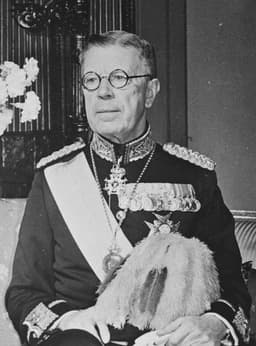
Gustaf VI Adolf
Emperor · Modern
53.1Total
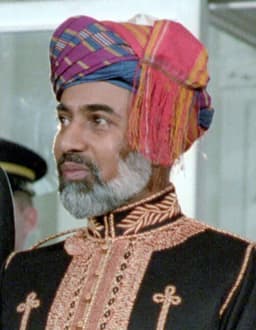
Sultan Qaboos of Oman
Emperor · Modern
54.7Total
Basic Information
Born
1882
1940
Died
1973
—
Era
Modern
Modern
Nationality
Sweden
Oman
Occupation
Emperor
Emperor
Civilization
Western
Middle Eastern
Score Comparison
Military (10%)
48.7
14.9
Political (20%)
45.0
72.0
Influence (20%)
54.1
61.0
Legacy (20%)
42.5
47.5
Leadership (15%)
78.0
72.0
Strategy (15%)
56.4
45.0
TOTAL
53.1
54.7
Gustaf VI Adolf — Complete Timeline
1950 AD
Accession to the thronePolitical Action◆ Major
Gustaf VI Adolf became King of Sweden on October 29, 1950, following the death of his father, Gustaf V. His reign was marked by his scholarly interests and the continued evolution of Sweden's constitutional monarchy.
AccessionSuccession
Impact: national
1952 AD
Archaeological excavations in Italy and GreeceCultural
Gustaf VI Adolf participated in archaeological excavations in Italy (especially at San Giovenale) and Greece. He was a respected amateur archaeologist and contributed to Etruscan studies, publishing several papers.
ArchaeologyEtruscan StudiesScholarship
Impact: regionalconstructive
Presidency of the Swedish Archaeological SocietyCultural
Gustaf VI Adolf served as president of the Swedish Archaeological Society and was a member of the Royal Swedish Academy of Letters. His patronage elevated the status of archaeology in Sweden.
ArchaeologyPatronageAcademy
Impact: nationalconstructive
1954 AD
State visit to the United StatesPolitical Action
Gustaf VI Adolf made a state visit to the United States in 1954, strengthening Swedish-American relations during the Cold War. The visit included meetings with President Dwight D. Eisenhower.
State VisitDiplomacyCold War
Impact: globalconstructive
1974 AD
Support for the 1974 Instrument of GovernmentReform◆ Major
Gustaf VI Adolf accepted the 1974 Instrument of Government, which stripped the monarchy of all remaining political powers, making the king a purely ceremonial head of state. This was a major constitutional reform.
Constitutional ReformCeremonial Monarchy
Impact: national
Sultan Qaboos of Oman — Complete Timeline
1970 AD
Modernization and Infrastructure DevelopmentReform◆ Major
Qaboos used oil revenues to build modern infrastructure: roads, schools, hospitals, and ports. He also established a modern government, including a cabinet and a consultative council, transforming Oman from a feudal state.
DevelopmentInfrastructureEducation
Impact: nationalconstructive
Accession as Sultan of OmanPolitical Action
Qaboos bin Said overthrew his father, Sultan Said bin Taimur, in a bloodless coup with British support. He became Sultan and immediately began modernizing Oman, ending its isolation.
CoupModernizationOman
Impact: national
1975 AD
End of the Dhofar RebellionWar◆ Major
Qaboos successfully ended the Dhofar Rebellion, a Marxist insurgency in southern Oman, through a combination of military force and development programs. This secured his rule and unified the country.
Civil WarDhofarCounterinsurgency
Impact: national
1980 AD
Oman's Neutral Foreign PolicyPolitical Action◆ Major
Qaboos established Oman as a neutral mediator in regional conflicts, maintaining diplomatic ties with both Iran and the West. This policy allowed Oman to host secret talks between the US and Iran.
DiplomacyNeutralityMediation
Impact: regionalconstructive
2020 AD
Death Without HeirOther◆ Major
Qaboos died on January 10, 2020, without a direct heir. He had named his successor, Haitham bin Tariq, in a sealed letter, ensuring a smooth transition. His death marked the end of a 50-year reign.
DeathSuccessionEnd of Era
Impact: nationaltragic
This comparison has not been analyzed yet.
One-time AI generation (~1 minute). Scores and timeline are already available below.
Rankings
🥇
Sultan Qaboos of OmanLeader
Mil: 14.9Pol: 72.0Inf: 61.0
54.7
🥈
Gustaf VI Adolf
Mil: 48.7Pol: 45.0Inf: 54.1
53.1
+1.6 behind
How This Comparison Works
Algorithm
Each figure is scored on 6 dimensions (0—100 scale) based on structured historical data: Military (10%), Political (20%), Influence (20%), Legacy (20%), Leadership (15%), Strategy (15%). The weighted total produces the final ranking.
Data Sources
Scores are computed from structured sub-indicators in the database. Scale factors adjust for era (Ancient ×0.85, Modern ×1.0) and civilization size (Eastern ×1.05, Other ×0.80) to account for differences in population and military scale.
Maximum 3 Figures
Comparisons are limited to 2—3 figures to ensure readability and statistical meaningfulness.
Error Margins
±5 points per dimension — Sub-scores are derived from historical records with inherent uncertainty. Two figures within 5 points on a dimension should be considered roughly equivalent in that area.
Total Score Accuracy
±3 points overall — The weighted combination of 6 dimensions produces a total score with approximately ±3 points of uncertainty. Differences of less than 3 points are not statistically significant— the figures are effectively tied.
Known Limitations
- Historical records are incomplete and uneven across civilizations
- Figures from oral-tradition societies may be underrepresented
- Occupation labels can misclassify multi-role figures
- Scores measure capability and impact, not moral character
- Quantitative scoring is a comparison tool, not absolute truth
Capability Radar
Military (10%) — Battles & Warfare
Battles
22
5
Win Rate
24
5
Expansion
32
10
Political (20%) — Governance & Reform
Reform
60
85
Diplomacy
65
80
Economy
55
80
Influence (20%) — Cultural & Global Reach
Cultural
40
50
Global
25
55
Legacy (20%) — Historical Impact
Historical
35
55
Longevity
30
40
Leadership (15%) — Power & Stability
Tenure
70
95
Stability
75
85
Strategy (15%) — Tactics & Innovation
Strategy
35
15
Tactics
34
10
Reform
40
60
Similar Comparisons
Comments & Discussion
No comments yet. Be the first to share your thoughts!