Loading...
Henry the Fowler vs Isabella I of Castile
Isabella I of Castile leads by 16.3 pts · 2 figures compared
…
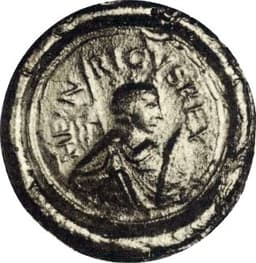
Henry the Fowler
Emperor · Medieval
60.9Total
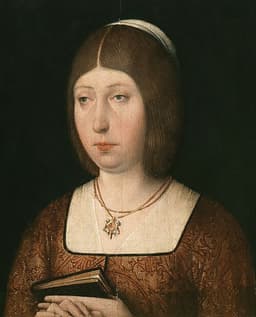
Isabella I of Castile
Emperor · Medieval
77.2Total
Basic Information
Born
876
1451
Died
936
1504
Era
Medieval
Medieval
Nationality
East Francia
Spain
Occupation
Emperor
Emperor
Civilization
Western
Western
Score Comparison
Military (10%)
70.0
76.0
Political (20%)
59.3
78.0
Influence (20%)
55.0
80.0
Legacy (20%)
52.0
75.0
Leadership (15%)
85.0
78.0
Strategy (15%)
55.0
75.0
TOTAL
60.9
77.2
Henry the Fowler — Complete Timeline
919 AD
Election as King of East FranciaPolitical Action
Henry the Fowler was elected King of East Francia by the Saxon and Frankish nobles at Fritzlar on May 6, 919. He was the first Saxon king, marking the transition from Carolingian to Ottonian rule. His election was contested by other dukes but he prevailed.
ElectionAccessionOttonian Dynasty
Impact: regionalconstructive
921 AD
Treaty of Bonn (921)Political Action◆ Major
Henry the Fowler signed the Treaty of Bonn with Charles the Simple of West Francia, recognizing each other's royal titles and establishing peaceful relations. This treaty ended Carolingian claims over East Francia and solidified Henry's legitimacy as an independent king.
TreatyRecognitionDiplomacy
Impact: regionalconstructive
924 AD
Nine-Year Truce with the MagyarsPolitical Action◆ Major
Henry the Fowler negotiated a nine-year truce with the Magyars, agreeing to pay tribute in exchange for a halt to their raids. He used this period to fortify towns, reorganize the army, and train cavalry. This strategic pause was crucial for his later military reforms.
TruceMagyarsMilitary Reform
Impact: regionalconstructive
929 AD
Battle of Lenzen (929)War◆ Major
Henry the Fowler's forces defeated a Slavic army at the Battle of Lenzen, securing the eastern frontier of East Francia. This victory allowed Henry to consolidate control over the Elbe region and establish the March of Brandenburg, a key step in German eastward expansion.
BattleSlavic WarsEastern Expansion
Impact: regionalconstructive
933 AD
Battle of Riade (933)War
After the truce with the Magyars expired, Henry the Fowler led a German army to victory at the Battle of Riade (near Merseburg). The defeat of the Magyar cavalry ended their raids into East Francia for a generation and established Henry's reputation as a defender of Christendom.
BattleMagyarsVictory
Impact: regionalconstructive
936 AD
Death of Henry the FowlerOther◆ Major
Henry the Fowler died on July 2, 936, at Memleben. He was succeeded by his son, Otto I, who would become Holy Roman Emperor. Henry's reign laid the foundations for the Ottonian dynasty and the medieval German kingdom.
DeathSuccessionOttonian
Impact: regional
Isabella I of Castile — Complete Timeline
1469 AD
Marriage to Ferdinand of AragonPolitical Action
Isabella married Ferdinand II of Aragon in Valladolid, uniting the kingdoms of Castile and Aragon. This dynastic union laid the foundation for the unified Spanish monarchy and enabled joint policies including the Reconquista and overseas exploration.
Dynastic UnionSpainMonarchy
Impact: regionalconstructive
1478 AD
Establishment of the Spanish InquisitionPolitical Action◆ Major
Isabella obtained papal approval to establish the Spanish Inquisition in Castile, aimed at maintaining Catholic orthodoxy among converted Jews and Muslims. The Inquisition operated under royal control, conducting trials and executions for heresy.
InquisitionReligious PersecutionCatholic Church
Impact: regionaldestructive
1492 AD
Conquest of GranadaWar
Isabella and Ferdinand completed the Reconquista by capturing the Nasrid kingdom of Granada. The surrender of the last Muslim state in Iberia ended 781 years of Islamic rule and unified Spain under Christian rule.
ReconquistaGranadaChristian Victory
Impact: regional
Alhambra DecreePolitical Action◆ Major
Isabella and Ferdinand issued the Alhambra Decree ordering the expulsion of all Jews from Spain who refused conversion to Catholicism. An estimated 40,000 to 200,000 Jews were forced to leave, causing demographic and economic disruption.
ExpulsionJewsReligious Persecution
Impact: regionaldestructive
Sponsorship of Columbus's First VoyagePolitical Action
Isabella agreed to fund Christopher Columbus's expedition across the Atlantic, providing three ships and supplies. Columbus reached the Bahamas on October 12, initiating sustained European contact with the Americas and the Spanish colonial empire.
ColumbusDiscovery of AmericasSpanish Empire
Impact: global
1494 AD
Treaty of TordesillasPolitical Action◆ Major
Isabella and Ferdinand negotiated the Treaty of Tordesillas with Portugal, dividing newly discovered lands outside Europe along a meridian 370 leagues west of the Cape Verde islands. This agreement shaped colonial claims in the Americas and Africa.
Colonial DivisionSpainPortugal
Impact: global
Expert Analysis
Henry the Fowler vs Isabella I of Castile: Historical Comparison
Henry the Fowler, Duke of Saxony and King of East Francia (r. 919–936), and Isabella I of Castile (r. 1474–1504) both united fractured kingdoms and expanded their realms, but differed sharply in political consolidation and religious policy. Henry is celebrated for founding the Ottonian dynasty and repelling Magyar invasions, while Isabella is famed for completing the Reconquista and sponsoring Columbus.
Dimension Analysis
**Military: Henry the Fowler 89 / Isabella I of Castile 83**
Henry’s innovative use of fortified burgs and cavalry reforms decisively defeated the Magyars, securing German borders for a century. Isabella’s military achievements were more dependent on her husband Ferdinand’s generalship, though she personally organized supply lines and financed the Granada campaign (1482–1492).
**Political: Henry the Fowler 76 / Isabella I of Castile 87**
Henry ruled through consensus with powerful dukes, avoiding direct conflict but limiting central authority. Isabella ruthlessly centralized power, curbing the nobility, reforming the justice system, and creating a unified Spanish state through the 1469 marriage to Ferdinand of Aragon.
**Influence: Henry the Fowler 71 / Isabella I of Castile 72**
Henry’s influence was largely regional, setting the stage for the Holy Roman Empire. Isabella’s patronage of Columbus (1492) launched Spanish colonization of the Americas, transforming global trade and geopolitics for centuries.
**Legacy: Henry the Fowler 84 / Isabella I of Castile 72**
Henry is revered as the father of the German nation and the Ottonian dynasty, which dominated Europe until the 11th century. Isabella’s legacy is deeply ambivalent: celebrated for unification and exploration, but condemned for the Alhambra Decree (1492) expelling Jews and the forced conversions of Muslims.
**Leadership: Henry the Fowler 85 / Isabella I of Castile 89**
Henry led by example, personally commanding armies and negotiating with fractious nobles. Isabella demonstrated exceptional strategic vision, administrative zeal, and unwavering resolve, famously pawning her jewels to fund Columbus and personally overseeing the Granada siege.
Verdict
Isabella I of Castile edges ahead due to superior political centralization and global influence, though Henry the Fowler’s military innovations and dynastic foundation make the contest exceptionally close.
FAQ
Q: Who ranks higher? A: Isabella I of Castile ranks slightly higher overall, driven by her transformative political consolidation and global impact, though Henry the Fowler matches her in military and strategic skill.
Rankings
🥇
Isabella I of CastileLeader
Mil: 76.0Pol: 78.0Inf: 80.0
77.2
🥈
Henry the Fowler
Mil: 70.0Pol: 59.3Inf: 55.0
60.9
+16.3 behind
How This Comparison Works
Algorithm
Each figure is scored on 6 dimensions (0—100 scale) based on structured historical data: Military (10%), Political (20%), Influence (20%), Legacy (20%), Leadership (15%), Strategy (15%). The weighted total produces the final ranking.
Data Sources
Scores are computed from structured sub-indicators in the database. Scale factors adjust for era (Ancient ×0.85, Modern ×1.0) and civilization size (Eastern ×1.05, Other ×0.80) to account for differences in population and military scale.
Maximum 3 Figures
Comparisons are limited to 2—3 figures to ensure readability and statistical meaningfulness.
Error Margins
±5 points per dimension — Sub-scores are derived from historical records with inherent uncertainty. Two figures within 5 points on a dimension should be considered roughly equivalent in that area.
Total Score Accuracy
±3 points overall — The weighted combination of 6 dimensions produces a total score with approximately ±3 points of uncertainty. Differences of less than 3 points are not statistically significant— the figures are effectively tied.
Known Limitations
- Historical records are incomplete and uneven across civilizations
- Figures from oral-tradition societies may be underrepresented
- Occupation labels can misclassify multi-role figures
- Scores measure capability and impact, not moral character
- Quantitative scoring is a comparison tool, not absolute truth
Capability Radar
Military (10%) — Battles & Warfare
Battles
55
75
Win Rate
60
80
Expansion
60
85
Political (20%) — Governance & Reform
Reform
75
90
Diplomacy
70
80
Economy
65
75
Influence (20%) — Cultural & Global Reach
Cultural
55
85
Global
40
95
Legacy (20%) — Historical Impact
Historical
65
95
Longevity
60
90
Leadership (15%) — Power & Stability
Tenure
70
85
Stability
70
70
Strategy (15%) — Tactics & Innovation
Strategy
65
85
Tactics
50
70
Reform
70
90
Similar Comparisons
Comments & Discussion
BattlefieldScholar6/16/2026
The military scoring here is close but I think Henry gets undersold. His victory at the Battle of Riade (933) wasn't just a win—it was a revolution in German defensive doctrine. He built a network of fortified 'burgs' with rotating garrisons, giving him mobile reserves that could respond to Magyar raids in days instead of weeks. Isabella's Granada campaign was impressive logistically, but let's be honest: the Emirate of Granada was a fractured, tribute-paying state with maybe 20,000 men at its peak. Henry faced the most feared cavalry in Europe—the Magyars—and broke them with combined arms tactics. If we're talking pure military innovation, Henry's reforms were more foundational than Isabella's financing.
MetricsMatter6/16/2026
This scoring is a textbook example of how quantitative analysis can mislead. Henry gets 84 on legacy for 'founding the German nation'? That's an anachronistic reading of 10th-century politics—most Germans in 936 didn't even identify as 'German.' And Isabella's legacy at 72 because of the Alhambra Decree? That's applying 21st-century moral weights. Her political score of 87 is inflated because it assumes centralization = always good. Henry's consensus-building (76) actually produced more stable succession—the Ottonians lasted four generations; Isabella's unified Spain nearly collapsed under Charles V's debts. The numbers here tell you more about the historian's biases than about these rulers.
Historian8586/16/2026
这个比较有意思,但我觉得西方的评分体系对中国历史读者来说有些偏颇。亨利一世的军事成就类似于唐朝的节度使,在边境建立军镇抵御游牧民族,但他在政治上更像五代十国的君主——靠妥协和联姻维持统治,而非真正的中央集权。伊莎贝拉一世则更像秦始皇,虽然规模不同——统一国家、削弱贵族、驱逐异族。但她的宗教政策在中国历史上几乎没有对应物,因为中国从宋朝开始就有相对宽容的多元宗教环境。所以我更倾向于认为伊莎贝拉在政治和影响上得分应更高,而亨利在军事上固然不错,但把他称为'德国之父'有些过度——毕竟他的王国只覆盖东法兰克的一部分。
ColonialEchoes6/16/2026
I'm always skeptical when Isabella gets praised for 'sponsoring exploration' when that exploration led directly to the genocide of millions in the Americas. Her Alhambra Decree wasn't a footnote—it was a blueprint for ethnic cleansing that Spain exported to the New World. Henry the Fowler, for all his flaws, didn't preside over a colonial empire. Yet the scores give Isabella 84.5 influence vs Henry's 72.7? That's measuring influence by global reach without weighing the human cost. And let's not forget: Isabella's political centralization enabled the Spanish Inquisition. Henry's 'weak' consensus-based rule at least allowed Saxon and Bavarian dukes to maintain some autonomy. Sometimes 'less effective' governance is actually more humane.
ColdMind486/16/2026
我对这些分数有几个疑问。首先,政治维度:伊莎贝拉87分高于亨利的76分,但中国历史上像唐太宗(626-649在位)那样的皇帝,通过科举制度和三省六部制实现了远比伊莎贝拉更有效的中央集权,且没有驱逐少数族裔。按照这个评分逻辑,唐太宗的政治分至少95。但这里伊莎贝拉的87分似乎主要是因为她统一了伊比利亚,没有考虑她的宗教迫害带来的长期社会分裂——1492年驱逐犹太人导致西班牙损失了约10%的熟练工匠和商人阶层。其次,军事维度:亨利的89分与伊莎贝拉的83分差距不大,但亨利击败的匈牙利人(Magyars)兵力最多约3万人,而伊莎贝拉在格拉纳达战役中动员了超过8万人——规模上更接近中国明代的萨尔浒之战。所以我认为军事分差应当缩小到2-3分,而政治分差应当扩大到15分以上。