Loading...
Henry V vs Li Zhi
Li Zhi leads by 5.7 pts · 2 figures compared
…

Henry V
Emperor · Medieval
56.1Total
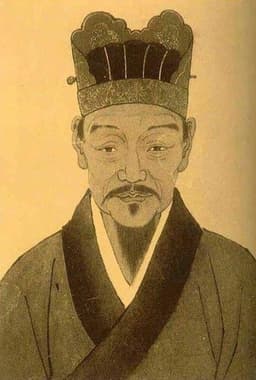
Li Zhi
Emperor · Medieval
61.8Total
Basic Information
Born
1081
628
Died
1125
683
Era
Medieval
Medieval
Nationality
Holy Roman Empire
China
Occupation
Emperor
Emperor
Civilization
Western
Eastern
Score Comparison
Military (10%)
25.0
85.0
Political (20%)
72.0
55.0
Influence (20%)
59.0
58.3
Legacy (20%)
54.0
52.0
Leadership (15%)
68.0
72.0
Strategy (15%)
43.3
66.3
TOTAL
56.1
61.8
Henry V — Complete Timeline
1106 AD
Election as King of GermanyPolitical Action◆ Major
Henry V was elected King of Germany in 1106 after rebelling against his father Henry IV, who died the same year. His accession marked the continuation of the Salian dynasty amid the Investiture Controversy.
SuccessionRebellion
Impact: regional
1110 AD
Campaign in ItalyWar
Henry V led a military campaign to Italy in 1110-1111 to assert imperial claims over the Papal States and secure his coronation. He captured Rome and forced Pope Paschal II to concede investiture rights, but the agreement was later repudiated.
Italian CampaignPapal Conflict
Impact: regional
1111 AD
Coronation as Holy Roman EmperorPolitical Action◆ Major
Pope Paschal II crowned Henry V Holy Roman Emperor in Rome on April 13, 1111, after Henry forced the Pope to grant him the right of investiture. The coronation followed a tense standoff where Henry imprisoned the Pope and cardinals.
CoronationInvestiture Controversy
Impact: regional
1122 AD
Concordat of WormsPolitical Action
Henry V and Pope Callixtus II signed the Concordat of Worms on September 23, 1122, ending the Investiture Controversy. The agreement gave the Church the right to elect bishops but allowed the emperor to invest them with secular authority.
Investiture ControversyTreatyChurch-State Relations
Impact: regionalconstructive
Li Zhi — Complete Timeline
640 AD
Establishment of the Protectorate General to Pacify the WestReform◆ Major
Li Zhi established the Anxi Protectorate to administer the newly conquered territories in Central Asia. This administrative structure governed the Tarim Basin and parts of modern Xinjiang, securing Tang control over the Silk Road trade routes.
AdministrationCentral AsiaSilk Road
Impact: regionalconstructive
657 AD
Conquest of the Western TurksWar◆ Major
Under Li Zhi's reign, Tang forces under Su Dingfang defeated the Western Turkic Khaganate, destroying their power in Central Asia. This victory extended Tang control over the Silk Road and established Chinese hegemony in the region for decades.
Tang ExpansionWestern TurksCentral Asia
Impact: regionalconstructive
660 AD
Conquest of Baekje and GoguryeoWar◆ Major
Tang forces allied with Silla to conquer the Korean kingdom of Baekje in 660, then Goguryeo in 668. These campaigns brought the Korean Peninsula under Tang suzerainty for a time, marking the greatest territorial extent of the Tang dynasty.
Korean CampaignsTang ExpansionSilla Alliance
Impact: regional
Illness and Regency of Wu ZetianPolitical Action
Li Zhi suffered a stroke that impaired his vision and ability to govern. His empress, Wu Zetian, began to handle state affairs, gradually accumulating power. This marked the beginning of her rise to de facto rule, which would later lead to her becoming emperor.
Wu ZetianRegencyPower Shift
Impact: national
Expert Analysis
Origins
Henry V was born in 1086 as the second son of Holy Roman Emperor Henry IV. His early life was marked by the Investiture Controversy, a conflict between the papacy and the empire over the appointment of bishops. Henry V rebelled against his father in 1104, forcing his abdication in 1105. Li Zhi was born in 628 as the ninth son of Tang Emperor Taizong. He was not the initial heir but became crown prince after his brothers' intrigues. He ascended the throne in 649 at age 21. His early reign was guided by advisors inherited from his father.
Rise to Power
Henry V's rise to power was through rebellion. In 1104, he allied with Pope Paschal II and Bavarian nobles against his father. After Henry IV's death in 1106, he became king. He secured his position by forcing Pope Paschal II to crown him emperor in 1111 after capturing Rome. Li Zhi became emperor peacefully in 649. His early reign saw the consolidation of Tang power, but his health declined after 660, leading to his empress Wu Zetian taking control. Wu Zetian's political acumen allowed Li Zhi to focus on military expansion.
Leadership & Governance
Henry V's leadership was focused on resolving the Investiture Controversy. He negotiated the Concordat of Worms in 1122, which ended the conflict by granting the church the right to elect bishops but allowing emperors to invest them with secular authority. This compromise strengthened the papacy and weakened imperial control over the church. Henry V's political score of 72.0 reflects his diplomatic skill. Li Zhi's governance was expansionist. He established the Anxi Protectorate to administer Central Asian territories and launched campaigns that brought the Korean Peninsula under Tang influence. His military score of 85.0 is among the highest for Tang emperors. However, his delegation of power to Wu Zetian led to her eventual usurpation, scoring him 55.0 in political acumen.
Triumph & Tragedy
Henry V's greatest triumph was the Concordat of Worms, which ended decades of conflict. However, his reign was marked by ongoing struggles with the papacy and nobles. His military campaigns in Italy were largely unsuccessful, scoring only 25.0 in military. His failure to secure a lasting imperial dominance left the empire fragmented. Li Zhi's triumphs include the conquest of the Western Turks and the defeat of Goguryeo, expanding Tang territory to its greatest extent. His tragedy was his illness and the subsequent rise of Wu Zetian, who eventually declared her own Zhou dynasty after his death, undermining Tang rule. Li Zhi's legacy score is 52.0, lower than his military achievements suggest.
Character & Destiny
Henry V was pragmatic but ruthless. He rebelled against his father and imprisoned Pope Paschal II to gain concessions. His character was shaped by the need to assert imperial authority, but his methods alienated allies. Li Zhi was physically frail but ambitious. He relied on capable generals and his wife to execute his vision. His decision to let Wu Zetian govern led to her accumulating power, which ultimately changed the dynasty's fate. Both rulers' characters reflect the challenges of their times: Henry V's conflict with the church and Li Zhi's struggle with health and succession.
Legacy
Henry V's legacy is tied to the Concordat of Worms, which ended the Investiture Controversy and established a precedent for church-state relations. However, his reign weakened the Holy Roman Empire's central authority. Li Zhi's legacy is the territorial expansion of Tang China. The Anxi Protectorate and the conquests in Korea and Central Asia under his reign laid the foundation for Tang influence. Yet, his empowerment of Wu Zetian led to a temporary interruption of Tang rule. Historical assessments often view Li Zhi as a capable ruler overshadowed by his wife. His overall score of 61.8 surpasses Henry V's 56.1.
Conclusion
Li Zhi had a greater impact than Henry V. While Henry V resolved a major conflict, his military shortcomings and political compromises limited his achievements. Li Zhi's military conquests expanded Tang China to its greatest extent, and his administrative reforms in Central Asia had lasting effects. Despite his political score being lower, his overall total score of 61.8 versus Henry V's 56.1 reflects his superior military and leadership. Li Zhi's reign shaped East Asian geopolitics for centuries, whereas Henry V's influence was more narrowly confined to European church-state relations.
Rankings
🥇
Li ZhiLeader
Mil: 85.0Pol: 55.0Inf: 58.3
61.8
🥈
Henry V
Mil: 25.0Pol: 72.0Inf: 59.0
56.1
+5.7 behind
How This Comparison Works
Algorithm
Each figure is scored on 6 dimensions (0—100 scale) based on structured historical data: Military (10%), Political (20%), Influence (20%), Legacy (20%), Leadership (15%), Strategy (15%). The weighted total produces the final ranking.
Data Sources
Scores are computed from structured sub-indicators in the database. Scale factors adjust for era (Ancient ×0.85, Modern ×1.0) and civilization size (Eastern ×1.05, Other ×0.80) to account for differences in population and military scale.
Maximum 3 Figures
Comparisons are limited to 2—3 figures to ensure readability and statistical meaningfulness.
Error Margins
±5 points per dimension — Sub-scores are derived from historical records with inherent uncertainty. Two figures within 5 points on a dimension should be considered roughly equivalent in that area.
Total Score Accuracy
±3 points overall — The weighted combination of 6 dimensions produces a total score with approximately ±3 points of uncertainty. Differences of less than 3 points are not statistically significant— the figures are effectively tied.
Known Limitations
- Historical records are incomplete and uneven across civilizations
- Figures from oral-tradition societies may be underrepresented
- Occupation labels can misclassify multi-role figures
- Scores measure capability and impact, not moral character
- Quantitative scoring is a comparison tool, not absolute truth
Capability Radar
Military (10%) — Battles & Warfare
Battles
40
85
Win Rate
45
80
Expansion
30
90
Political (20%) — Governance & Reform
Reform
70
65
Diplomacy
75
80
Economy
55
70
Influence (20%) — Cultural & Global Reach
Cultural
40
55
Global
45
65
Legacy (20%) — Historical Impact
Historical
65
70
Longevity
50
60
Leadership (15%) — Power & Stability
Tenure
65
75
Stability
60
65
Strategy (15%) — Tactics & Innovation
Strategy
40
85
Tactics
35
70
Reform
30
60
Similar Comparisons
Comments & Discussion
No comments yet. Be the first to share your thoughts!