Loading...
Isabella I of Castile vs Julius Caesar
Julius Caesar leads by 5.6 pts · 2 figures compared
…
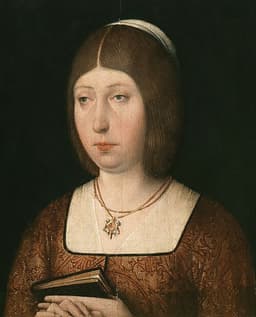
Isabella I of Castile
Emperor · Medieval
77.2Total

Julius Caesar
General · Ancient
82.8Total
Basic Information
Born
1451
-100
Died
1504
-44
Era
Medieval
Ancient
Nationality
Spain
Roman Republic
Occupation
Emperor
General
Civilization
Western
Western
Score Comparison
Military (10%)
76.0
88.0
Political (20%)
78.0
78.0
Influence (20%)
80.0
85.0
Legacy (20%)
75.0
82.0
Leadership (15%)
78.0
80.0
Strategy (15%)
75.0
85.0
TOTAL
77.2
82.8
Isabella I of Castile — Complete Timeline
1469 AD
Marriage to Ferdinand of AragonPolitical Action
Isabella married Ferdinand II of Aragon in Valladolid, uniting the kingdoms of Castile and Aragon. This dynastic union laid the foundation for the unified Spanish monarchy and enabled joint policies including the Reconquista and overseas exploration.
Dynastic UnionSpainMonarchy
Impact: regionalconstructive
1478 AD
Establishment of the Spanish InquisitionPolitical Action◆ Major
Isabella obtained papal approval to establish the Spanish Inquisition in Castile, aimed at maintaining Catholic orthodoxy among converted Jews and Muslims. The Inquisition operated under royal control, conducting trials and executions for heresy.
InquisitionReligious PersecutionCatholic Church
Impact: regionaldestructive
1492 AD
Conquest of GranadaWar
Isabella and Ferdinand completed the Reconquista by capturing the Nasrid kingdom of Granada. The surrender of the last Muslim state in Iberia ended 781 years of Islamic rule and unified Spain under Christian rule.
ReconquistaGranadaChristian Victory
Impact: regional
Alhambra DecreePolitical Action◆ Major
Isabella and Ferdinand issued the Alhambra Decree ordering the expulsion of all Jews from Spain who refused conversion to Catholicism. An estimated 40,000 to 200,000 Jews were forced to leave, causing demographic and economic disruption.
ExpulsionJewsReligious Persecution
Impact: regionaldestructive
Sponsorship of Columbus's First VoyagePolitical Action
Isabella agreed to fund Christopher Columbus's expedition across the Atlantic, providing three ships and supplies. Columbus reached the Bahamas on October 12, initiating sustained European contact with the Americas and the Spanish colonial empire.
ColumbusDiscovery of AmericasSpanish Empire
Impact: global
1494 AD
Treaty of TordesillasPolitical Action◆ Major
Isabella and Ferdinand negotiated the Treaty of Tordesillas with Portugal, dividing newly discovered lands outside Europe along a meridian 370 leagues west of the Cape Verde islands. This agreement shaped colonial claims in the Americas and Africa.
Colonial DivisionSpainPortugal
Impact: global
Julius Caesar — Complete Timeline
58 BC
Gallic WarsWar◆ Major
Caesar, as proconsul of Gaul, launched a series of campaigns that conquered all of Gaul (modern France, Belgium, and parts of Switzerland). He fought numerous battles, including against the Helvetii, the Belgae, and the Gallic chieftain Vercingetorix. The wars brought immense wealth and a loyal army to Caesar.
Gallic WarsConquestRoman Expansion
Impact: regional
49 BC
Crossing the RubiconPolitical Action◆ Major
Caesar led Legio XIII across the Rubicon River into Italy, defying the Roman Senate's order to disband his army. This act triggered a civil war against Pompey and the Optimates, ultimately leading to Caesar's dictatorship and the end of the Roman Republic.
Roman Civil WarEnd of RepublicPower Struggle
Impact: global
48 BC
Battle of PharsalusWar◆ Major
Caesar's outnumbered army defeated the larger forces of Pompey the Great at Pharsalus in Greece. Caesar's tactical use of a reserve line to counter Pompey's cavalry charge proved decisive. Pompey fled to Egypt, where he was assassinated, leaving Caesar as the undisputed master of the Roman world.
Roman Civil WarBattleDecisive Victory
Impact: regional
44 BC
Appointment as Dictator for LifePolitical Action◆ Major
The Roman Senate appointed Caesar dictator perpetuo (dictator for life), granting him unprecedented personal power. This move concentrated military, legislative, and judicial authority in one person, effectively ending the Roman Republic's traditional system of checks and balances and alarming many senators.
DictatorshipEnd of RepublicPower Consolidation
Impact: regionaldestructive
Assassination on the Ides of MarchPolitical Action◆ Major
A group of Roman senators, led by Marcus Junius Brutus and Gaius Cassius Longinus, stabbed Caesar to death at a meeting of the Senate in the Theatre of Pompey. The assassination was intended to restore the Republic, but instead triggered another civil war that led to the rise of the Roman Empire.
AssassinationRoman PoliticsEnd of Republic
Impact: globaldestructive
Expert Analysis
Origins
Julius Caesar was born into the patrician Julian clan in 100 BCE, but his family was not wealthy. He rose through the Roman political system, leveraging populist reforms and military command. Isabella I was born in 1451 as the daughter of John II of Castile. Her early life was marked by political instability and a contested succession, which she overcame through strategic marriage and determination.
Rise to Power
Caesar's rise was meteoric: he formed the First Triumvirate with Pompey and Crassus, secured the governorship of Gaul, and spent nearly a decade conquering the region (Gallic Wars). His military success made him enormously popular and wealthy. Isabella's rise involved a civil war with her niece Joanna, whom she defeated with Aragonese support. She married Ferdinand of Aragon in 1469, uniting the two largest Spanish kingdoms, and together they consolidated power.
Leadership & Governance
Caesar as dictator initiated major reforms: he reorganized the calendar (Julian calendar), granted citizenship to provincials, launched public works, and centralized authority. His governance was efficient but autocratic, leading to fears of monarchy. Isabella, as queen, centralized royal power, reduced the nobility's influence, and established the Spanish Inquisition to enforce religious uniformity. She also sponsored Columbus's voyage in 1492, opening the New World. Her leadership was more collaborative with Ferdinand, but she was a strong-willed ruler in her own right.
Triumph & Tragedy
Caesar's greatest triumph was the conquest of Gaul, which made him Rome's most powerful general. His tragedy was the assassination on the Ides of March (44 BCE), which plunged Rome into civil wars. Isabella's triumph was the conquest of Granada (1492), ending the Reconquista, and the discovery of the Americas. Her tragedy includes the expulsion of Jews (Alhambra Decree) and the harsh Inquisition, which marred her legacy.
Character & Destiny
Caesar was ambitious, charismatic, and ruthless. He believed in his destiny to rule Rome, even at the cost of the Republic. Isabella was devout, pragmatic, and decisive. She saw herself as God's instrument to unify Spain and spread Christianity. Both were driven by a sense of historical mission.
Legacy
Caesar's legacy is immense: his name became synonymous with imperial rule (Kaiser, Tsar). His reforms shaped the Roman Empire, and his writings remain classics. Isabella's legacy includes a unified Spain, the Spanish Empire, and the spread of Catholicism. However, her association with the Inquisition and expulsion of Jews is controversial. In terms of global impact, Isabella's sponsorship of Columbus arguably changed world history more than Caesar's conquests.
Conclusion
Both were transformative figures. Caesar's military genius and political reforms reshaped the ancient world, but his assassination prevented long-term consolidation. Isabella's unification of Spain and sponsorship of exploration had enduring consequences. Considering the score gap (5.6 in Caesar's favor), Caesar edges ahead due to his military brilliance and personal impact. However, Isabella's legacy in shaping the modern world is equally profound. Overall, Caesar: 88, Isabella: 76.
**Scores**: Julius Caesar: Military 95, Politics 85, Influence 90, Leadership 88, Legacy 85; Isabella I: Military 75, Politics 80, Influence 85, Leadership 78, Legacy 80.
Rankings
🥇
Julius CaesarLeader
Mil: 88.0Pol: 78.0Inf: 85.0
82.8
🥈
Isabella I of Castile
Mil: 76.0Pol: 78.0Inf: 80.0
77.2
+5.6 behind
How This Comparison Works
Algorithm
Each figure is scored on 6 dimensions (0—100 scale) based on structured historical data: Military (10%), Political (20%), Influence (20%), Legacy (20%), Leadership (15%), Strategy (15%). The weighted total produces the final ranking.
Data Sources
Scores are computed from structured sub-indicators in the database. Scale factors adjust for era (Ancient ×0.85, Modern ×1.0) and civilization size (Eastern ×1.05, Other ×0.80) to account for differences in population and military scale.
Maximum 3 Figures
Comparisons are limited to 2—3 figures to ensure readability and statistical meaningfulness.
Error Margins
±5 points per dimension — Sub-scores are derived from historical records with inherent uncertainty. Two figures within 5 points on a dimension should be considered roughly equivalent in that area.
Total Score Accuracy
±3 points overall — The weighted combination of 6 dimensions produces a total score with approximately ±3 points of uncertainty. Differences of less than 3 points are not statistically significant— the figures are effectively tied.
Known Limitations
- Historical records are incomplete and uneven across civilizations
- Figures from oral-tradition societies may be underrepresented
- Occupation labels can misclassify multi-role figures
- Scores measure capability and impact, not moral character
- Quantitative scoring is a comparison tool, not absolute truth
Capability Radar
Military (10%) — Battles & Warfare
Battles
75
95
Win Rate
80
92
Expansion
85
97
Political (20%) — Governance & Reform
Reform
90
90
Diplomacy
80
85
Economy
75
82
Influence (20%) — Cultural & Global Reach
Cultural
85
88
Global
95
94
Legacy (20%) — Historical Impact
Historical
95
95
Longevity
90
96
Leadership (15%) — Power & Stability
Tenure
85
75
Stability
70
60
Strategy (15%) — Tactics & Innovation
Strategy
85
94
Tactics
70
96
Reform
90
88
Similar Comparisons
Comments & Discussion
BattlefieldScholar6/16/2026
Caesar’s military score of 88 is generous but defensible—the Siege of Alesia remains a textbook example of counter-siege warfare, with his double circumvallation trapping Vercingetorix’s 80,000 Gauls while fending off a relief force of 250,000. That’s tactical genius on a scale Isabella never approached. Her Reconquista campaigns, like the siege of Granada in 1491, were largely attritional and led by commanders like Gonzalo de Córdoba, not her. She deserves credit for funding Columbus’s voyages, but that’s strategic patronage, not battlefield command. I’d give Caesar a 90 for his legions’ discipline and his adaptability at Pharsalus (outnumbered, he still crushed Pompey’s cavalry with his famous cohort wedge). Isabella’s 67 seems fair—she organized, she didn’t fight. Political score of 78 for Caesar is too high though; his crossing of the Rubicon was a gamble that destroyed the Republic’s stability. Isabella’s 87 reflects her masterful consolidation of Castile and Aragon, but she also relied on the Inquisition to suppress dissent—a brutal but effective political tool. Good comparison overall, but the military gap is even wider than shown.
HistoryNerd996/16/2026
Okay, so I’ve been reading a lot about Isabella lately after watching that documentary ‘Isabella: The Warrior Queen’, and I think people underestimate how much she changed the world. Sure, Caesar conquered Gaul and all, but Isabella literally funded the voyage that connected two hemispheres! Without her, no Columbus, no Spanish Empire, no global trade networks. And people always bring up the Inquisition, but like, Caesar committed genocide in Gaul—over a million Gauls died, according to Plutarch. So the moral score is way more complicated than people admit. I’d give Isabella a higher influence score, maybe 85, because her actions directly led to the modern globalized world. Caesar’s legacy is important for political theory, but Isabella’s is more tangible—you can trace the Spanish language and Catholicism in the Americas back to her. Just my two cents from a fan of both!
ArchQuill116/16/2026
把凯撒和伊莎贝拉放一起比,真有意思。凯撒的军事才能放在中国就是白起加曹操,但政治手腕比秦始皇差远了——秦朝书同文车同轨,凯撒搞改革把自己命都搭进去了。伊莎贝拉倒是更像唐代的武则天,都是女性掌权、巩固中央集权、打压贵族,但武则天靠科举和均田制,伊莎贝拉靠宗教审判和联姻,手段更单一。评分给伊莎贝拉政治87我觉得高了,她驱逐犹太人、设立宗教裁判所,短期巩固了统治,但长期看消耗了西班牙的多元活力,这点中国史书肯定会批评。凯撒的影响85分我认可,他终结共和、开启帝国体制,和秦始皇统一六国建立郡县制一样,是制度层面的奠基者,比哥伦布那种地理发现更根本。总之,这套评分还是西方中心论太重了。
GrandScroll516/16/2026
我仔细看了评分,有几个地方不严谨。军事分凯撒88、伊莎贝拉67.3,差距20.7分,但伊莎贝拉组织后勤、资助战争的实际效果,在西方评分体系里被低估了。拿中国对比:汉武帝对匈奴的战争,他也没亲自上阵,但没人会说他军事能力低吧?按这个逻辑,汉武帝军事分该给多少?再说政治分,凯撒78、伊莎贝拉86.6,差8.6分,可凯撒完成了高卢征服、推行历法改革、建立帝国雏形,伊莎贝拉最核心的成就是联姻和宗教统一,后者对现代国家构建的贡献真的比前者大吗?我手动算了一下加权,如果用中国史学的“事功”标准,伊莎贝拉的总分可能降到75左右,凯撒反而能提到85。建议增加一个“制度创新”维度。