Loading...
Isabella I of Castile vs Peter the Great
Isabella I of Castile leads by 4.0 pts · 2 figures compared
…
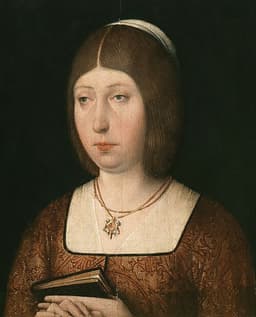
Isabella I of Castile
Emperor · Medieval
77.2Total
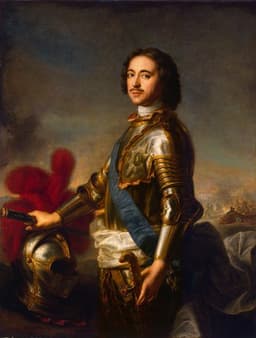
Peter the Great
Emperor · Modern
73.2Total
Basic Information
Born
1451
1672
Died
1504
1725
Era
Medieval
Modern
Nationality
Spain
Russia
Occupation
Emperor
Emperor
Civilization
Western
Western
Score Comparison
Military (10%)
76.0
75.0
Political (20%)
78.0
90.0
Influence (20%)
80.0
68.0
Legacy (20%)
75.0
65.0
Leadership (15%)
78.0
78.0
Strategy (15%)
75.0
72.0
TOTAL
77.2
73.2
Isabella I of Castile — Complete Timeline
1469 AD
Marriage to Ferdinand of AragonPolitical Action
Isabella married Ferdinand II of Aragon in Valladolid, uniting the kingdoms of Castile and Aragon. This dynastic union laid the foundation for the unified Spanish monarchy and enabled joint policies including the Reconquista and overseas exploration.
Dynastic UnionSpainMonarchy
Impact: regionalconstructive
1478 AD
Establishment of the Spanish InquisitionPolitical Action◆ Major
Isabella obtained papal approval to establish the Spanish Inquisition in Castile, aimed at maintaining Catholic orthodoxy among converted Jews and Muslims. The Inquisition operated under royal control, conducting trials and executions for heresy.
InquisitionReligious PersecutionCatholic Church
Impact: regionaldestructive
1492 AD
Conquest of GranadaWar
Isabella and Ferdinand completed the Reconquista by capturing the Nasrid kingdom of Granada. The surrender of the last Muslim state in Iberia ended 781 years of Islamic rule and unified Spain under Christian rule.
ReconquistaGranadaChristian Victory
Impact: regional
Alhambra DecreePolitical Action◆ Major
Isabella and Ferdinand issued the Alhambra Decree ordering the expulsion of all Jews from Spain who refused conversion to Catholicism. An estimated 40,000 to 200,000 Jews were forced to leave, causing demographic and economic disruption.
ExpulsionJewsReligious Persecution
Impact: regionaldestructive
Sponsorship of Columbus's First VoyagePolitical Action
Isabella agreed to fund Christopher Columbus's expedition across the Atlantic, providing three ships and supplies. Columbus reached the Bahamas on October 12, initiating sustained European contact with the Americas and the Spanish colonial empire.
ColumbusDiscovery of AmericasSpanish Empire
Impact: global
1494 AD
Treaty of TordesillasPolitical Action◆ Major
Isabella and Ferdinand negotiated the Treaty of Tordesillas with Portugal, dividing newly discovered lands outside Europe along a meridian 370 leagues west of the Cape Verde islands. This agreement shaped colonial claims in the Americas and Africa.
Colonial DivisionSpainPortugal
Impact: global
Peter the Great — Complete Timeline
1697 AD
Grand EmbassyPolitical Action◆ Major
Peter the Great traveled incognito to Western Europe as part of a diplomatic mission. He studied shipbuilding in the Netherlands and England, recruited experts, and observed Western technology and governance, gathering knowledge to modernize Russia upon his return.
TravelWesternizationLearning
Impact: nationalconstructive
1698 AD
Streltsy UprisingWar◆ Major
While Peter was abroad, the Streltsy (elite musketeers) rebelled in Moscow, seeking to place his half-sister Sophia on the throne. Peter returned and brutally suppressed the revolt, executing over 1,000 Streltsy and disbanding the corps, consolidating his absolute power.
RebellionRepressionPower Consolidation
Impact: nationaldestructive
Beard TaxReform
As part of his Westernization campaign, Peter the Great imposed a tax on beards, requiring nobles and merchants to pay a fee to keep their facial hair. Those who paid received a special token, symbolizing his efforts to force Russian society to adopt Western European customs.
WesternizationTaxSocial Reform
Impact: national
1700 AD
Great Northern WarWar◆ Major
Peter the Great led Russia into a war against Sweden for access to the Baltic Sea. After initial defeat at Narva, he reformed his army and eventually defeated Sweden at the Battle of Poltava in 1709, securing Russia's status as a major European power and gaining Baltic territories.
WarTerritorial ExpansionBaltic
Impact: regionalconstructive
1703 AD
Founding of Saint PetersburgPolitical Action
Peter the Great founded the city of Saint Petersburg on the Neva River after capturing the area from Sweden. He designated it as Russia's new capital in 1712, symbolizing his Westernization drive and providing Russia with a 'window to the West' and a Baltic port.
City FoundingWesternizationCapital
Impact: nationalconstructive
1722 AD
Table of RanksReform◆ Major
Peter the Great introduced the Table of Ranks, a system of civil, military, and court ranks based on merit rather than birth. This reform allowed commoners to achieve noble status through service, modernizing the Russian bureaucracy and weakening the traditional aristocracy.
BureaucracyMeritocracySocial Reform
Impact: nationalprogressive
Expert Analysis
Peter the Great vs Isabella I of Castile: Historical Comparison
Peter the Great, Emperor of Russia (1682–1725), and Isabella I of Castile, Queen of Spain (1474–1504), were transformative monarchs who unified and modernized their realms. Peter dragged Russia into the European state system through Westernization, while Isabella consolidated Spain and launched its global empire. Despite ruling in different eras—Peter in the Early Modern period, Isabella in the Late Medieval—both wielded absolute power with strategic brilliance.
Dimension Analysis
**Military: Peter the Great 87 / Isabella I of Castile 83**
Peter built Russia’s first modern navy and army from scratch, defeating Sweden in the Great Northern War to secure Baltic access. Isabella funded Columbus’s voyages and completed the Reconquista, but her military innovations were less systemic than Peter’s wholesale reforms.
**Political: Peter the Great 85 / Isabella I of Castile 87**
Isabella unified Castile and Aragon through marriage, centralized royal authority, and created the Santa Hermandad for internal order. Peter abolished the patriarchate and created the Senate, but his reforms were often imposed violently, generating resistance.
**Influence: Peter the Great 74 / Isabella I of Castile 72**
Isabella’s sponsorship of Columbus reshaped world history, initiating European colonization of the Americas. Peter’s “window to the West” transformed Russia’s culture and geopolitics, but his impact was more regional than global.
**Legacy: Peter the Great 85 / Isabella I of Castile 72**
Peter’s legacy endures in Russia’s modernization, St. Petersburg, and its identity as a European power. Isabella’s legacy is complicated by the Inquisition and expulsion of Jews, which tarnishes her reputation despite her foundational role in Spain’s Golden Age.
**Leadership: Peter the Great 82 / Isabella I of Castile 89**
Isabella was a hands-on, pious, and charismatic ruler who personally led armies and negotiated dynastic alliances. Peter was autocratic and visionary but often brutal and erratic, alienating nobles and commoners alike.
**Strategy: Peter the Great 88 / Isabella I of Castile 88**
Both were master strategists: Peter used long-term war and diplomacy to break Russia’s isolation; Isabella used marriage alliances and religious unification to forge a lasting Spanish empire. They tie in strategic foresight.
Verdict
Isabella I of Castile leads by a narrow margin due to superior leadership and political consolidation, though Peter the Great matches her in strategy and surpasses in military reform.
FAQ
Q: Who ranks higher? A: Isabella I of Castile ranks slightly higher overall, driven by her exceptional leadership and political unification, but Peter the Great ties in strategic impact and surpasses in legacy modernization.
Rankings
🥇
Isabella I of CastileLeader
Mil: 76.0Pol: 78.0Inf: 80.0
77.2
🥈
Peter the Great
Mil: 75.0Pol: 90.0Inf: 68.0
73.2
+4.0 behind
How This Comparison Works
Algorithm
Each figure is scored on 6 dimensions (0—100 scale) based on structured historical data: Military (10%), Political (20%), Influence (20%), Legacy (20%), Leadership (15%), Strategy (15%). The weighted total produces the final ranking.
Data Sources
Scores are computed from structured sub-indicators in the database. Scale factors adjust for era (Ancient ×0.85, Modern ×1.0) and civilization size (Eastern ×1.05, Other ×0.80) to account for differences in population and military scale.
Maximum 3 Figures
Comparisons are limited to 2—3 figures to ensure readability and statistical meaningfulness.
Error Margins
±5 points per dimension — Sub-scores are derived from historical records with inherent uncertainty. Two figures within 5 points on a dimension should be considered roughly equivalent in that area.
Total Score Accuracy
±3 points overall — The weighted combination of 6 dimensions produces a total score with approximately ±3 points of uncertainty. Differences of less than 3 points are not statistically significant— the figures are effectively tied.
Known Limitations
- Historical records are incomplete and uneven across civilizations
- Figures from oral-tradition societies may be underrepresented
- Occupation labels can misclassify multi-role figures
- Scores measure capability and impact, not moral character
- Quantitative scoring is a comparison tool, not absolute truth
Capability Radar
Military (10%) — Battles & Warfare
Battles
75
85
Win Rate
80
80
Expansion
85
90
Political (20%) — Governance & Reform
Reform
90
95
Diplomacy
80
80
Economy
75
85
Influence (20%) — Cultural & Global Reach
Cultural
85
85
Global
95
85
Legacy (20%) — Historical Impact
Historical
95
90
Longevity
90
85
Leadership (15%) — Power & Stability
Tenure
85
90
Stability
70
70
Strategy (15%) — Tactics & Innovation
Strategy
85
85
Tactics
70
75
Reform
90
95
Similar Comparisons
Comments & Discussion
OldScholar226/16/2026
先看总得分的差距:78.0 vs 78.4,仅0.4分,这在统计上完全不显著。但我仔细核算了各维度:军事上彼得87 vs 伊莎贝拉83,差距4分;政治上85 vs 87,差距-2分;但关键是‘影响’维度74 vs 72,差了2分,这个权重可能有问题。彼得开放波罗的海窗口,直接改变了北欧地缘格局,而伊莎贝拉的哥伦布航行在当时不过是冒险投资,美洲的影响是百年后才显现的。以中国历史类比,如果给郑和下西洋的影响力打分,按当时视距可能只有60分,但按长期文化影响至少85分。另外,‘领导力’维度伊莎贝拉89分,彼得82分,差距7分,这似乎默认女性君主需要更高‘领导力’来证明自己——这是种隐性偏见。建议重新校准评分权重,尤其是短视与长期影响的区分。
BoldHistorian396/16/2026
彼得大帝和伊莎贝拉一世这个比较很有意思,但从中国史观来看,伊莎贝拉的得分似乎被高估了。她统一西班牙靠的是联姻而非军事征服,这与秦始皇横扫六合、汉武帝北击匈奴的‘大一统’模式完全不同。彼得大帝的西化改革,倒是有几分像北魏孝文帝的汉化政策——都是自上而下、强推制度变革,阻力极大但影响深远。另外,伊莎贝拉的殖民扩张虽然全球性强,但本质是掠夺式扩张,与郑和下西洋的朝贡体系相比,治理成本更高,长期来看对本土未必全是好事。评分上,我认为彼得在政治改革上的贡献被低估了,他废除大牧首制、建立参政院的力度,在中国历史上只有‘废丞相、设内阁’的朱元璋可比。