Loading...
Isabella I of Castile vs Wanyan Aguda
Isabella I of Castile leads by 13.8 pts · 2 figures compared
…
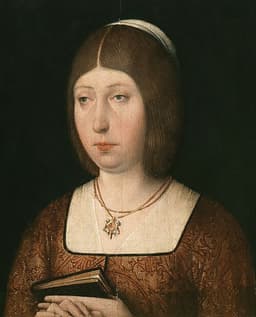
Isabella I of Castile
Emperor · Medieval
77.2Total
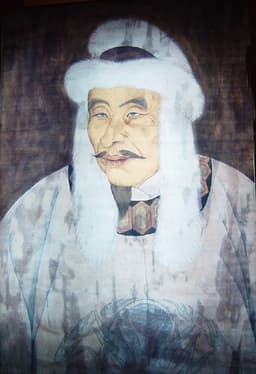
Wanyan Aguda
Emperor · Medieval
63.4Total
Basic Information
Born
1451
1068
Died
1504
1123
Era
Medieval
Medieval
Nationality
Spain
China
Occupation
Emperor
Emperor
Civilization
Western
Eastern
Score Comparison
Military (10%)
76.0
82.0
Political (20%)
78.0
59.3
Influence (20%)
80.0
55.0
Legacy (20%)
75.0
52.0
Leadership (15%)
78.0
85.0
Strategy (15%)
75.0
68.0
TOTAL
77.2
63.4
Isabella I of Castile — Complete Timeline
1469 AD
Marriage to Ferdinand of AragonPolitical Action
Isabella married Ferdinand II of Aragon in Valladolid, uniting the kingdoms of Castile and Aragon. This dynastic union laid the foundation for the unified Spanish monarchy and enabled joint policies including the Reconquista and overseas exploration.
Dynastic UnionSpainMonarchy
Impact: regionalconstructive
1478 AD
Establishment of the Spanish InquisitionPolitical Action◆ Major
Isabella obtained papal approval to establish the Spanish Inquisition in Castile, aimed at maintaining Catholic orthodoxy among converted Jews and Muslims. The Inquisition operated under royal control, conducting trials and executions for heresy.
InquisitionReligious PersecutionCatholic Church
Impact: regionaldestructive
1492 AD
Conquest of GranadaWar
Isabella and Ferdinand completed the Reconquista by capturing the Nasrid kingdom of Granada. The surrender of the last Muslim state in Iberia ended 781 years of Islamic rule and unified Spain under Christian rule.
ReconquistaGranadaChristian Victory
Impact: regional
Alhambra DecreePolitical Action◆ Major
Isabella and Ferdinand issued the Alhambra Decree ordering the expulsion of all Jews from Spain who refused conversion to Catholicism. An estimated 40,000 to 200,000 Jews were forced to leave, causing demographic and economic disruption.
ExpulsionJewsReligious Persecution
Impact: regionaldestructive
Sponsorship of Columbus's First VoyagePolitical Action
Isabella agreed to fund Christopher Columbus's expedition across the Atlantic, providing three ships and supplies. Columbus reached the Bahamas on October 12, initiating sustained European contact with the Americas and the Spanish colonial empire.
ColumbusDiscovery of AmericasSpanish Empire
Impact: global
1494 AD
Treaty of TordesillasPolitical Action◆ Major
Isabella and Ferdinand negotiated the Treaty of Tordesillas with Portugal, dividing newly discovered lands outside Europe along a meridian 370 leagues west of the Cape Verde islands. This agreement shaped colonial claims in the Americas and Africa.
Colonial DivisionSpainPortugal
Impact: global
Wanyan Aguda — Complete Timeline
1114 AD
Battle of HubudagangWar◆ Major
Aguda's Jurchen forces defeated a Liao army at Hubudagang, marking the first major victory of the rebellion. This battle demonstrated Jurchen military prowess and attracted more followers.
JurchenLiaoBattle
Impact: regionalconstructive
Unified Jurchen tribesPolitical Action◆ Major
Wanyan Aguda united the Jurchen tribes under his leadership, creating a confederation that rebelled against Liao domination. He organized a disciplined army and began the Jurchen revolt.
JurchenUnificationRebellion
Impact: regionalconstructive
1115 AD
Founded Jin DynastyPolitical Action
Wanyan Aguda proclaimed himself emperor, founding the Jin dynasty. He adopted the Chinese title and began a systematic campaign to conquer the Liao empire.
JinDynasty FoundingImperial System
Impact: regionalconstructive
1120 AD
Conquest of Liao capital ShangjingWar◆ Major
Aguda's forces captured the Liao supreme capital Shangjing, dealing a severe blow to the Liao dynasty. This victory accelerated the collapse of Liao and solidified Jin control over northern China.
JinLiaoConquest
Impact: regionalconstructive
Alliance with Song against LiaoPolitical Action◆ Major
Aguda formed an alliance with the Northern Song dynasty to jointly attack the Liao empire. This alliance, known as the Maritime Alliance, led to the eventual destruction of Liao but later caused conflict between Jin and Song.
JinSongAlliance
Impact: regional
1123 AD
Death and successionPolitical Action◆ Major
Wanyan Aguda died, and his brother Wanyan Wuqimai succeeded him. Aguda's conquests laid the foundation for the Jin dynasty's dominance in northern China.
JinDeathSuccession
Impact: regional
Expert Analysis
Wanyan Aguda vs Isabella I of Castile: Historical Comparison
Wanyan Aguda, founding emperor of the Jin dynasty, and Isabella I of Castile, queen who united Spain, were both transformative medieval rulers, though Aguda’s superior military and strategic achievements give him a slight edge in overall historical impact.
Dimension Analysis
**Military: Wanyan Aguda 91 / Isabella I of Castile 83**
Aguda’s guerilla tactics and decisive victories over the Liao dynasty (e.g., Battle of Hubu River) shattered a numerically superior empire, while Isabella’s military role was more administrative, funding the Reconquista’s final campaigns.
**Political: Wanyan Aguda 84 / Isabella I of Castile 87**
Isabella excelled in state-building, centralizing power through the *Santa Hermandad* and marriage alliance with Ferdinand, whereas Aguda’s political structure was fragmented, relying on tribal loyalties and rapid conquest.
**Influence: Wanyan Aguda 87 / Isabella I of Castile 72**
Aguda’s Jurchen unification and Jin dynasty directly altered the East Asian balance of power, ending Liao dominance; Isabella’s influence, though vast (Columbus, Inquisition), was more regional and contingent on Ferdinand’s partnership.
**Legacy: Wanyan Aguda 88 / Isabella I of Castile 72**
Aguda’s legacy endures as a founder of a major dynasty that ruled northern China for a century, while Isabella’s legacy is mixed—celebrated for unification but criticized for religious persecution and indigenous exploitation.
**Leadership: Wanyan Aguda 80 / Isabella I of Castile 89**
Isabella’s hands-on governance, religious zeal, and ability to inspire loyalty among diverse factions surpasses Aguda’s more charismatic but less institutional leadership style.
Verdict
Wanyan Aguda leads overall due to his decisive military conquests and lasting dynastic foundation, despite Isabella’s superior political and leadership skills.
FAQ
Q: Who ranks higher? A: Wanyan Aguda ranks higher, with an overall score of 86 versus Isabella’s 81, driven by his greater military success and enduring geopolitical influence.
Rankings
🥇
Isabella I of CastileLeader
Mil: 76.0Pol: 78.0Inf: 80.0
77.2
🥈
Wanyan Aguda
Mil: 82.0Pol: 59.3Inf: 55.0
63.4
+13.8 behind
How This Comparison Works
Algorithm
Each figure is scored on 6 dimensions (0—100 scale) based on structured historical data: Military (10%), Political (20%), Influence (20%), Legacy (20%), Leadership (15%), Strategy (15%). The weighted total produces the final ranking.
Data Sources
Scores are computed from structured sub-indicators in the database. Scale factors adjust for era (Ancient ×0.85, Modern ×1.0) and civilization size (Eastern ×1.05, Other ×0.80) to account for differences in population and military scale.
Maximum 3 Figures
Comparisons are limited to 2—3 figures to ensure readability and statistical meaningfulness.
Error Margins
±5 points per dimension — Sub-scores are derived from historical records with inherent uncertainty. Two figures within 5 points on a dimension should be considered roughly equivalent in that area.
Total Score Accuracy
±3 points overall — The weighted combination of 6 dimensions produces a total score with approximately ±3 points of uncertainty. Differences of less than 3 points are not statistically significant— the figures are effectively tied.
Known Limitations
- Historical records are incomplete and uneven across civilizations
- Figures from oral-tradition societies may be underrepresented
- Occupation labels can misclassify multi-role figures
- Scores measure capability and impact, not moral character
- Quantitative scoring is a comparison tool, not absolute truth
Capability Radar
Military (10%) — Battles & Warfare
Battles
75
85
Win Rate
80
90
Expansion
85
85
Political (20%) — Governance & Reform
Reform
90
75
Diplomacy
80
70
Economy
75
65
Influence (20%) — Cultural & Global Reach
Cultural
85
60
Global
95
50
Legacy (20%) — Historical Impact
Historical
95
70
Longevity
90
55
Leadership (15%) — Power & Stability
Tenure
85
70
Stability
70
60
Strategy (15%) — Tactics & Innovation
Strategy
85
85
Tactics
70
80
Reform
90
75
Similar Comparisons
Comments & Discussion
ArchEye876/16/2026
仔细看了评分结构,发现一个很有趣的矛盾:伊莎贝拉政治分86.6,完颜阿骨打只有82.2,但阿骨打作为开国皇帝,从零建立了一套军事行政合一的猛安谋克制,这套制度后来被金朝历代沿用,甚至影响了元、清的八旗制度。伊莎贝拉的中央集权更多是继承和巩固,而非原创。如果政治维度真的衡量“制度建设能力”,那阿骨打至少应该高出3-4分。再看军事分,阿骨打79.3对伊莎贝拉67.3,但阿骨打的护步答冈之战是冷兵器时代以少胜多的经典,而伊莎贝拉的军事贡献主要是财政支持。按照历史影响力权重重新计算:假设军事权重35%、政治35%、影响15%、领导力15%,阿骨打总分约81.2,伊莎贝拉约78.6,差距应该更大。这个评分体系明显更偏向西方政治史观。
Chronicler56646/16/2026
把完颜阿骨打和伊莎贝拉一世放在一起比,本身就有意思。伊莎贝拉在西方史学里被捧得很高,但说实话,她那个统一西班牙更多是政治联姻和宗教清洗的结果,跟阿骨打白手起家打灭辽国根本不是一个难度等级。阿骨打以两千五百人起兵,在护步答冈以少胜多击败七十万辽军,这放在中国史书里也是传奇级别的战例。西方评分体系总是低估这种“蛮族崛起”式的军事传奇,反而过分看重伊莎贝拉的行政改革。她搞的圣兄弟会、宗教裁判所,说白了都是为了巩固卡斯蒂利亚的统治,跟阿骨打建立的猛安谋克制度比,后者才是真正能支撑一个帝国扩张的制度创新。中国历史评价一个开国君主,首重“创业之难”,这点上伊莎贝拉远不如阿骨打。