Loading...
Mahatma Gandhi vs Mao Zedong
Mao Zedong leads by 10.7 pts · 2 figures compared
…
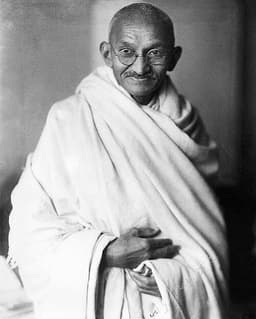
Mahatma Gandhi
Politician · Modern
68.7Total
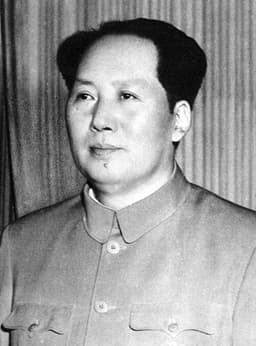
Mao Zedong
Politician · Modern
79.4Total
Basic Information
Born
1869
1893
Died
1948
1976
Era
Modern
Modern
Nationality
India
China
Occupation
Politician
Politician
Civilization
Indian
Eastern
Score Comparison
Military (10%)
42.3
75.0
Political (20%)
65.0
88.0
Influence (20%)
80.0
85.0
Legacy (20%)
75.0
70.0
Leadership (15%)
70.0
85.0
Strategy (15%)
55.0
72.0
TOTAL
68.7
79.4
Mahatma Gandhi — Complete Timeline
1917 AD
Champaran SatyagrahaPolitical Action
Gandhi led his first nonviolent protest in India, supporting indigo farmers in Champaran, Bihar, against exploitative British planters. He organized a campaign of civil disobedience and negotiations, resulting in the abolition of the oppressive tinkathia system.
Civil disobedienceFarmers' rightsBritish Raj
Impact: nationalprogressive
1919 AD
Jallianwala Bagh massacre aftermathPolitical Action◆ Major
After British troops killed hundreds of unarmed civilians in Amritsar, Gandhi organized a nationwide hartal (strike) and nonviolent protests. He returned his medals and launched the Rowlatt Satyagraha, marking a shift from cooperation to non-cooperation with British rule.
ProtestBritish RajMassacre
Impact: nationaltragic
1930 AD
Salt MarchPolitical Action
Gandhi led a 240-mile march from Sabarmati to Dandi, Gujarat, to defy the British salt monopoly. Thousands joined him, making salt from seawater. This act of civil disobedience sparked mass protests across India and drew global attention to the independence movement.
Civil disobedienceSalt taxIndependence movement
Impact: globalprogressive
1942 AD
Quit India Movement launchPolitical Action◆ Major
Gandhi launched the Quit India Movement, calling for an end to British rule with the slogan 'Do or Die'. The British arrested him and other leaders, but the movement led to widespread protests and repression, accelerating the end of colonial rule.
IndependenceCivil disobedienceBritish Raj
Impact: nationalprogressive
1948 AD
AssassinationPolitical Action
Gandhi was shot and killed by Nathuram Godse, a Hindu nationalist, during a prayer meeting in New Delhi. His assassination shocked the world and led to a wave of grief and violence, but also reinforced his legacy as a martyr for nonviolence.
AssassinationMartyrdomNonviolence
Impact: globaltragic
Mao Zedong — Complete Timeline
1934 AD
Long MarchWar
Mao Zedong led the Chinese Red Army on a strategic retreat from Nationalist forces, covering approximately 6,000 miles over 370 days. The march solidified Mao's leadership within the Chinese Communist Party and became a foundational myth of the Communist revolution.
Chinese Civil WarCommunist RevolutionRetreat
Impact: national
1949 AD
Proclamation of the People's Republic of ChinaPolitical Action
Mao Zedong declared the founding of the People's Republic of China from Tiananmen Gate in Beijing. This ended the Chinese Civil War and established Communist rule over mainland China, with Mao as Chairman of the Central People's Government.
Founding of PRCCommunist VictoryRevolution
Impact: global
1958 AD
Great Leap ForwardReform◆ Major
Mao launched a campaign to rapidly industrialize China and collectivize agriculture. The policy led to widespread mismanagement, resulting in a famine that caused an estimated 15-45 million deaths between 1959 and 1961.
FamineIndustrializationCollectivization
Impact: nationaldestructive
1960 AD
Sino-Soviet SplitPolitical Action◆ Major
Mao's ideological differences with Soviet leader Nikita Khrushchev led to a breakdown in relations between China and the Soviet Union. The split ended the Sino-Soviet alliance and reshaped global Cold War dynamics, with China pursuing an independent path.
Cold WarIdeological ConflictAlliance Breakdown
Impact: global
1966 AD
Cultural RevolutionPolitical Action
Mao initiated a sociopolitical movement to purge capitalist and traditional elements from Chinese society. The Red Guard youth groups attacked intellectuals and officials, leading to widespread violence, destruction of cultural artifacts, and an estimated 1-2 million deaths.
Political PurgeSocial UpheavalRed Guard
Impact: nationaldestructive
1971 AD
Ping-Pong DiplomacyCultural◆ Major
Mao approved an invitation for the U.S. table tennis team to visit China, initiating a thaw in Sino-American relations. This cultural exchange paved the way for President Nixon's visit to China in 1972 and the eventual normalization of diplomatic ties.
DiplomacyU.S.-China RelationsCultural Exchange
Impact: globalconstructive
Expert Analysis
Mao Zedong vs Mahatma Gandhi
The Saint and the Sovereign
On a sweltering March morning in 1930, a frail man in a loincloth bent down to scoop a handful of salt from the Arabian Sea. Thousands watched in silence, then erupted in cheers. Half a world away and two decades later, another man stood atop the Gate of Heavenly Peace in Beijing, his voice booming across a sea of red flags as he declared a new nation born in revolution. One man’s weapon was salt; the other’s, steel. Gandhi and Mao: the apostle of nonviolence and the architect of total war. Both sought to free their peoples from centuries of humiliation. But while one dreamed of a moral awakening, the other built a state on ashes. What drove these two titans down such divergent paths?
Origins
Gandhi was born in 1869 in coastal Gujarat, into a devout Hindu family of modest means. His father was a local administrator; his mother, a deeply religious woman who instilled in him the principle of *ahimsa*—non-harm. Gandhi was an unremarkable student, shy and fearful, who found his voice only after traveling to London to study law. The British Empire, at its zenith, shaped his early worldview: he wanted to be an English gentleman, until a train conductor in South Africa threw him off a first-class carriage because of his skin color. That moment of humiliation crystallized his life’s mission.
Mao was born in 1893 in Shaoshan, a village in Hunan province, to a wealthy peasant family. His father was a harsh, calculating man who beat him; his mother, a gentle counterweight. Mao devoured Chinese classics and romantic novels of rebellion, from the Water Margin to the Romance of the Three Kingdoms. He left home at sixteen to study in Changsha, where he first encountered Western ideas—Darwin, Rousseau, Marx. While Gandhi was shaped by Victorian liberalism and Hindu piety, Mao was forged in the brutal chaos of a collapsing empire, where warlords and foreign powers carved China into pieces.
Rise to Power
Gandhi’s path was slow, incremental, almost accidental. After two decades in South Africa organizing the Indian community against racial laws, he returned to India in 1915. He had no party, no army, no money. His first victory came in 1917 in Champaran, where he led a nonviolent protest on behalf of indigo farmers forced into exploitative contracts. The British, baffled by a man who refused to fight, conceded. From that turning point, Gandhi built a movement not on ideology but on moral suasion. The Jallianwala Bagh massacre of 1919, where British troops killed hundreds of unarmed civilians, radicalized him. He called for a nationwide strike, and millions responded.
Mao’s rise was forged in blood. He was present at the founding of the Chinese Communist Party in 1921, but spent years on the margins, arguing that revolution must come from the countryside, not the cities. When the Nationalists turned on the Communists in 1927, Mao fled to the mountains, building a guerrilla army from peasants. The Long March of 1934—a 6,000-mile retreat through some of the world’s harshest terrain—cemented his leadership. Only 8,000 of the 80,000 who started survived. But Mao emerged as the undisputed leader of a hardened revolutionary core. While Gandhi won by converting his enemy, Mao won by outlasting him.
Leadership & Governance
Gandhi governed through example. He wore homespun cloth to boycott British textiles, fasted to stop Hindu-Muslim riots, and walked barefoot to the sea to defy the salt monopoly. His Salt March of 1930 was a masterpiece of political theater: a 240-mile walk that drew the world’s attention and demonstrated that the British could arrest millions but could not jail an idea. His philosophy of *Satyagraha*—truth-force—insisted that means and ends were inseparable. You could not build a free society through violence, he argued, because violence would corrupt the freedom you sought.
Mao governed through upheaval. He believed that power grew from the barrel of a gun, and that revolution required constant struggle. After proclaiming the People’s Republic in 1949, he launched the Great Leap Forward in 1958, a crash industrialization program that collectivized farms and forced peasants to produce steel in backyard furnaces. The result was catastrophic: mismanagement and famine killed an estimated 20 to 45 million people. Mao later admitted the policy had been “70 percent good, 30 percent bad”—a cold calculus of suffering. The Cultural Revolution, begun in 1966, was his most radical act: he turned China’s youth into Red Guards, unleashing them to purge “bourgeois” elements from society. Millions were persecuted, humiliated, or killed.
Triumph & Tragedy
Gandhi’s greatest moment was also his deepest failure. In 1947, India won independence, but at the cost of partition. The subcontinent split into Hindu-majority India and Muslim-majority Pakistan, triggering one of history’s largest and bloodiest migrations. Gandhi, who had dreamed of a united, pluralistic India, wept as trains arrived packed with corpses. He spent his final months fasting and walking through riot-torn villages, trying to stop the killing. On January 30, 1948, a Hindu nationalist named Nathuram Godse shot him three times at a prayer meeting. Gandhi’s last words were “Hey Ram”—O God.
Mao’s triumph was the unification of China after a century of chaos. He had driven out the Japanese, defeated the Nationalists, and stood up to both the United States and the Soviet Union. But his tragedy was the price of that unity. The Great Leap Forward and Cultural Revolution left deep scars on Chinese society, destroying families, institutions, and lives. By the time of his death in 1976, China was exhausted, isolated, and impoverished. Yet Mao also opened the door to the world: in 1971, his Ping-Pong Diplomacy with the United States began the thaw that would eventually transform China into a global power.
Character & Destiny
Gandhi was a man of radical humility. He lived in ashrams, cleaned latrines, and tested his celibacy by sleeping next to naked women. His self-discipline was legendary, but it also made him rigid. He could not compromise on nonviolence, even when it meant accepting partition. His moral absolutism was his strength and his prison.
Mao was a man of radical ambition. He read history as a cycle of rebellion and consolidation, and he saw himself as a new emperor, but one who would break the cycle forever. He was ruthless, charismatic, and capable of immense cruelty—yet also of genuine charm. He wrote poetry about snow and revolution, and he loved swimming in the Yangtze River. His personality was a furnace: it could forge a nation or incinerate it.
Legacy
Gandhi left a philosophy that outlived him. Martin Luther King Jr. carried his torch in the American civil rights movement; Nelson Mandela invoked him in the struggle against apartheid. Today, Gandhi’s image adorns currency and statues worldwide, but his message of nonviolence feels fragile in an age of drone strikes and ethnic cleansing. His legacy is a question: can moral power truly overcome force?
Mao left a nation transformed. China is a superpower today because of the foundation he laid, for better and worse. His image still hangs in Tiananmen Square, but his policies are remembered with ambivalence. The Chinese Communist Party honors him as a founder, while quietly distancing itself from his excesses. His legacy is a paradox: the man who fought for the people, but whose policies crushed them.
Conclusion
Gandhi and Mao represent two poles of the human struggle for freedom. One believed that the oppressed must purify themselves to win justice. The other believed that the oppressed must seize power at any cost. Both succeeded beyond measure, and both failed in ways that haunt us still. Their stories remind us that the path to liberation is never pure, and that every victory carries the seed of a new tragedy. In the end, we are left with a choice not between good and evil, but between different kinds of sacrifice—and different kinds of hope.
Rankings
🥇
Mao ZedongLeader
Mil: 75.0Pol: 88.0Inf: 85.0
79.4
🥈
Mahatma Gandhi
Mil: 42.3Pol: 65.0Inf: 80.0
68.7
+10.7 behind
How This Comparison Works
Algorithm
Each figure is scored on 6 dimensions (0—100 scale) based on structured historical data: Military (10%), Political (20%), Influence (20%), Legacy (20%), Leadership (15%), Strategy (15%). The weighted total produces the final ranking.
Data Sources
Scores are computed from structured sub-indicators in the database. Scale factors adjust for era (Ancient ×0.85, Modern ×1.0) and civilization size (Eastern ×1.05, Other ×0.80) to account for differences in population and military scale.
Maximum 3 Figures
Comparisons are limited to 2—3 figures to ensure readability and statistical meaningfulness.
Error Margins
±5 points per dimension — Sub-scores are derived from historical records with inherent uncertainty. Two figures within 5 points on a dimension should be considered roughly equivalent in that area.
Total Score Accuracy
±3 points overall — The weighted combination of 6 dimensions produces a total score with approximately ±3 points of uncertainty. Differences of less than 3 points are not statistically significant— the figures are effectively tied.
Known Limitations
- Historical records are incomplete and uneven across civilizations
- Figures from oral-tradition societies may be underrepresented
- Occupation labels can misclassify multi-role figures
- Scores measure capability and impact, not moral character
- Quantitative scoring is a comparison tool, not absolute truth
Capability Radar
Military (10%) — Battles & Warfare
Battles
45
85
Win Rate
46
80
Expansion
51
85
Political (20%) — Governance & Reform
Reform
85
95
Diplomacy
80
80
Economy
40
70
Influence (20%) — Cultural & Global Reach
Cultural
85
90
Global
90
90
Legacy (20%) — Historical Impact
Historical
90
95
Longevity
85
85
Leadership (15%) — Power & Stability
Tenure
60
95
Stability
55
60
Strategy (15%) — Tactics & Innovation
Strategy
52
85
Tactics
56
75
Reform
55
90
Similar Comparisons
Comments & Discussion
The Salt Man vs the Steel Drag6/16/2026
As a military historian, it's absurd to compare the two. Gandhi's 241-mile march to Dandi was a masterclass in asymmetric psychological warfare, but Mao's Long March of 6,000 miles forged the Red Army into a fighting force that would eventually humble the US in Korea. Gandhi never commanded a single division; Mao commanded the largest standing army in the world. Nonviolence is a tactic, not a strategy—ask the Dalits. Mao understood that the dialectic of history moves through force.
盐之圣徒与钢之暴君6/16/2026
作为一个冷战史研究者,我认为这两人根本就没法比。甘地领导的独立运动用了30年,整体死亡人数大约几十万;而毛主导的土地改革、大跃进和文化大革命,保守估计造成了三千万到五千万的意外死亡。甘地强调“非暴力不合作”,毛却鼓吹“革命不是请客吃饭”。我看甘地更像是个活菩萨,而毛更像是中国版的斯大林。别跟我扯什么苦难辉煌,数据摆在那儿,谁更值得尊敬一目了然。
The Mahatma and the Great Helm6/16/2026
From a classics scholar's lens, both men were highly creative in their myth-making. Gandhi reinvented ancient Hindu concepts like *satyagraha* (truth-force) and *swaraj* (self-rule) for modern political ends, drawing from Tolstoy and Thoreau. Mao rejected classical Confucian traditions but wrote lyric poems like "Snow" that celebrate the Qin emperor and Genghis Khan as models of conquerors. Gandhi's Gita was nonviolent; Mao's Sixteen Character Formula was guerrilla war. One sought to purify trad
非暴力之圣与革命之神6/16/2026
从一个历史爱好者的角度看,甘地和毛都是神级的人物,但路子完全相反。毛在延安整风时期亲自审问王实味,然后下令毙了他;甘地却因为反对种姓制度被一个印度教狂热分子枪杀,临死前还说“原谅他”。你敢信?一个把敌人逼到忏悔,一个把敌人感动到后悔。不过说真的,如果毛是甘地,新中国可能还是半殖民地;如果甘地是毛,印度可能早就打内战了。
The Data Skeptic's Dilemma6/16/2026
Let's cut through the hero worship. Gandhi's impact on GDP per capita? Near zero. India was still a basket case when he died. Mao industrialized China from 2% to 37% share of global GDP in two decades, albeit at catastrophic human cost. The ethical calculus is brutal. Do we value more lives saved via slower change, or rapid transformation that kills millions? Gandhi's salt tax protest yielded immediate results; Mao's steel campaigns created factories but buried families. There's no clean moral v