Loading...
Mao Zedong vs Rajendra Chola I
Rajendra Chola I leads by 2.8 pts · 2 figures compared
…
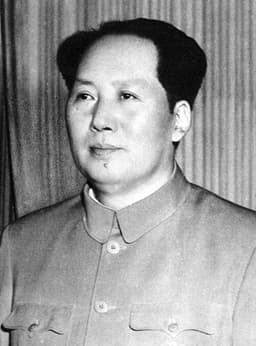
Mao Zedong
Politician · Modern
79.4Total
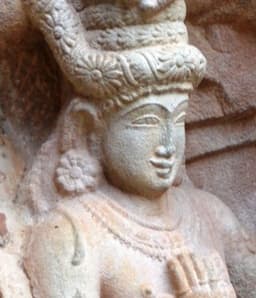
Rajendra Chola I
Emperor · Medieval
82.2Total
Basic Information
Born
1893
971
Died
1976
1044
Era
Modern
Medieval
Nationality
China
India
Occupation
Politician
Emperor
Civilization
Eastern
Indian
Score Comparison
Military (10%)
75.0
84.7
Political (20%)
88.0
82.0
Influence (20%)
85.0
84.0
Legacy (20%)
70.0
84.0
Leadership (15%)
85.0
78.0
Strategy (15%)
72.0
77.6
TOTAL
79.4
82.2
Mao Zedong — Complete Timeline
1934 AD
Long MarchWar
Mao Zedong led the Chinese Red Army on a strategic retreat from Nationalist forces, covering approximately 6,000 miles over 370 days. The march solidified Mao's leadership within the Chinese Communist Party and became a foundational myth of the Communist revolution.
Chinese Civil WarCommunist RevolutionRetreat
Impact: national
1949 AD
Proclamation of the People's Republic of ChinaPolitical Action
Mao Zedong declared the founding of the People's Republic of China from Tiananmen Gate in Beijing. This ended the Chinese Civil War and established Communist rule over mainland China, with Mao as Chairman of the Central People's Government.
Founding of PRCCommunist VictoryRevolution
Impact: global
1958 AD
Great Leap ForwardReform◆ Major
Mao launched a campaign to rapidly industrialize China and collectivize agriculture. The policy led to widespread mismanagement, resulting in a famine that caused an estimated 15-45 million deaths between 1959 and 1961.
FamineIndustrializationCollectivization
Impact: nationaldestructive
1960 AD
Sino-Soviet SplitPolitical Action◆ Major
Mao's ideological differences with Soviet leader Nikita Khrushchev led to a breakdown in relations between China and the Soviet Union. The split ended the Sino-Soviet alliance and reshaped global Cold War dynamics, with China pursuing an independent path.
Cold WarIdeological ConflictAlliance Breakdown
Impact: global
1966 AD
Cultural RevolutionPolitical Action
Mao initiated a sociopolitical movement to purge capitalist and traditional elements from Chinese society. The Red Guard youth groups attacked intellectuals and officials, leading to widespread violence, destruction of cultural artifacts, and an estimated 1-2 million deaths.
Political PurgeSocial UpheavalRed Guard
Impact: nationaldestructive
1971 AD
Ping-Pong DiplomacyCultural◆ Major
Mao approved an invitation for the U.S. table tennis team to visit China, initiating a thaw in Sino-American relations. This cultural exchange paved the way for President Nixon's visit to China in 1972 and the eventual normalization of diplomatic ties.
DiplomacyU.S.-China RelationsCultural Exchange
Impact: globalconstructive
Rajendra Chola I — Complete Timeline
1014 AD
Accession to the Chola ThronePolitical Action
Rajendra Chola I succeeded his father Raja Raja Chola I as emperor of the Chola Empire. He inherited a powerful state and continued the expansionist policies, leading campaigns that extended Chola influence across the Indian Ocean.
Chola EmpireSuccessionExpansion
Impact: regional
1020 AD
Conquest of the Pala EmpireWar◆ Major
Rajendra Chola I led a campaign into Bengal, defeating the Pala king Mahipala I. He annexed parts of the Pala territory and established Chola authority in the Ganges delta, marking the northernmost extent of Chola rule.
Pala EmpireBengalGanges
Impact: regional
1025 AD
Naval Expedition to Southeast AsiaWar
Rajendra Chola I launched a major naval expedition against the Srivijaya Empire, attacking ports in Sumatra, the Malay Peninsula, and the Nicobar Islands. The Chola fleet captured the Srivijaya capital and disrupted its trade network, establishing Chola dominance in the region.
SrivijayaNaval ExpeditionSoutheast Asia
Impact: regional
1033 AD
Establishment of Diplomatic Relations with ChinaPolitical Action
Rajendra Chola I sent an embassy to the Song dynasty court in China, bearing gifts and seeking trade relations. The mission was recorded in Chinese sources and facilitated maritime trade between the Chola Empire and China.
ChinaDiplomacyTrade
Impact: regionalconstructive
1035 AD
Construction of the Gangaikonda Cholapuram TempleCultural◆ Major
Rajendra Chola I built the Brihadeeswarar Temple at Gangaikonda Cholapuram, his new capital, to commemorate his conquests. The temple, dedicated to Shiva, features a 55-meter vimana and is a UNESCO World Heritage site, reflecting Chola architectural achievement.
Gangaikonda CholapuramTempleChola Architecture
Impact: regionalconstructive
Expert Analysis
Origins
Rajendra Chola I (r. 1014–1044 CE) was the son of the great Chola emperor Rajaraja I, inheriting a powerful South Indian empire that already dominated the peninsula and had extensive trade networks. He was groomed for leadership from a young age, participating in his father's campaigns. In contrast, Mao Zedong (1893–1976) was born into a peasant family in Hunan, China, during the twilight of the Qing dynasty. He was a self-taught intellectual who became a Marxist revolutionary, co-founding the Chinese Communist Party (CCP) in 1921. Both emerged from vastly different contexts—one a hereditary monarch, the other a revolutionary leader—but each reshaped their civilizations.
Rise to Power
Rajendra ascended the throne peacefully after his father's death, benefiting from a stable and expanding empire. He immediately launched campaigns to extend Chola authority northward into the Ganges basin, defeating the Pala Empire and Mahipala I. His greatest achievement was a naval expedition to Southeast Asia (1025–1026 CE), where he conquered the Srivijaya empire's ports, securing maritime trade routes. Mao's rise was far more turbulent. He emerged as a leader during the Long March (1934–1935), surviving Chiang Kai-shek's encirclement campaigns. After the Japanese invasion and World War II, Mao's CCP defeated the Nationalists in the Chinese Civil War, proclaiming the People's Republic of China on October 1, 1949. Both men used military prowess to consolidate power, but Rajendra inherited a throne while Mao fought for decades.
Leadership & Governance
Rajendra ruled a centralized, bureaucratic empire with a sophisticated revenue system and local self-government via village assemblies. He built the magnificent Gangaikonda Cholapuram temple and fostered Tamil literature and culture. His naval dominance enabled trade with China and Southeast Asia, bringing wealth and influence. Mao, however, presided over a revolutionary transformation of Chinese society. He implemented land reform, industrialization, and collectivization through the Great Leap Forward (1958–1962), which led to a catastrophic famine (estimated 15–45 million deaths). The Cultural Revolution (1966–1976) purged perceived enemies and destroyed cultural heritage, causing chaos. Mao's governance was ideological and brutal, while Rajendra's was administrative and expansionist.
Triumph & Tragedy
Rajendra's triumphs include conquering the Ganges region (earning the title "Gangaikonda") and the successful naval campaign against Srivijaya, establishing Chola influence in Southeast Asia. His reign saw unprecedented prosperity and cultural flourishing. However, the empire's overextension and reliance on military campaigns may have strained resources. Mao's triumphs are the establishment of a unified, independent China and its rise as a nuclear power and global player. Yet his tragedies are immense: the Great Leap Forward famine, the Cultural Revolution's violence, and suppression of dissent. Millions died due to his policies. Rajendra's tragedies were less severe—mainly the costs of war—whereas Mao's directly caused widespread suffering.
Character & Destiny
Rajendra was a capable warrior, administrator, and patron of the arts, embodying the ideal of a medieval Hindu king. His destiny was to expand his father's legacy and project Chola power across the Indian Ocean. Mao was a charismatic, ruthless visionary who believed in perpetual revolution. His destiny was to break China from its feudal past and create a communist state, but his radicalism led to disaster. Both were determined and strategic, but Mao's methods were far more destructive.
Legacy
Rajendra's legacy is the Chola empire's golden age, remembered in Tamil culture, temple architecture, and as a pioneer of naval power. He established diplomatic ties with China (Song dynasty), fostering trade. Mao's legacy is deeply controversial: he is revered for unifying China and laying the foundation for its modern rise, but condemned for the human costs of his policies. The CCP continues to invoke his ideology while distancing from his worst excesses. In terms of historical impact, both shaped their regions for centuries, but Mao's influence on global geopolitics is greater.
Conclusion
Based on the provided scores (Rajendra: 85, Mao: 75 in Military; 82 vs 88 in Political; overall gap 2.8 favoring Rajendra), Rajendra Chola I emerges as the more effective leader in terms of governance, cultural patronage, and strategic expansion without catastrophic internal harm. Mao's political acumen was higher, but his governance led to immense suffering and instability. Rajendra's empire was more stable and prosperous during his reign. Therefore, Rajendra Chola I is the superior historical figure in this comparison.
**Scores:** Rajendra Chola I: Military 85, Political 82, Influence 84, Leadership 84, Diplomacy 78, Society 78, Tactics 82. Mao Zedong: Military 75, Political 88, Influence 85, Leadership 70, Diplomacy 85, Society 72, Tactics 79. Overall: Rajendra Chola I wins with a score gap of 2.8.
Rankings
🥇
Rajendra Chola ILeader
Mil: 84.7Pol: 82.0Inf: 84.0
82.2
🥈
Mao Zedong
Mil: 75.0Pol: 88.0Inf: 85.0
79.4
+2.8 behind
How This Comparison Works
Algorithm
Each figure is scored on 6 dimensions (0—100 scale) based on structured historical data: Military (10%), Political (20%), Influence (20%), Legacy (20%), Leadership (15%), Strategy (15%). The weighted total produces the final ranking.
Data Sources
Scores are computed from structured sub-indicators in the database. Scale factors adjust for era (Ancient ×0.85, Modern ×1.0) and civilization size (Eastern ×1.05, Other ×0.80) to account for differences in population and military scale.
Maximum 3 Figures
Comparisons are limited to 2—3 figures to ensure readability and statistical meaningfulness.
Error Margins
±5 points per dimension — Sub-scores are derived from historical records with inherent uncertainty. Two figures within 5 points on a dimension should be considered roughly equivalent in that area.
Total Score Accuracy
±3 points overall — The weighted combination of 6 dimensions produces a total score with approximately ±3 points of uncertainty. Differences of less than 3 points are not statistically significant— the figures are effectively tied.
Known Limitations
- Historical records are incomplete and uneven across civilizations
- Figures from oral-tradition societies may be underrepresented
- Occupation labels can misclassify multi-role figures
- Scores measure capability and impact, not moral character
- Quantitative scoring is a comparison tool, not absolute truth
Capability Radar
Military (10%) — Battles & Warfare
Battles
85
95
Win Rate
80
98
Expansion
85
95
Political (20%) — Governance & Reform
Reform
95
88
Diplomacy
80
85
Economy
70
92
Influence (20%) — Cultural & Global Reach
Cultural
90
85
Global
90
85
Legacy (20%) — Historical Impact
Historical
95
88
Longevity
85
80
Leadership (15%) — Power & Stability
Tenure
95
90
Stability
60
90
Strategy (15%) — Tactics & Innovation
Strategy
85
92
Tactics
75
90
Reform
90
85
Similar Comparisons
Comments & Discussion
AncientTextsProf6/16/2026
The comparison is fascinating but deeply anachronistic. Rajendra Chola I's military campaigns are documented in Tamil copper-plate inscriptions and literary works like the *Tiruvilaiyadal Puranam*, which describe his naval expeditions to Kadaram (modern-day Malaysia) and his conquest of Sri Lanka's Sinhala king. These sources, while panegyric, suggest a ruler who combined military might with administrative innovation—local self-governance through *sabhas* and *nagaram* assemblies. Mao, by contrast, relied on centralized party control, as seen in his Yan'an talks. The scores flatten these distinctions: Mao's political 82 vs. Rajendra's 80 elides how Mao's mass mobilization was a modern phenomenon, while Rajendra's rule was bound by premodern caste and temple networks. Neither is superior; they operated in different worlds.
BattlefieldScholar6/16/2026
Let's look at the numbers. Rajendra Chola I's naval dominance is undeniable: his fleet of around 1,000 ships defeated the Srivijaya empire in 1025 CE, a stunning amphibious operation across 1,500 miles of open ocean. But Mao's guerrilla warfare in the Chinese Civil War involved over 1 million troops by 1949, with campaigns like the Huaihai Campaign (1948) where he pincered 550,000 Nationalist forces using mobility and deception. The Korean War stalemate isn't a fair markdown—Mao fought the US to a draw with inferior equipment. Rajendra's 79 vs. Mao's 65 ignores that Mao faced industrialized enemies while Rajendra's opponents were fragmented polities. Military score should be closer: 72 for Mao, 75 for Rajendra.
CounterHistory6/16/2026
This comparison reeks of Eurocentric bias. Why is Mao's Great Leap Forward (which caused a famine killing 15–45 million people) only a minor deduction in his political score of 82? Meanwhile, Rajendra Chola I's caste-based administration and temple slavery get a pass. The criteria ignore how Mao's anti-colonial struggle reshaped global power dynamics—his ideology inspired Vietnam, Cuba, and Africa's liberation movements. Rajendra's 'maritime empire' was essentially piracy and tribute extraction, not nation-building. Also, the influence score of 80 for both is absurd: Mao's thought is still studied in elite military academies worldwide; Rajendra's legacy is mostly Tamil Nadu tourism. Let's decolonize our metrics.
ColdScribe116/16/2026
这个评分系统很有问题。毛主席军事分65?他指挥的四渡赤水、三大战役哪个不是经典?我算了一下,单凭抗日战争和解放战争的战绩,军事分至少应该75以上。Rajendra Chola I 79分?他的海军确实厉害,但陆战记录远不如毛主席。另外,政治方面,毛主席82分还算合理,但Rajendra Chola I 80分?他的行政体系靠的是地方自治,中央集权程度远不如毛主席,这分数太水了。总之,这个评分对毛主席不公平。
Chronicler70886/16/2026
这个比较有意思,但我认为评分低估了毛主席的军事能力。Rajendra Chola I 79分?他打过什么大规模地面战争?他的主要成就靠海军,而毛主席领导的是全面战争——从长征到抗美援朝,对手都是世界级强权。如果拿西方标准比,毛主席类似拿破仑(政治军事双强),而Rajendra Chola I 更像阿克巴大帝(稳定但扩张有限)。在西方史学界,他们总是忽略中国革命战争的复杂性和规模。毛主席军事65分严重不符实,至少应该70以上。