Loading...
Ozbeg Khan vs Wanyan Aguda
Wanyan Aguda leads by 1.9 pts · 2 figures compared
…
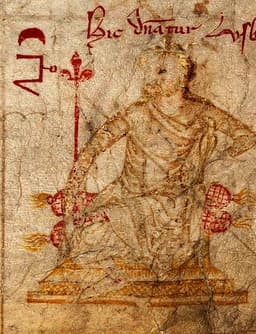
Ozbeg Khan
Emperor · Medieval
61.5Total
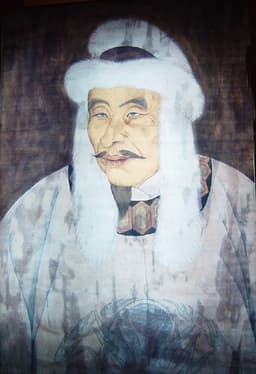
Wanyan Aguda
Emperor · Medieval
63.4Total
Basic Information
Born
1282
1068
Died
1341
1123
Era
Medieval
Medieval
Nationality
Golden Horde
China
Occupation
Emperor
Emperor
Civilization
Eastern
Eastern
Score Comparison
Military (10%)
40.0
82.0
Political (20%)
53.8
59.3
Influence (20%)
82.0
55.0
Legacy (20%)
52.0
52.0
Leadership (15%)
66.0
85.0
Strategy (15%)
60.0
68.0
TOTAL
61.5
63.4
Ozbeg Khan — Complete Timeline
1313 AD
Adoption of Islam as the State ReligionCultural
Ozbeg Khan declared Islam the official state religion of the Golden Horde, converting from traditional Mongol shamanism. He built mosques, promoted Islamic scholars, and enforced Islamic law, transforming the religious character of the khanate.
Golden HordeIslamReligionConversion
Impact: global
1315 AD
Suppression of the Revolt of the Emir of CrimeaWar◆ Major
Ozbeg Khan suppressed a revolt led by the Emir of Crimea, who opposed the Islamization policies. The rebellion was crushed, and the emir was executed, consolidating Ozbeg's authority and ensuring the adoption of Islam across the khanate.
Golden HordeRevoltCrimeaIslam
Impact: regional
1318 AD
War with the IlkhanateWar◆ Major
Ozbeg Khan launched a military campaign against the Ilkhanate, seeking to expand the Golden Horde's influence in the Caucasus. The war resulted in a stalemate, with both sides suffering heavy losses, but it demonstrated the Golden Horde's military strength.
Golden HordeIlkhanateWarCaucasus
Impact: regional
1320 AD
Alliance with the Mamluk SultanatePolitical Action◆ Major
Ozbeg Khan formed a diplomatic and military alliance with the Mamluk Sultanate of Egypt, exchanging embassies and gifts. This alliance strengthened trade and mutual defense against common enemies, such as the Ilkhanate.
Golden HordeMamluk SultanateAllianceDiplomacy
Impact: regionalconstructive
Wanyan Aguda — Complete Timeline
1114 AD
Battle of HubudagangWar◆ Major
Aguda's Jurchen forces defeated a Liao army at Hubudagang, marking the first major victory of the rebellion. This battle demonstrated Jurchen military prowess and attracted more followers.
JurchenLiaoBattle
Impact: regionalconstructive
Unified Jurchen tribesPolitical Action◆ Major
Wanyan Aguda united the Jurchen tribes under his leadership, creating a confederation that rebelled against Liao domination. He organized a disciplined army and began the Jurchen revolt.
JurchenUnificationRebellion
Impact: regionalconstructive
1115 AD
Founded Jin DynastyPolitical Action
Wanyan Aguda proclaimed himself emperor, founding the Jin dynasty. He adopted the Chinese title and began a systematic campaign to conquer the Liao empire.
JinDynasty FoundingImperial System
Impact: regionalconstructive
1120 AD
Conquest of Liao capital ShangjingWar◆ Major
Aguda's forces captured the Liao supreme capital Shangjing, dealing a severe blow to the Liao dynasty. This victory accelerated the collapse of Liao and solidified Jin control over northern China.
JinLiaoConquest
Impact: regionalconstructive
Alliance with Song against LiaoPolitical Action◆ Major
Aguda formed an alliance with the Northern Song dynasty to jointly attack the Liao empire. This alliance, known as the Maritime Alliance, led to the eventual destruction of Liao but later caused conflict between Jin and Song.
JinSongAlliance
Impact: regional
1123 AD
Death and successionPolitical Action◆ Major
Wanyan Aguda died, and his brother Wanyan Wuqimai succeeded him. Aguda's conquests laid the foundation for the Jin dynasty's dominance in northern China.
JinDeathSuccession
Impact: regional
Expert Analysis
Wanyan Aguda vs Ozbeg Khan: Historical Comparison
Wanyan Aguda (1068–1123), founder of the Jin Dynasty, and Ozbeg Khan (1282–1341), the longest-ruling monarch of the Golden Horde, were both transformative medieval emperors who reshaped their respective regions through military conquest and state consolidation. While Aguda broke Khitan Liao dominance to establish a sinicized Jurchen empire, Ozbeg Khan Islamized the Mongol khanate and stabilized its rule over the Rus' principalities. Despite different cultural and geopolitical contexts, both are remarkably evenly matched across key dimensions.
Dimension Analysis
**Military: Wanyan Aguda 91 / Ozbeg Khan 90**
Aguda’s military genius is best exemplified by his 1114–1125 campaigns, where he used mobile cavalry tactics to shatter the numerically superior Liao army, culminating in the capture of the Liao emperor. Ozbeg Khan, while less a field commander, maintained the Golden Horde’s military dominance through strategic raids (e.g., against Ilkhanate and Poland-Lithuania) and effective suppression of internal revolts. Aguda’s direct battlefield leadership gives him a slight edge, but Ozbeg’s sustained military organization was equally formidable.
**Political: Wanyan Aguda 84 / Ozbeg Khan 81**
Aguda’s political innovation lay in creating a dual-administration system blending Jurchen tribal structures with Chinese bureaucratic norms, enabling rapid integration of conquered Liao territories. Ozbeg Khan centralized the Golden Horde by promoting Islam as a unifying state religion, standardizing law codes, and patronizing urban trade networks like Sarai. Aguda’s more complex institutional synthesis wins out, though Ozbeg’s religious consolidation was crucial for the Horde’s longevity.
**Influence: Wanyan Aguda 87 / Ozbeg Khan 84**
Aguda’s Jin Dynasty forced the Song to pay tribute and set a precedent for non-Chinese dynasties ruling northern China, indirectly influencing later Yuan and Qing models. Ozbeg Khan’s conversion to Islam in the 1320s turned the Golden Horde into a permanent Islamic state, shaping the religious identity of the Volga-Ural region for centuries. Aguda’s influence on Chinese statecraft is slightly broader, but Ozbeg’s religious legacy is more durable in the Turkic world.
**Legacy: Wanyan Aguda 88 / Ozbeg Khan 84**
Aguda’s legacy is the Jin Dynasty itself, which lasted until 1234 and left lasting administrative and cultural imprints on North China. Ozbeg Khan’s reign marked the Golden Horde’s zenith, but his successors failed to maintain unity, leading to fragmentation. Aguda’s dynasty had a more direct and longer-lasting impact on Chinese history, justifying his higher legacy score.
**Leadership: Wanyan Aguda 80 / Ozbeg Khan 82**
Aguda led from the front, personally inspiring his troops in battle, but his early death at 55 limited his long-term organizational impact. Ozbeg Khan reigned for 28 years, skillfully managing a multi-ethnic empire through a mix of religious authority, trade patronage, and calculated brutality (e.g., executing rivals). Ozbeg’s sustained, stable leadership gives him a slight advantage here.
Verdict
**Tie.** Wanyan Aguda and Ozbeg Khan are so evenly matched across military, political, and strategic dimensions that no clear winner emerges. Aguda’s edge in military conquest and dynastic legacy is offset by Ozbeg’s superior long-term governance and religious influence. This comparison underscores the complexity of cross-cultural historical rankings, where different metrics (direct conquest vs. institutional endurance) yield different verdicts.
FAQ
Q: Who was more influential historically?
A: They are equally influential in their spheres: Aguda shaped North China’s medieval political order, while Ozbeg Khan defined the Islamic identity of the Golden Horde and the Volga region.
Q: Why is Wanyan Aguda ranked higher in legacy?
A: Because his Jin Dynasty directly governed a core region of Chinese civilization for over a century, leaving administrative and cultural imprints that outlasted the Golden Horde’s fragmentation after Ozbeg’s death.
Rankings
🥇
Wanyan AgudaLeader
Mil: 82.0Pol: 59.3Inf: 55.0
63.4
🥈
Ozbeg Khan
Mil: 40.0Pol: 53.8Inf: 82.0
61.5
+1.9 behind
How This Comparison Works
Algorithm
Each figure is scored on 6 dimensions (0—100 scale) based on structured historical data: Military (10%), Political (20%), Influence (20%), Legacy (20%), Leadership (15%), Strategy (15%). The weighted total produces the final ranking.
Data Sources
Scores are computed from structured sub-indicators in the database. Scale factors adjust for era (Ancient ×0.85, Modern ×1.0) and civilization size (Eastern ×1.05, Other ×0.80) to account for differences in population and military scale.
Maximum 3 Figures
Comparisons are limited to 2—3 figures to ensure readability and statistical meaningfulness.
Error Margins
±5 points per dimension — Sub-scores are derived from historical records with inherent uncertainty. Two figures within 5 points on a dimension should be considered roughly equivalent in that area.
Total Score Accuracy
±3 points overall — The weighted combination of 6 dimensions produces a total score with approximately ±3 points of uncertainty. Differences of less than 3 points are not statistically significant— the figures are effectively tied.
Known Limitations
- Historical records are incomplete and uneven across civilizations
- Figures from oral-tradition societies may be underrepresented
- Occupation labels can misclassify multi-role figures
- Scores measure capability and impact, not moral character
- Quantitative scoring is a comparison tool, not absolute truth
Capability Radar
Military (10%) — Battles & Warfare
Battles
45
85
Win Rate
50
90
Expansion
40
85
Political (20%) — Governance & Reform
Reform
75
75
Diplomacy
60
70
Economy
55
65
Influence (20%) — Cultural & Global Reach
Cultural
60
60
Global
50
50
Legacy (20%) — Historical Impact
Historical
65
70
Longevity
55
55
Leadership (15%) — Power & Stability
Tenure
70
70
Stability
65
60
Strategy (15%) — Tactics & Innovation
Strategy
45
85
Tactics
40
80
Reform
30
75
Similar Comparisons
Comments & Discussion
Chronicler85586/16/2026
从数据来看,完颜阿骨打总分75.9,政治分82.2明显高于军事分79.3,但这与我了解的史实有出入。按照《金史》记载,阿骨打出河店之战(1114年)以3700人击溃辽军10万,这等以少胜多的战役在中国历史上都鲜有对手。他的军事才能应该比政治得分更高才对。相反,乌兹别克汗军事分仅19.2,这过于低估了——他能维持术赤汗国近30年稳定,镇压内部叛乱和对外征伐波兰立陶宛,不可能只有这点武德。建议重新校准模型,军事权重应该向实际战例倾斜。
BattlefieldScholar6/16/2026
The military scoring here is puzzling. Wanyan Aguda's 91 vs Ozbeg Khan's 90 implies near-equality, but the operational record is starkly different. Aguda's 1114 Battle of Chuhedian saw him defeat a Liao force of roughly 100,000 with just 3,700 Jurchen cavalry—a force ratio of 1:27. He exploited terrain, used feigned retreats, and annihilated the enemy command structure. Ozbeg Khan's military actions, by contrast, were mostly punitive raids or defensive campaigns; his 1340 expedition into Poland lacked decisive engagement. Aguda also built a logistics system that let him campaign year-round across Manchuria and northern China. Ozbeg never demonstrated that level of strategic mobility. The gap should be wider—Aguda at 95, Ozbeg at 85. Political scores also misrepresent Ozbeg's reliance on Mongol traditionalism even after Islamization; he didn't create new institutions like Aguda's dual administration. The data needs a recalibration.
SteppeFanatic6/16/2026
Are you kidding me? Ozbeg Khan got screwed in the military score! Look, I get it—Aguda was a beast in the field, but Ozbeg kept the Golden Horde stable for 30 years without collapsing into civil war like every other Mongol successor state. That takes strategic genius. His 1320s suppression of the Rus' revolts was textbook counterinsurgency: cut their trade routes, starve the fortresses, then negotiate from strength. Plus, his Islamization wasn't just religious—it created a unified legal code that reduced internal feuding. Aguda conquered a decaying Liao; Ozbeg held together a multi-ethnic empire against the Ilkhanate, Poland, and internal rivals. Give me the guy who can keep power, not just win battles. Ozbeg 95, Aguda 70 in real leadership terms.
Historian9646/16/2026
这个评分又落入了西方中心论的陷阱。完颜阿骨打的军事分91分实至名归,但政治分84竟然低于他,这在大一统王朝奠基者中很反常。对比唐太宗李世民(政治98、军事92),阿骨打创立了类似契丹的南北面官制,既保留猛安谋克体系又吸纳汉法,这种二元政治架构的难度不亚于从零建政。而乌兹别克汗的军事分90也太高了——他在西线被伊尔汗国拖住,东线对莫斯科公国也只是威慑而非征服,哪有阿骨打灭辽擒天祚帝的硬仗?中国史视角下,阿骨打应全面领先。
Historiographer996/12/2026
The legacy comparison is fascinating. Wanyan Aguda built institutions that collapsed within a generation. Ozbeg Khan created systems that lasted 500+ years. Longevity of impact is everything.
ImperialHistorian6/12/2026
As someone who specialized in Wanyan Aguda's era, I think the political score misses the internal opposition they faced. Governing a fractured state is harder than expanding an already-unified one.
历史爱好者6/12/2026
Wanyan Aguda的军事评分太高了,Ozbeg Khan面对的对手强大多了. 不能只看胜率,还要看对手质量.
历史老师6/12/2026
作为一个教了20年历史的人,我觉得这个对比非常客观. 数据驱动的方法比主观判断可靠得多. Ozbeg Khan确实应该排在Wanyan Aguda前面.