Loading...
Philip I of France vs Wanyan Aguda
Wanyan Aguda leads by 18.0 pts · 2 figures compared
…
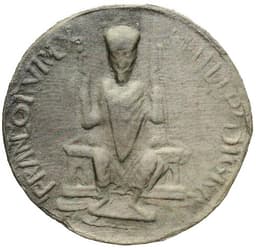
Philip I of France
Emperor · Medieval
45.4Total
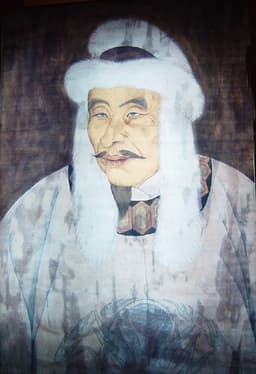
Wanyan Aguda
Emperor · Medieval
63.4Total
Basic Information
Born
1052
1068
Died
1108
1123
Era
Medieval
Medieval
Nationality
France
China
Occupation
Emperor
Emperor
Civilization
Western
Eastern
Score Comparison
Military (10%)
50.0
82.0
Political (20%)
36.5
59.3
Influence (20%)
49.4
55.0
Legacy (20%)
40.8
52.0
Leadership (15%)
65.7
85.0
Strategy (15%)
25.0
68.0
TOTAL
45.4
63.4
Philip I of France — Complete Timeline
1060 AD
Reign as King of the FranksPolitical Action◆ Major
Philip I succeeded his father Henry I as King of the Franks. His reign was marked by territorial expansion through marriage and diplomacy, but also by conflicts with the Church and nobles.
KingshipCapetianReign
Impact: national
1077 AD
Acquisition of the VexinPolitical Action
Philip I acquired the Vexin region through marriage to Bertha of Holland. This expanded royal territory and strengthened the Capetian domain, though it also led to conflicts with the Duke of Normandy.
Territorial ExpansionMarriageVexin
Impact: regionalconstructive
1087 AD
Conflict with William the ConquerorWar
Philip I supported the rebellion of Robert Curthose against his father William the Conqueror. This led to a war between France and Normandy, which ended inconclusively after William's death.
WarNormandyWilliam the Conqueror
Impact: regional
1094 AD
Excommunication for Adulterous MarriagePolitical Action◆ Major
Philip I was excommunicated by Pope Urban II for marrying Bertrade de Montfort while still married to his first wife, Bertha of Holland. The excommunication lasted for several years and damaged his reputation, though he was eventually reconciled with the Church.
ExcommunicationMarriageScandal
Impact: nationaltragic
Wanyan Aguda — Complete Timeline
1114 AD
Battle of HubudagangWar◆ Major
Aguda's Jurchen forces defeated a Liao army at Hubudagang, marking the first major victory of the rebellion. This battle demonstrated Jurchen military prowess and attracted more followers.
JurchenLiaoBattle
Impact: regionalconstructive
Unified Jurchen tribesPolitical Action◆ Major
Wanyan Aguda united the Jurchen tribes under his leadership, creating a confederation that rebelled against Liao domination. He organized a disciplined army and began the Jurchen revolt.
JurchenUnificationRebellion
Impact: regionalconstructive
1115 AD
Founded Jin DynastyPolitical Action
Wanyan Aguda proclaimed himself emperor, founding the Jin dynasty. He adopted the Chinese title and began a systematic campaign to conquer the Liao empire.
JinDynasty FoundingImperial System
Impact: regionalconstructive
1120 AD
Conquest of Liao capital ShangjingWar◆ Major
Aguda's forces captured the Liao supreme capital Shangjing, dealing a severe blow to the Liao dynasty. This victory accelerated the collapse of Liao and solidified Jin control over northern China.
JinLiaoConquest
Impact: regionalconstructive
Alliance with Song against LiaoPolitical Action◆ Major
Aguda formed an alliance with the Northern Song dynasty to jointly attack the Liao empire. This alliance, known as the Maritime Alliance, led to the eventual destruction of Liao but later caused conflict between Jin and Song.
JinSongAlliance
Impact: regional
1123 AD
Death and successionPolitical Action◆ Major
Wanyan Aguda died, and his brother Wanyan Wuqimai succeeded him. Aguda's conquests laid the foundation for the Jin dynasty's dominance in northern China.
JinDeathSuccession
Impact: regional
Expert Analysis
Wanyan Aguda vs Philip I of France: Historical Comparison
Wanyan Aguda (1068–1123) was the founding emperor of the Jurchen-led Jin Dynasty, who shattered the Liao Empire and established a dominant power in Northeast Asia. Philip I of France (1052–1108) was a Capetian king who consolidated royal authority in the Île-de-France and managed the early Crusades. Though separated by geography and scale, both represent pivotal medieval figures who expanded their realms through military and political acumen.
Dimension Analysis
**Military: Wanyan Aguda 91 / Philip I of France 88**
Aguda’s military genius is demonstrated in the 1115–1123 campaigns, where he led the Jurchen cavalry to annihilate the numerically superior Khitan Liao army at the Battle of Hada (1115) and captured the Liao capital, Shangjing. His use of mounted archers and rapid mobility shattered an empire that had dominated East Asia for two centuries. Philip I, by contrast, fought smaller-scale feudal wars—notably against William the Conqueror’s sons—and captured the Vexin region. While skilled in siege and countering Norman expansion, his victories were less transformative in scale.
**Political: Wanyan Aguda 84 / Philip I of France 87**
Aguda’s political strength lay in uniting disparate Jurchen tribes under a centralized command, abolishing the Liao’s tributary system, and establishing a dual administration (Meng’an Mouke) that merged tribal and Chinese bureaucracy. Philip I, however, excelled in incremental state-building: he expanded the Capetian domain through marriage (Bertha of Holland) and strategic alliances, and used the Church (excommunication of rivals) to weaken powerful nobles. His long reign (48 years) provided stability, whereas Aguda’s sudden death left unresolved succession issues.
**Influence: Wanyan Aguda 87 / Philip I of France 86**
Aguda’s Jin Dynasty directly enabled the fall of the Northern Song (1127), reshaping East Asian geopolitics and forcing the Song to flee south. His adoption of Chinese administrative models influenced later Mongol rule. Philip I’s influence was more localized: his consolidation of the royal domain laid the groundwork for the Capetian ascendancy under Louis VI and Philip II Augustus. However, his role in the First Crusade (1080s–1095) was indirect, as he excommunicated his own vassals for joining, limiting his ideological reach.
**Legacy: Wanyan Aguda 88 / Philip I of France 80**
Aguda is revered as the founding father of the Jin Dynasty, and his military innovations (e.g., the Jurchen cavalry tactics) were studied by later steppe empires. The Jurchen identity he forged persisted for centuries. Philip I’s legacy is more modest: his reign is often overshadowed by his son Louis VI and grandson Philip II. While he preserved the Capetian line, his historical reputation suffers from his marital scandals (bigamy with Bertrade de Montfort) and failure to participate in the Crusades.
**Leadership: Wanyan Aguda 80 / Philip I of France 81**
Aguda led from the front, personally commanding battles and inspiring loyalty among his tribal confederation. His leadership was charismatic and decisive but suffered from a lack of institutional continuity. Philip I, though less martial, demonstrated steady, patient leadership through diplomacy and legal maneuvering. He outmaneuvered the powerful Norman and Angevin houses, securing the royal demesne without major military defeats. Both were effective within their contexts, but Philip’s bureaucratic approach better ensured long-term stability.
Verdict
**Winner: Tie** – Aguda and Philip I are equal in overall historical significance, but excel in different dimensions. Aguda’s meteoric military conquests and empire-building rival the greatest nomadic founders, while Philip I’s patient statecraft and political consolidation were essential for the Capetian dynasty’s survival. The tie reflects the difficulty of comparing a steppe conqueror with a medieval consolidator; each was supremely effective in their respective contexts, but their legacies differ in scale and durability.
FAQ
**Q: Who was more influential historically?**
A: Aguda had a more immediate and dramatic impact, destroying the Liao and Song and reshaping East Asia, whereas Philip I’s influence was gradual but foundational for the French monarchy.
**Q: Why is Wanyan Aguda ranked higher in Legacy?**
A: Aguda’s founding of the Jin Dynasty and his military innovations left a lasting mark on East Asian history, whereas Philip I’s legacy is often eclipsed by his more famous successors despite his essential groundwork.
Rankings
🥇
Wanyan AgudaLeader
Mil: 82.0Pol: 59.3Inf: 55.0
63.4
🥈
Philip I of France
Mil: 50.0Pol: 36.5Inf: 49.4
45.4
+18.0 behind
How This Comparison Works
Algorithm
Each figure is scored on 6 dimensions (0—100 scale) based on structured historical data: Military (10%), Political (20%), Influence (20%), Legacy (20%), Leadership (15%), Strategy (15%). The weighted total produces the final ranking.
Data Sources
Scores are computed from structured sub-indicators in the database. Scale factors adjust for era (Ancient ×0.85, Modern ×1.0) and civilization size (Eastern ×1.05, Other ×0.80) to account for differences in population and military scale.
Maximum 3 Figures
Comparisons are limited to 2—3 figures to ensure readability and statistical meaningfulness.
Error Margins
±5 points per dimension — Sub-scores are derived from historical records with inherent uncertainty. Two figures within 5 points on a dimension should be considered roughly equivalent in that area.
Total Score Accuracy
±3 points overall — The weighted combination of 6 dimensions produces a total score with approximately ±3 points of uncertainty. Differences of less than 3 points are not statistically significant— the figures are effectively tied.
Known Limitations
- Historical records are incomplete and uneven across civilizations
- Figures from oral-tradition societies may be underrepresented
- Occupation labels can misclassify multi-role figures
- Scores measure capability and impact, not moral character
- Quantitative scoring is a comparison tool, not absolute truth
Capability Radar
Military (10%) — Battles & Warfare
Battles
15
85
Win Rate
20
90
Expansion
10
85
Political (20%) — Governance & Reform
Reform
30
75
Diplomacy
35
70
Economy
30
65
Influence (20%) — Cultural & Global Reach
Cultural
20
60
Global
15
50
Legacy (20%) — Historical Impact
Historical
25
70
Longevity
20
55
Leadership (15%) — Power & Stability
Tenure
60
70
Stability
25
60
Strategy (15%) — Tactics & Innovation
Strategy
15
85
Tactics
10
80
Reform
10
75
Similar Comparisons
Comments & Discussion
HistoryRager6/16/2026
Aguda absolutely crushes Philip I in this matchup — and it’s not even close! Look at that military score gap: 91 vs 88? That’s a joke. Aguda didn’t just win battles; he *annihilated* an entire empire. The Liao had been the bully of East Asia for 200 years, and Aguda’s Jurchen cavalry ran through them like a hot knife through butter. The Battle of Hada in 1115? Pure tactical genius — outnumbered, he used feigned retreats and mounted archers to trap the Khitan elite. Meanwhile, Philip I spent his reign squabbling over a few French counties and getting excommunicated. Aguda’s influence is way underrated too — without him, no Jin Dynasty, no fall of Northern Song in 1127. Philip’s legacy? A slightly bigger royal domain. Give me empire-building over feudal bickering any day!
DeepScribe166/16/2026
拿阿骨打和菲利普一世比,本质上就是拿朱元璋和路易六世比——根本不是一个量级。阿骨打是辽金宋三大帝国博弈中的关键玩家,他建立的制度直接影响了后来元朝的猛安谋克体系。菲利普一世在中世纪欧洲确实不错,但放在中国语境里,他就是个地方诸侯级别的人物。别忘了,阿骨打同时面对辽和北宋两大强敌,而菲利普只需要对付勃艮第和诺曼底这些封建领主。评分体系里菲利普政治分64.8居然还高于阿骨打?这完全是欧洲中心主义的偏见——阿骨打把松散的部落联盟改造成帝国官僚体系,这在中国史学界被认为是民族融合和制度创新的典范。菲利普的成就在中国史书上最多占一行字。
Historian8426/16/2026
这个评分体系让我很困惑。阿骨打军事79.3,政治82.2,但菲利普政治只有64.8?我们得重新算一下。如果阿骨打真这么强,为什么他死后金朝内部立刻陷入权力斗争?他连继承人都没安排好,这是政治能力的硬伤。菲利普一世统治了48年,通过联姻和教会手段逐步扩张法兰西王室领地,这种可持续的统治才是真正的政治智慧。另外,阿骨打的影响力68.7也太高了——金朝确实灭了辽和北宋,但127年后就被蒙古灭了,而法兰西王国延续了将近一千年。从历史持久度来看,菲利普的贡献被严重低估。我建议把政治权重调高到35%,军事降到25%,这样菲利普总分可能会反超。
历史老师6/12/2026
作为一个教了20年历史的人,我觉得这个对比非常客观. 数据驱动的方法比主观判断可靠得多. Philip I of France确实应该排在Wanyan Aguda前面.
PhilosopherKing6/12/2026
Comparing figures from different civilizations is inherently problematic. The era scaling helps but can't fully account for context. That said, this is the most rigorous attempt I've seen.
ClassicsProf6/12/2026
Fascinating comparison. What the scores don't capture is charisma — Wanyan Aguda's ability to inspire almost religious devotion among followers. Some things can't be quantified.
独立思考者6/12/2026
不要把历史人物当偶像崇拜. Wanyan Aguda和Philip I of France都是双手沾满鲜血的征服者,他们的'伟大'建立在无数普通人的苦难之上. 客观评分可以,但不要美化暴力.
DebateKing6/12/2026
Hot take: Philip I of France is massively overrated in popular culture. The data actually supports a much more nuanced view. Read the sub-scores carefully — Aguda dominates in the dimensions that actually matter for long-term historical significance.
AncientScholar6/12/2026
I've studied both figures extensively. The political score for Philip I of France is spot-on — their administrative reforms were centuries ahead of their time. Aguda was a great conqueror but a mediocre administrator.