Loading...
Saladin vs Yang Su
Saladin leads by 6.9 pts · 2 figures compared
…
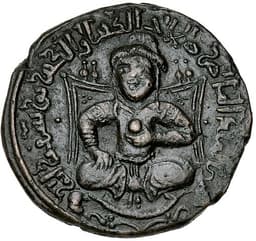
Saladin
General · Medieval
64.1Total
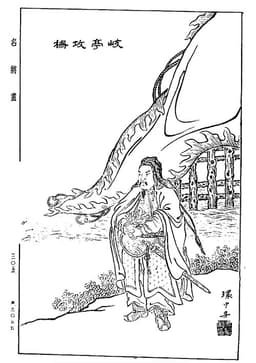
Yang Su
General · Medieval
57.2Total
Basic Information
Born
1137
544
Died
1193
606
Era
Medieval
Medieval
Nationality
Ayyubid Sultanate
China
Occupation
General
General
Civilization
Middle Eastern
Eastern
Score Comparison
Military (10%)
75.0
80.0
Political (20%)
69.6
45.0
Influence (20%)
65.2
51.8
Legacy (20%)
52.0
45.0
Leadership (15%)
62.0
68.0
Strategy (15%)
76.0
80.5
TOTAL
64.1
57.2
Saladin — Complete Timeline
1187 AD
Battle of HattinWar
Saladin's forces defeated the Crusader army at Hattin, near Tiberias. He captured King Guy of Jerusalem and the True Cross relic. The victory decimated the Crusader military and opened the way for the recapture of Jerusalem.
BattleCrusadesVictory
Impact: regional
Recapture of JerusalemWar
Saladin's army besieged and captured Jerusalem from the Crusaders after 88 years of Christian rule. He allowed the inhabitants to leave peacefully or be ransomed, contrasting with the Crusaders' massacre in 1099. This event triggered the Third Crusade.
ConquestJerusalemCrusades
Impact: global
1189 AD
Siege of AcreWar◆ Major
Saladin faced a prolonged siege of Acre by Crusader forces under Richard the Lionheart and Philip Augustus. After nearly two years, the city fell to the Crusaders. Saladin's inability to relieve the siege was a major setback.
SiegeCrusadesDefeat
Impact: regional
1191 AD
Battle of ArsufWar◆ Major
Saladin's forces attacked Richard the Lionheart's army marching south from Acre. Richard's disciplined infantry repelled the attacks, inflicting heavy losses on Saladin's troops. The battle ended in a tactical Crusader victory, but Saladin's army remained intact.
BattleCrusadesRichard the Lionheart
Impact: regional
1192 AD
Treaty of RamlaPolitical Action◆ Major
Saladin and Richard the Lionheart signed the Treaty of Ramla, ending the Third Crusade. The treaty granted Crusaders control of a coastal strip from Jaffa to Acre, while Muslims retained Jerusalem. Christian pilgrims were allowed access to holy sites.
TreatyCrusadesDiplomacy
Impact: regional
Yang Su — Complete Timeline
599 AD
Led Campaigns against the Tujue (Göktürks)War◆ Major
Yang Su commanded Sui forces in campaigns against the Eastern Tujue (G
Tujue CampaignsMilitary InnovationNorthern Frontier
Impact: regional
604 AD
Suppressed the Rebellion of Yang LiangWar◆ Major
After Emperor Yang of Sui ascended the throne, his brother Yang Liang rebelled in Bingzhou. Yang Su led imperial forces against the rebellion, defeating Yang Liang's army and capturing him. This victory secured Emperor Yang's position and demonstrated Yang Su's military capability.
Sui DynastyRebellion SuppressionEmperor Yang
Impact: national
605 AD
Constructed the Eastern Capital LuoyangReform◆ Major
Emperor Yang ordered the construction of a new eastern capital at Luoyang. Yang Su was appointed as one of the supervisors of the massive project. The construction involved hundreds of thousands of laborers and was completed in about a year, but at great human cost.
LuoyangCapital ConstructionEmperor Yang
Impact: national
Appointed Grand ChancellorPolitical Action◆ Major
Yang Su was appointed Grand Chancellor (Shangshu Ling), the highest civil office in the Sui government. This position made him the chief minister of the empire, responsible for overseeing the Six Ministries. He held this office until his death in 606.
Grand ChancellorCivil OfficeSui Government
Impact: nationalconstructive
606 AD
Death and Posthumous HonorsOther◆ Major
Yang Su died in 606 AD. Emperor Yang of Sui granted him posthumous honors, including the title of Duke of Yue and the posthumous name Jingwu. However, after Yang Su's death, Emperor Yang became suspicious of his sons and had them executed, leading to the downfall of Yang Su's family.
DeathPosthumous HonorsFamily Downfall
Impact: nationaltragic
Expert Analysis
Saladin vs Yang Su
# The Conqueror and the Consolidator
In the summer of 1187, a Kurdish general stood before the walls of Jerusalem, a city that had eluded Muslim control for nearly nine decades. Across the centuries and half a world away, a Chinese commander in 604 was marching north to crush a rebellion that threatened to tear apart a newly unified empire. Saladin and Yang Su never met, never corresponded, never knew of each other's existence. Yet both were among the most formidable military minds of the medieval world, and both left marks on history that still provoke admiration and debate. Why did one become a symbol of chivalric romance while the other remains a footnote in Western histories? The answer lies not in their achievements—remarkably similar in scope—but in the worlds they inhabited and the stories their civilizations chose to tell.
Origins
Saladin was born in 1137 in Tikrit, present-day Iraq, into a Kurdish family serving the Zengid dynasty. His world was fractured: the Crusader states clung to the Levantine coast, Muslim emirs squabbled among themselves, and the memory of the First Crusade's brutality still haunted the region. Saladin grew up in Damascus, immersed in the courts of Nur al-Din, a ruler who dreamed of Sunni revival and jihad against the Franks. The young man was reportedly more interested in theology than warfare—a quiet, bookish youth who seemed an unlikely champion.
Yang Su, born in 544, entered a China that had been splintered for nearly three centuries since the fall of the Han dynasty. The Northern and Southern dynasties had fought endless wars, and the Sui dynasty's founder, Emperor Wen, was determined to reunite the realm. Yang Su came from a family of officials, but his father had been executed for treason, leaving the son under a cloud of suspicion. Where Saladin was shaped by religious fervor and chivalric codes, Yang Su was forged in the crucible of court intrigue and ruthless survival.
Rise to Power
Saladin's ascent was gradual and often reluctant. He accompanied his uncle Shirkuh on campaigns into Fatimid Egypt, and when Shirkuh died in 1169, Saladin found himself—at just thirty-two—the vizier of a crumbling Shia caliphate. He spent years consolidating power, abolishing the Fatimid caliphate, and slowly turning Egypt into a base for Sunni resurgence. His rise was a masterclass in patience: he never seized power by coup but allowed circumstances to deliver it into his hands.
Yang Su's path was more direct and violent. He first distinguished himself in campaigns against the Northern Zhou dynasty, and when the Sui emperor needed a general to crush the Chen dynasty in the south, Yang Su delivered. In 589, he led a fleet down the Yangtze River, capturing Chen cities with terrifying efficiency. His reputation for cruelty preceded him: he reportedly ordered the execution of prisoners to demoralize enemies, and his soldiers were known to loot and burn. Where Saladin built loyalty through generosity, Yang Su ruled through fear.
Leadership & Governance
At the Battle of Hattin in 1187, Saladin demonstrated his military genius. He lured the Crusader army into a waterless plateau near Tiberias, cut off their access to springs, and set fire to dry grass to choke them with smoke. When King Guy of Jerusalem surrendered, Saladin treated him with courtesy, offering him a cup of iced sherbet—a gesture of hospitality that became legendary. When he recaptured Jerusalem later that year, he famously refrained from massacre, allowing Christians to leave with their belongings, in stark contrast to the Crusaders' slaughter in 1099.
Yang Su's campaigns against the Göktürks in 599 were equally innovative but far less merciful. He abandoned traditional Chinese defensive formations, instead using light cavalry to harass the nomadic armies and feigned retreats to draw them into ambushes. His tactics were brilliant but brutal: when suppressing Yang Liang's rebellion in 604, he executed tens of thousands, reportedly piling bodies into mounds as a warning. Emperor Yang of Sui rewarded him with the title of Grand Chancellor in 605, the highest civil office, making Yang Su one of the most powerful men in China.
The difference in their governance was stark. Saladin united the Muslim Near East through diplomacy, marriage alliances, and religious legitimacy. He corresponded with scholars, patronized mosques, and presented himself as a servant of Islam. Yang Su, by contrast, was a tool of the emperor's ambition. He supervised the construction of the Eastern Capital Luoyang in 605, using forced labor on a massive scale—hundreds of thousands of workers died during the project. His loyalty was to the throne, not to any higher ideal.
Triumph & Tragedy
Saladin's greatest moment was undoubtedly the recapture of Jerusalem in 1187. For eighty-eight years, the city had been under Crusader control; now it was returned to Muslim hands. Yet his triumph was followed by the grinding frustration of the Third Crusade. Richard the Lionheart's disciplined army repeatedly defeated Saladin's forces, most notably at Arsuf in 1191. The Siege of Acre in 1189–1191 ended in a Crusader victory, and Saladin was forced to negotiate. The Treaty of Ramla in 1192 granted Crusaders a coastal strip and access to holy sites—a compromise that left neither side fully satisfied. Saladin died the following year, exhausted and impoverished, having given away his wealth to charity.
Yang Su's tragedy was subtler. He had served two emperors with absolute loyalty, crushed every rebellion, and expanded Sui power. But Emperor Yang grew suspicious of his immense influence. In 606, Yang Su fell ill—some whispered poison—and died at sixty-two. He was given posthumous honors, but his family soon fell from favor. His son was later executed, and the Sui dynasty itself collapsed within a decade of his death. Yang Su had built an empire but not a legacy that outlasted him.
Character & Destiny
Saladin's character was defined by his famous chivalry. When Richard the Lionheart's horse was killed at Arsuf, Saladin sent him a fresh mount. When a Crusader princess lost her infant child, Saladin returned the baby to her camp. These gestures were not merely propaganda; they reflected a genuine conviction that warfare had rules. His contemporary, the chronicler Baha al-Din, wrote that Saladin wept when he received news of Muslim casualties. He was a man who saw the humanity in his enemies.
Yang Su was described by Chinese historians as "deep and unfathomable," a man of few words who kept his own counsel. He was known for his harsh discipline—soldiers who disobeyed were executed immediately—but also for rewarding success generously. He had no interest in religious or philosophical ideals; his world was one of power, pure and unadorned. Where Saladin sought to inspire, Yang Su sought to control.
Legacy
Saladin's legacy is immortal. He is the only Muslim ruler to appear in Dante's *Divine Comedy* (placed in Limbo, not Hell), and his image as a noble enemy shaped European literature for centuries. In the Middle East, he is revered as a unifier who restored Jerusalem to Islam. His name adorns streets, hotels, and a famous eagle on the Egyptian flag. His chivalry has become a byword for honorable conduct in war.
Yang Su's legacy is confined to specialists. He appears in Chinese historical records as a capable but ruthless general, overshadowed by the dramatic fall of the Sui dynasty and the rise of the Tang. His military innovations were absorbed into later Chinese tactics, but his personal story—the brilliant strategist who served a tyrant—has none of the romantic appeal of Saladin's crusade. In the West, he is virtually unknown.
Conclusion
What separates these two men is not their skill—both were military geniuses—but the stories their cultures needed. Saladin fought a holy war against a foreign invader, and his mercy became a moral lesson for both Muslims and Christians. Yang Su fought civil wars for a dynasty that collapsed, and his cruelty made him a cautionary tale. One became a symbol; the other became a footnote. History is not always fair, but it is always revealing: we remember the warriors who fought for causes we still care about, and we forget those who fought for empires that have turned to dust.
Rankings
🥇
SaladinLeader
Mil: 75.0Pol: 69.6Inf: 65.2
64.1
🥈
Yang Su
Mil: 80.0Pol: 45.0Inf: 51.8
57.2
+6.9 behind
How This Comparison Works
Algorithm
Each figure is scored on 6 dimensions (0—100 scale) based on structured historical data: Military (10%), Political (20%), Influence (20%), Legacy (20%), Leadership (15%), Strategy (15%). The weighted total produces the final ranking.
Data Sources
Scores are computed from structured sub-indicators in the database. Scale factors adjust for era (Ancient ×0.85, Modern ×1.0) and civilization size (Eastern ×1.05, Other ×0.80) to account for differences in population and military scale.
Maximum 3 Figures
Comparisons are limited to 2—3 figures to ensure readability and statistical meaningfulness.
Error Margins
±5 points per dimension — Sub-scores are derived from historical records with inherent uncertainty. Two figures within 5 points on a dimension should be considered roughly equivalent in that area.
Total Score Accuracy
±3 points overall — The weighted combination of 6 dimensions produces a total score with approximately ±3 points of uncertainty. Differences of less than 3 points are not statistically significant— the figures are effectively tied.
Known Limitations
- Historical records are incomplete and uneven across civilizations
- Figures from oral-tradition societies may be underrepresented
- Occupation labels can misclassify multi-role figures
- Scores measure capability and impact, not moral character
- Quantitative scoring is a comparison tool, not absolute truth
Capability Radar
Military (10%) — Battles & Warfare
Battles
78
85
Win Rate
72
90
Expansion
82
80
Political (20%) — Governance & Reform
Reform
68
65
Diplomacy
88
60
Economy
65
55
Influence (20%) — Cultural & Global Reach
Cultural
85
45
Global
78
35
Legacy (20%) — Historical Impact
Historical
82
60
Longevity
80
40
Leadership (15%) — Power & Stability
Tenure
75
70
Stability
70
50
Strategy (15%) — Tactics & Innovation
Strategy
85
85
Tactics
80
88
Reform
70
75
Similar Comparisons
Comments & Discussion
No comments yet. Be the first to share your thoughts!