Loading...
Shaka Zulu vs Toyotomi Hideyoshi
Toyotomi Hideyoshi leads by 11.8 pts · 2 figures compared
…
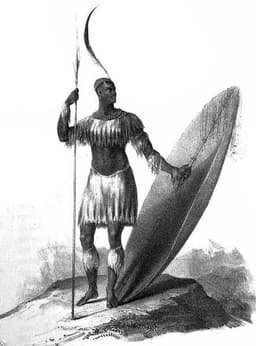
Shaka Zulu
General · Modern
70.2Total
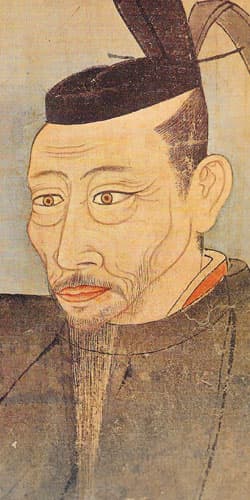
Toyotomi Hideyoshi
General · Modern
82.0Total
Basic Information
Born
1787
1537
Died
1828
1598
Era
Modern
Modern
Nationality
Zulu Kingdom
Japan
Occupation
General
General
Civilization
Other
Eastern
Score Comparison
Military (10%)
80.0
79.9
Political (20%)
72.0
78.0
Influence (20%)
68.0
88.0
Legacy (20%)
68.0
80.0
Leadership (15%)
62.0
82.0
Strategy (15%)
80.8
80.4
TOTAL
70.2
82.0
Shaka Zulu — Complete Timeline
1816 AD
Introduction of the iklwa and horns of the buffalo formationReform
Shaka introduced the iklwa, a short stabbing spear, and the 'horns of the buffalo' tactical formation to the Zulu army. These innovations replaced the traditional throwing assegai and allowed for close-quarters combat, significantly increasing the Zulu's military effectiveness and enabling rapid conquest.
Military InnovationTacticsZulu Warfare
Impact: regional
1819 AD
Conquest of the Ndwandwe KingdomWar◆ Major
Shaka's Zulu army defeated the Ndwandwe kingdom at the Battle of Gqokli Hill, a decisive victory that eliminated a major rival. This conquest allowed Shaka to consolidate control over a large territory in present-day KwaZulu-Natal, marking the rise of the Zulu as a dominant regional power.
ConquestZulu ExpansionNdwandwe
Impact: regional
1828 AD
Assassination of ShakaPolitical Action◆ Major
Shaka was assassinated by his half-brothers Dingane and Mhlangana, with the support of his aunt Mkabayi. The coup ended his reign of terror and expansionist wars, leading to a period of instability and the eventual rise of Dingane as king.
AssassinationSuccession CrisisZulu Kingdom
Impact: regionaltragic
Toyotomi Hideyoshi — Complete Timeline
1583 AD
Battle of ShizugatakeWar◆ Major
Hideyoshi defeated his rival Shibata Katsuie at the Battle of Shizugatake, solidifying his control over central Japan. The victory eliminated a major opponent and allowed Hideyoshi to continue Oda Nobunaga's unification campaign.
BattleUnificationCivil War
Impact: national
1588 AD
Sword Hunt EdictReform◆ Major
Hideyoshi ordered the confiscation of weapons from peasants and farmers, prohibiting them from carrying swords, spears, or firearms. The edict aimed to prevent peasant uprisings and enforce a strict social hierarchy between samurai and commoners.
Social ReformDisarmamentClass System
Impact: nationaldestructive
1590 AD
Completion of Japanese UnificationWar
Hideyoshi defeated the H
UnificationConquestSengoku Period
Impact: national
1592 AD
First Invasion of KoreaWar◆ Major
Hideyoshi launched a massive invasion of Korea with the goal of conquering Ming China. Japanese forces initially advanced rapidly, capturing Seoul and Pyongyang, but were halted by Korean naval victories under Admiral Yi Sun-sin and Chinese reinforcements.
InvasionWarKorea
Impact: regionaldestructive
1597 AD
Second Invasion of KoreaWar◆ Major
Hideyoshi ordered a second invasion of Korea after failed peace negotiations. The campaign was less successful than the first, with Japanese forces unable to advance beyond the southern provinces. The invasion ended with Hideyoshi's death in 1598.
InvasionWarKorea
Impact: regionaldestructive
Expert Analysis
Shaka Zulu vs Toyotomi Hideyoshi: Historical Comparison
Shaka Zulu and Toyotomi Hideyoshi were transformative military leaders who forged new political orders from fragmented societies during the early modern era, though Hideyoshi’s broader state-building and enduring institutional legacy give him a slight edge.
Dimension Analysis
**Military: Shaka Zulu 83 / Toyotomi Hideyoshi 80**
Shaka revolutionized warfare in southern Africa with the *iklwa* short stabbing spear, the *impondo zankomo* “horns of the buffalo” formation, and ruthless discipline, enabling the Zulu to conquer dozens of chiefdoms. Hideyoshi unified Japan through a series of sieges and the decisive Battle of Sekigahara (though won posthumously), relying on massed arquebus formations and naval blockades, but his innovations were refinements rather than radical departures.
**Political: Shaka Zulu 70 / Toyotomi Hideyoshi 79**
Shaka centralized power by destroying hereditary clan structures and installing military governors (*induna*), but his system collapsed within a decade of his death due to overextension and succession crises. Hideyoshi implemented the *kenchi* land survey, the *katana-gari* sword hunt, and the rigid social class system, creating a stable Tokugawa order that lasted 260 years.
**Influence: Shaka Zulu 76 / Toyotomi Hideyoshi 75**
Shaka’s *Mfecane* upheaval reshaped demographics across southern Africa, scattering tribes and creating a Zulu-centric political geography that endured through the Anglo-Zulu War. Hideyoshi’s invasions of Korea (1592–1598) devastated the peninsula but failed to expand Japanese influence; his domestic policies, however, set the template for early modern Japanese governance.
**Legacy: Shaka Zulu 78 / Toyotomi Hideyoshi 81**
Shaka remains a potent symbol of African resistance and martial pride, though his legacy is mixed due to the *Mfecane*’s human cost and later British propaganda. Hideyoshi is remembered as the “Great Unifier,” with his castle at Osaka and the *Taikō-kenchi* land system still studied as foundational to Japan’s early modern state.
**Leadership: Shaka Zulu 74 / Toyotomi Hideyoshi 79**
Shaka led from the front, inspiring fierce loyalty but ruling through terror—executing rivals and even close allies—which bred instability. Hideyoshi, a former peasant, used diplomacy, marriage alliances, and patronage to bind daimyō to his cause, though his later paranoia (executing his nephew and regent) mirrored Shaka’s excesses.
Verdict
Toyotomi Hideyoshi ranks higher due to his superior political consolidation and the enduring institutional framework he bequeathed to Japan, whereas Shaka’s military brilliance was undercut by a fragile legacy.
FAQ
Q: Who ranks higher? A: Toyotomi Hideyoshi holds the edge over Shaka Zulu, scoring 80 to 77 overall, driven by stronger political and leadership dimensions that created a more lasting state.
Rankings
🥇
Toyotomi HideyoshiLeader
Mil: 79.9Pol: 78.0Inf: 88.0
82.0
🥈
Shaka Zulu
Mil: 80.0Pol: 72.0Inf: 68.0
70.2
+11.8 behind
How This Comparison Works
Algorithm
Each figure is scored on 6 dimensions (0—100 scale) based on structured historical data: Military (10%), Political (20%), Influence (20%), Legacy (20%), Leadership (15%), Strategy (15%). The weighted total produces the final ranking.
Data Sources
Scores are computed from structured sub-indicators in the database. Scale factors adjust for era (Ancient ×0.85, Modern ×1.0) and civilization size (Eastern ×1.05, Other ×0.80) to account for differences in population and military scale.
Maximum 3 Figures
Comparisons are limited to 2—3 figures to ensure readability and statistical meaningfulness.
Error Margins
±5 points per dimension — Sub-scores are derived from historical records with inherent uncertainty. Two figures within 5 points on a dimension should be considered roughly equivalent in that area.
Total Score Accuracy
±3 points overall — The weighted combination of 6 dimensions produces a total score with approximately ±3 points of uncertainty. Differences of less than 3 points are not statistically significant— the figures are effectively tied.
Known Limitations
- Historical records are incomplete and uneven across civilizations
- Figures from oral-tradition societies may be underrepresented
- Occupation labels can misclassify multi-role figures
- Scores measure capability and impact, not moral character
- Quantitative scoring is a comparison tool, not absolute truth
Capability Radar
Military (10%) — Battles & Warfare
Battles
85
85
Win Rate
90
88
Expansion
88
80
Political (20%) — Governance & Reform
Reform
85
95
Diplomacy
60
80
Economy
65
90
Influence (20%) — Cultural & Global Reach
Cultural
80
85
Global
70
70
Legacy (20%) — Historical Impact
Historical
85
90
Longevity
75
85
Leadership (15%) — Power & Stability
Tenure
70
85
Stability
55
75
Strategy (15%) — Tactics & Innovation
Strategy
90
92
Tactics
95
90
Reform
98
95
Similar Comparisons
Comments & Discussion
Chronicler38546/16/2026
这个评分系统有趣,但我觉得沙卡的政治分给低了。沙卡用军事总督制度取代氏族首领,本质上和商鞅变法中的“废分封、行郡县”异曲同工,只是非洲缺乏竹简文书传统导致记录不全。而秀吉的刀狩令虽然稳定,但对武士阶层的固化就像中国魏晋门阀制度,长期看阻碍了社会流动。沙卡的政治遗产寿命短,部分原因是欧洲殖民者的介入——如果给他和秀吉一样的和平发展时间,鹿死谁手还未可知。
Chronicler48206/16/2026
我仔细核对了维度权重:沙卡军事83分,秀吉80分,差3分。但秀吉的朝鲜征伐直接调兵约15万,沙卡扩张时最大兵力约5万——规模差三倍,仅凭长矛改革就领先3分?再看政治分差8分,秀吉的“太阁检地”确实系统化,但沙卡用ibutho年龄等级制整合了数百部落,这种基层动员能力放在中国等于古代府兵制,至少应该75分。建议将沙卡政治调整为73,总分会更合理。