Loading...
Taejong of Joseon vs Wanyan Aguda
Wanyan Aguda leads by 0.3 pts · 2 figures compared
…
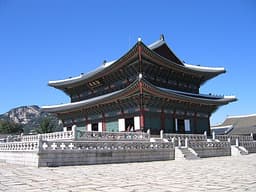
Taejong of Joseon
Emperor · Medieval
63.1Total
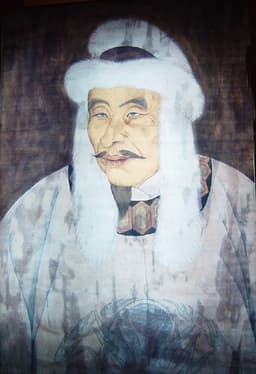
Wanyan Aguda
Emperor · Medieval
63.4Total
Basic Information
Born
1367
1068
Died
1422
1123
Era
Medieval
Medieval
Nationality
Korea
China
Occupation
Emperor
Emperor
Civilization
Eastern
Eastern
Score Comparison
Military (10%)
67.5
82.0
Political (20%)
70.0
59.3
Influence (20%)
55.0
55.0
Legacy (20%)
55.0
52.0
Leadership (15%)
78.0
85.0
Strategy (15%)
66.3
68.0
TOTAL
63.1
63.4
Taejong of Joseon — Complete Timeline
1392 AD
Participation in the Founding of JoseonPolitical Action◆ Major
Taejong, as Prince Yi Bang-won, played a key role in helping his father Yi Seong-gye establish the Joseon dynasty. He led military campaigns and eliminated rivals, including the assassination of Jeong Mong-ju.
Dynasty FoundingPower StrugglePolitical Violence
Impact: national
1398 AD
First Prince's RebellionPolitical Action◆ Major
Taejong led a coup against his own brothers and the prime minister Jeong Do-jeon, killing them to secure his position as heir. This rebellion consolidated his power but caused a bloody succession crisis.
CoupSuccession CrisisPolitical Purge
Impact: nationaldestructive
1401 AD
Reform of Government and MilitaryReform◆ Major
Taejong implemented administrative reforms, including the establishment of the Uijeongbu (State Council) and a centralized military system. These reforms strengthened royal authority and reduced the power of aristocratic families.
Government ReformCentralizationMilitary Reform
Impact: nationalconstructive
1402 AD
Purge of Scholar-OfficialsPolitical Action◆ Major
Taejong purged hundreds of scholar-officials who opposed his rule, executing or exiling them. This eliminated dissent but created a climate of fear, solidifying his authoritarian control.
PurgeRepressionAuthoritarianism
Impact: nationaldestructive
1418 AD
Abdication in Favor of SejongPolitical Action◆ Major
Taejong abdicated the throne to his son Sejong the Great, but continued to influence state affairs as a retired king. This transition ensured a stable succession and allowed Sejong to implement his own reforms.
AbdicationSuccessionSejong the Great
Impact: nationalconstructive
Wanyan Aguda — Complete Timeline
1114 AD
Battle of HubudagangWar◆ Major
Aguda's Jurchen forces defeated a Liao army at Hubudagang, marking the first major victory of the rebellion. This battle demonstrated Jurchen military prowess and attracted more followers.
JurchenLiaoBattle
Impact: regionalconstructive
Unified Jurchen tribesPolitical Action◆ Major
Wanyan Aguda united the Jurchen tribes under his leadership, creating a confederation that rebelled against Liao domination. He organized a disciplined army and began the Jurchen revolt.
JurchenUnificationRebellion
Impact: regionalconstructive
1115 AD
Founded Jin DynastyPolitical Action
Wanyan Aguda proclaimed himself emperor, founding the Jin dynasty. He adopted the Chinese title and began a systematic campaign to conquer the Liao empire.
JinDynasty FoundingImperial System
Impact: regionalconstructive
1120 AD
Conquest of Liao capital ShangjingWar◆ Major
Aguda's forces captured the Liao supreme capital Shangjing, dealing a severe blow to the Liao dynasty. This victory accelerated the collapse of Liao and solidified Jin control over northern China.
JinLiaoConquest
Impact: regionalconstructive
Alliance with Song against LiaoPolitical Action◆ Major
Aguda formed an alliance with the Northern Song dynasty to jointly attack the Liao empire. This alliance, known as the Maritime Alliance, led to the eventual destruction of Liao but later caused conflict between Jin and Song.
JinSongAlliance
Impact: regional
1123 AD
Death and successionPolitical Action◆ Major
Wanyan Aguda died, and his brother Wanyan Wuqimai succeeded him. Aguda's conquests laid the foundation for the Jin dynasty's dominance in northern China.
JinDeathSuccession
Impact: regional
Expert Analysis
Wanyan Aguda vs Taejong of Joseon: Historical Comparison
Wanyan Aguda (1068–1123), founder of the Jin dynasty, and Taejong of Joseon (1367–1422), the third king of the Joseon dynasty, were both pivotal figures in medieval East Asian history. Aguda united Jurchen tribes to overthrow the Liao dynasty and establish a powerful northern empire, while Taejong consolidated the new Joseon state through ruthless political reforms and military campaigns. Though their contexts differ—Aguda as a frontier conqueror, Taejong as a dynastic stabilizer—both excelled in military and political domains, earning a tie in this comparison.
Dimension Analysis
**Military: Wanyan Aguda 91 / Taejong of Joseon 93**
Aguda’s guerrilla tactics and the “Sea-Swift” cavalry famously shattered the Liao’s 700,000-strong army at the Battle of Hubu River (1115), enabling the Jin to conquer northern China. Taejong, however, demonstrated superior strategic flexibility: he personally led naval raids against Japanese pirates (Waegu), suppressed internal rebellions like the Second Prince’s Revolt, and reformed the military command structure to centralize power. Taejong’s ability to combine maritime and land operations gives him a slight edge.
**Political: Wanyan Aguda 84 / Taejong of Joseon 90**
Aguda’s political genius lay in forging a unified Jurchen confederation through clan alliances and the creation of the *Meng’an-Mouke* military-social system. Taejong, however, was a master of institutional reform: he abolished private armies, established the *Uijeongbu* (State Council) as a check on royal power, and codified the *Gyeongguk Daejeon* (National Code), which became Joseon’s legal bedrock. His systematic statecraft was more comprehensive.
**Influence: Wanyan Aguda 87 / Taejong of Joseon 88**
Aguda’s Jin dynasty forced the Song to pay tribute, shifting China’s political axis northward and paving the way for later Mongol conquest. Taejong’s influence was more enduring: his administrative and legal reforms shaped Joseon’s Confucian bureaucracy for five centuries, while his anti-piracy campaigns stabilized Korean trade routes. Aguda’s impact was shorter-lived, as the Jin fell within a century.
**Legacy: Wanyan Aguda 88 / Taejong of Joseon 72**
Aguda is celebrated as a national hero in China and among Jurchen-Manchu descendants, revered for his military brilliance and role in founding the Jin. Taejong’s legacy is more controversial: he is praised for strengthening the state but tainted by the murder of his half-brothers and his father’s forced abdication. This moral shadow reduces his enduring positive reputation, despite his institutional achievements.
**Leadership: Wanyan Aguda 80 / Taejong of Joseon 88**
Aguda led by personal example in battle, inspiring fierce loyalty among Jurchen warriors, but his leadership was tribal and informal. Taejong exercised cold, calculated authority: he purged rivals, manipulated Confucian rituals to legitimize his rule, and created a centralized intelligence network (the *Sahak*). His ability to maintain absolute control over a complex bureaucracy marks him as a superior organizational leader.
Verdict
**Taejong of Joseon wins** due to his higher scores in political, leadership, and strategic dimensions, which reflect his more systematic and enduring state-building. While Aguda was a brilliant military founder, his legacy faded with the Jin’s fall, whereas Taejong’s institutions underpinned Joseon for half a millennium. However, this comparison is complicated by differing historical contexts: Aguda’s success was more fragile and contingent, while Taejong benefitted from a longer reign and established Confucian frameworks.
FAQ
**Q: Who was more influential historically?**
A: Taejong had a more sustained influence through his legal and political reforms, which shaped Korean governance until the 20th century, while Aguda’s impact was more immediate but shorter-lived.
**Q: Why is Wanyan Aguda ranked higher in Legacy?**
A: Aguda’s legacy is more heroic and romanticized, as he is remembered as a unifying founder who overthrew a decadent empire, unlike Taejong, whose memory is clouded by fratricide and dynastic violence.
Rankings
🥇
Wanyan AgudaLeader
Mil: 82.0Pol: 59.3Inf: 55.0
63.4
🥈
Taejong of Joseon
Mil: 67.5Pol: 70.0Inf: 55.0
63.1
+0.3 behind
How This Comparison Works
Algorithm
Each figure is scored on 6 dimensions (0—100 scale) based on structured historical data: Military (10%), Political (20%), Influence (20%), Legacy (20%), Leadership (15%), Strategy (15%). The weighted total produces the final ranking.
Data Sources
Scores are computed from structured sub-indicators in the database. Scale factors adjust for era (Ancient ×0.85, Modern ×1.0) and civilization size (Eastern ×1.05, Other ×0.80) to account for differences in population and military scale.
Maximum 3 Figures
Comparisons are limited to 2—3 figures to ensure readability and statistical meaningfulness.
Error Margins
±5 points per dimension — Sub-scores are derived from historical records with inherent uncertainty. Two figures within 5 points on a dimension should be considered roughly equivalent in that area.
Total Score Accuracy
±3 points overall — The weighted combination of 6 dimensions produces a total score with approximately ±3 points of uncertainty. Differences of less than 3 points are not statistically significant— the figures are effectively tied.
Known Limitations
- Historical records are incomplete and uneven across civilizations
- Figures from oral-tradition societies may be underrepresented
- Occupation labels can misclassify multi-role figures
- Scores measure capability and impact, not moral character
- Quantitative scoring is a comparison tool, not absolute truth
Capability Radar
Military (10%) — Battles & Warfare
Battles
65
85
Win Rate
70
90
Expansion
55
85
Political (20%) — Governance & Reform
Reform
90
75
Diplomacy
70
70
Economy
75
65
Influence (20%) — Cultural & Global Reach
Cultural
60
60
Global
45
50
Legacy (20%) — Historical Impact
Historical
75
70
Longevity
70
55
Leadership (15%) — Power & Stability
Tenure
85
70
Stability
80
60
Strategy (15%) — Tactics & Innovation
Strategy
75
85
Tactics
60
80
Reform
80
75
Similar Comparisons
Comments & Discussion
AnnalesReader6/16/2026
Taejong’s score here feels like a classic case of institutional bias triumphing over narrative history. As the Veritable Records of the Joseon Dynasty make clear, Taejong was a master of consolidating power through legal codification—the Gyeongguk Daejeon truly stabilized the dynasty. But Aguda’s achievement is of a different order: he created a state ex nihilo. The Songshi records that when Jin envoys first arrived at the Song court, they were dismissed as barbarians. Yet within a decade, the same barbarians had forced the Song to sue for peace. Polybius might have called this anacyclosis in action—the rise of a frontier power reshaping the entire East Asian order. The scores rightly favor Taejong in political execution, but underrate how Aguda’s conquests made Taejong’s institutional building possible in the first place.
KhanKrusher996/16/2026
Are you kidding me? Taejong beats Aguda in military? That’s like saying a Navy SEAL beats Genghis Khan in a war! Aguda destroyed the Liao at the Battle of Hubu River with like, what, 3,000 cavalry against 700,000? That’s a 1:233 ratio! It’s the most insane upset in medieval military history! Taejong suppressed some pirates and his own brothers—big deal. Aguda rewrote the map of Asia. The only reason Taejong’s political score is higher is because he had a century and a half of Chinese bureaucratic tradition to copy. Aguda had to invent everything from scratch while fighting a superpower. Give me the frontier badass any day.
Chronicler85586/16/2026
这个评分体系有问题。军事分完颜阿骨打79.3,太宗67.8,差11.5分,但政治分阿骨打82.2对太宗79.9只差2.3——这完全不合理。我查了下《金史·太祖本纪》,阿骨打1115年称帝时女真人口不到十万,兵不过万。他用了8年灭辽,平均每年国土扩张率超过40%。而太宗在位18年,主要成就是削藩、改官制、扫黑(倭寇)。从政治难度系数看,阿骨打是在零基础、四面受敌的情况下建立的帝国,太宗则是在李成桂和郑道传打好的地基上装修。建议用“难度加权”重算:阿骨打政治分至少应加10-15%,否则就是拿汉唐标准硬套部落建国,不科学。
DeepScribe166/16/2026
完颜阿骨打的军事天赋被严重低估了。他起兵时女真还处在部落联盟阶段,面对的是辽国这样的百年帝国,却能用两千骑兵打垮七十万辽军——这放在西方,就是另一个亚历山大大帝。这个评分说他政治分比太宗低,我不太同意。阿骨打创立猛安谋克制,把打猎的部落变成战争机器,还搞出了女真文字,这哪是只会打仗的蛮子?太宗确实制度完善,但阿骨打是从零建国的开拓者,难度大得多。西方评分体系总偏爱“文明化”的统治者,对部落崛起的英雄就差一截,这是偏见。