Loading...
This comparison has not been analyzed yet.
One-time AI generation (~1 minute). Scores and timeline are already available below.
Billy Hughes vs Pinheiro Machado
Billy Hughes leads by 10.1 pts · 2 figures compared
…
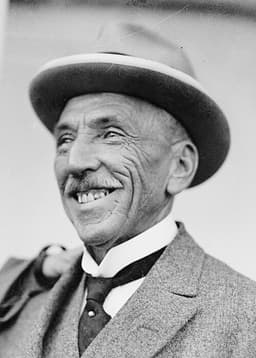
Billy Hughes
Politician · Modern
56.9Total

Pinheiro Machado
Politician · Modern
46.8Total
Basic Information
Born
1862
1851
Died
1952
1915
Era
Modern
Modern
Nationality
Australia
Brazil
Occupation
Politician
Politician
Civilization
Western
Western
Score Comparison
Military (10%)
49.4
50.0
Political (20%)
72.0
42.3
Influence (20%)
59.0
48.6
Legacy (20%)
49.2
40.8
Leadership (15%)
66.0
58.8
Strategy (15%)
41.8
42.5
TOTAL
56.9
46.8
Billy Hughes — Complete Timeline
1915 AD
Became Prime Minister of AustraliaPolitical Action◆ Major
Billy Hughes became Prime Minister of Australia on October 27, 1915, succeeding Andrew Fisher. He led the country through the remainder of World War I, becoming a dominant figure in Australian politics.
Prime MinisterWorld War ILeadership
Impact: national
1916 AD
Conscription Referendums (1916 and 1917)Political Action◆ Major
Hughes held two national referendums on conscription for overseas military service during WWI, in 1916 and 1917. Both were narrowly defeated, causing a split in the Labor Party. Hughes and his supporters left to form the Nationalist Party.
ConscriptionReferendumLabor Split
Impact: nationaldestructive
Expelled from Labor PartyPolitical Action◆ Major
Following the defeat of the first conscription referendum, Hughes was expelled from the Australian Labor Party in November 1916. He then formed the National Labor Party, which later merged with the Liberal Party to become the Nationalist Party.
ExpulsionLabor PartyParty Split
Impact: nationaldestructive
1919 AD
Attended Paris Peace ConferencePolitical Action◆ Major
Hughes represented Australia at the Paris Peace Conference in 1919. He argued strongly for Australian interests, including control over former German colonies in the Pacific and reparations from Germany. He also secured Australia's separate membership in the League of Nations.
Paris Peace ConferenceLeague of NationsWorld War I
Impact: globalconstructive
Pinheiro Machado — Complete Timeline
1902 AD
Elected President of the Federal SenatePolitical Action◆ Major
Pinheiro Machado was elected President of the Federal Senate of Brazil. He wielded significant power as a political boss, controlling patronage and influencing national policy. His leadership made him one of the most powerful figures in the Republic.
SenatePolitical PowerRepublic
Impact: national
1910 AD
Led the 'Salvacionista' CampaignPolitical Action◆ Major
Pinheiro Machado led the 'Salvacionista' campaign, a movement to intervene in state governments to remove opposition politicians. This campaign consolidated his power but also created widespread opposition and contributed to political instability.
Political InterventionPower StruggleRepublic
Impact: nationaldestructive
Supported the Hermes da Fonseca PresidencyPolitical Action◆ Major
Pinheiro Machado was a key supporter of Hermes da Fonseca's successful presidential campaign. His political machine delivered crucial votes, and he became the power behind the throne during da Fonseca's administration.
ElectionPolitical SupportPresidency
Impact: national
1915 AD
Assassinated by Francisco CoimbraPolitical Action◆ Major
Pinheiro Machado was stabbed to death by Francisco Coimbra, a political opponent, in the lobby of the Hotel dos Estrangeiros in Rio de Janeiro. His assassination shocked the nation and highlighted the intense political rivalries of the period.
AssassinationPolitical ViolenceSenate
Impact: nationaltragic
This comparison has not been analyzed yet.
One-time AI generation (~1 minute). Scores and timeline are already available below.
Rankings
🥇
Billy HughesLeader
Mil: 49.4Pol: 72.0Inf: 59.0
56.9
🥈
Pinheiro Machado
Mil: 50.0Pol: 42.3Inf: 48.6
46.8
+10.1 behind
How This Comparison Works
Algorithm
Each figure is scored on 6 dimensions (0—100 scale) based on structured historical data: Military (10%), Political (20%), Influence (20%), Legacy (20%), Leadership (15%), Strategy (15%). The weighted total produces the final ranking.
Data Sources
Scores are computed from structured sub-indicators in the database. Scale factors adjust for era (Ancient ×0.85, Modern ×1.0) and civilization size (Eastern ×1.05, Other ×0.80) to account for differences in population and military scale.
Maximum 3 Figures
Comparisons are limited to 2—3 figures to ensure readability and statistical meaningfulness.
Error Margins
±5 points per dimension — Sub-scores are derived from historical records with inherent uncertainty. Two figures within 5 points on a dimension should be considered roughly equivalent in that area.
Total Score Accuracy
±3 points overall — The weighted combination of 6 dimensions produces a total score with approximately ±3 points of uncertainty. Differences of less than 3 points are not statistically significant— the figures are effectively tied.
Known Limitations
- Historical records are incomplete and uneven across civilizations
- Figures from oral-tradition societies may be underrepresented
- Occupation labels can misclassify multi-role figures
- Scores measure capability and impact, not moral character
- Quantitative scoring is a comparison tool, not absolute truth
Capability Radar
Military (10%) — Battles & Warfare
Battles
30
26
Win Rate
34
30
Expansion
32
32
Political (20%) — Governance & Reform
Reform
60
30
Diplomacy
70
50
Economy
55
20
Influence (20%) — Cultural & Global Reach
Cultural
40
20
Global
55
10
Legacy (20%) — Historical Impact
Historical
55
30
Longevity
40
15
Leadership (15%) — Power & Stability
Tenure
65
40
Stability
50
15
Strategy (15%) — Tactics & Innovation
Strategy
35
38
Tactics
43
42
Reform
42
43
Similar Comparisons
Comments & Discussion
No comments yet. Be the first to share your thoughts!