Loading...
Billy Hughes vs Rutherford B. Hayes
Billy Hughes leads by 2.6 pts · 2 figures compared
…
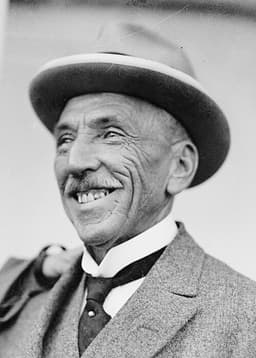
Billy Hughes
Politician · Modern
56.9Total

Rutherford B. Hayes
Politician · Modern
54.3Total
Basic Information
Born
1862
1822
Died
1952
1893
Era
Modern
Modern
Nationality
Australia
United States
Occupation
Politician
Politician
Civilization
Western
Western
Score Comparison
Military (10%)
49.4
36.6
Political (20%)
72.0
62.7
Influence (20%)
59.0
54.9
Legacy (20%)
49.2
49.2
Leadership (15%)
66.0
66.0
Strategy (15%)
41.8
52.8
TOTAL
56.9
54.3
Billy Hughes — Complete Timeline
1915 AD
Became Prime Minister of AustraliaPolitical Action◆ Major
Billy Hughes became Prime Minister of Australia on October 27, 1915, succeeding Andrew Fisher. He led the country through the remainder of World War I, becoming a dominant figure in Australian politics.
Prime MinisterWorld War ILeadership
Impact: national
1916 AD
Conscription Referendums (1916 and 1917)Political Action◆ Major
Hughes held two national referendums on conscription for overseas military service during WWI, in 1916 and 1917. Both were narrowly defeated, causing a split in the Labor Party. Hughes and his supporters left to form the Nationalist Party.
ConscriptionReferendumLabor Split
Impact: nationaldestructive
Expelled from Labor PartyPolitical Action◆ Major
Following the defeat of the first conscription referendum, Hughes was expelled from the Australian Labor Party in November 1916. He then formed the National Labor Party, which later merged with the Liberal Party to become the Nationalist Party.
ExpulsionLabor PartyParty Split
Impact: nationaldestructive
1919 AD
Attended Paris Peace ConferencePolitical Action◆ Major
Hughes represented Australia at the Paris Peace Conference in 1919. He argued strongly for Australian interests, including control over former German colonies in the Pacific and reparations from Germany. He also secured Australia's separate membership in the League of Nations.
Paris Peace ConferenceLeague of NationsWorld War I
Impact: globalconstructive
Rutherford B. Hayes — Complete Timeline
1876 AD
Elected President of the United StatesPolitical Action◆ Major
Hayes won the disputed 1876 presidential election against Democrat Samuel Tilden. The Electoral Commission awarded Hayes all disputed electoral votes, making him president despite Tilden winning the popular vote.
ElectionDisputed ElectionElectoral Commission
Impact: national
1877 AD
Civil Service Reform EffortsReform
Hayes issued an executive order banning federal employees from political activities and requiring merit-based appointments. His efforts faced opposition from Congress and were largely ineffective.
Civil ServiceReformPatronage
Impact: nationalconstructive
Compromise of 1877Political Action◆ Major
Hayes agreed to the Compromise of 1877, which ended Reconstruction in exchange for Democratic acceptance of his presidency. He withdrew federal troops from the South, effectively ending Reconstruction.
Compromise of 1877ReconstructionTroop Withdrawal
Impact: nationaldestructive
Withdrew Federal Troops from the SouthPolitical Action◆ Major
Hayes ordered the removal of federal troops from Louisiana and South Carolina, the last states under military occupation. This ended federal protection for African American civil rights and allowed white supremacist rule.
ReconstructionTroop WithdrawalCivil Rights
Impact: regionaldestructive
Great Railroad Strike of 1877Other◆ Major
Hayes used federal troops to suppress the Great Railroad Strike, which began in West Virginia and spread nationwide. The strike was crushed, resulting in over 100 deaths and widespread property damage.
Labor StrikeRailroadFederal Intervention
Impact: nationaldestructive
1878 AD
Signed the Bland-Allison ActReform
Hayes signed the Bland-Allison Act over his veto, requiring the Treasury to purchase silver and coin it into dollars. The act aimed to inflate the currency and help debtors.
Monetary PolicySilverInflation
Impact: national
Expert Analysis
Origins
Billy Hughes was born on September 25, 1862, in London, England, to Welsh parents. His father died when he was young, and Hughes worked as a teacher and laborer before emigrating to Australia in 1884. He settled in Sydney and became involved in the labor movement, joining the Australian Socialist League and the newly formed Labor Party. His early life was marked by poverty and hard work, shaping his combative political style.
Rutherford B. Hayes was born on October 4, 1822, in Delaware, Ohio, to a prosperous family. He graduated from Kenyon College and Harvard Law School, then practiced law in Cincinnati. Hayes served as a brevet major general in the Union Army during the Civil War, which boosted his political career. His background was one of privilege and education, contrasting sharply with Hughes's humble beginnings.
Rise to Power
Hughes entered Australian politics in 1894 as a Labor member of the New South Wales Legislative Assembly. He quickly rose through the ranks due to his oratory skills and fierce advocacy for workers' rights. In 1915, he became Prime Minister of Australia on October 27, succeeding Andrew Fisher. His rise was accelerated by his strong stance on national security and war effort during World War I.
Hayes's political career began with his election to the U.S. House of Representatives in 1864. He later served as Governor of Ohio from 1868 to 1872 and again in 1876. His rise to the presidency was controversial: the 1876 election against Samuel Tilden was disputed, with Hayes winning after the Compromise of 1877 awarded him all contested electoral votes. This deal effectively made him president but tainted his legitimacy.
Leadership & Governance
Hughes governed during a time of war, focusing on mobilizing Australia's resources for the Allied effort. He implemented conscription for home service but failed to extend it overseas, losing two referendums in 1916 and 1917. His leadership style was authoritarian and divisive; he expelled from the Labor Party in November 1916 after the first conscription defeat and formed the Nationalist Party. He also clashed with allies at the Paris Peace Conference, securing Australian control over former German colonies. His political score of 72.0 reflects his ability to maintain power despite controversy.
Hayes ended Reconstruction by withdrawing federal troops from the South, fulfilling the Compromise of 1877. He also suppressed the Great Railroad Strike of 1877 using federal troops, prioritizing order over labor rights. He signed the Bland-Allison Act over his veto, which required silver purchases. His governance was marked by a commitment to civil service reform and fiscal conservatism. His political score of 62.7 indicates moderate effectiveness.
Triumph & Tragedy
Hughes's greatest triumph was his representation at the Paris Peace Conference, where he secured Australia's independent membership in the League of Nations and control over German New Guinea. His tragedy was the failure of conscription referendums, which split the Labor Party and left his legacy tarnished. He also faced criticism for his authoritarian methods.
Hayes's triumph was overseeing the end of Reconstruction, which he saw as necessary for national unity, but this came at the cost of abandoning African Americans in the South, leading to Jim Crow laws. His suppression of the railroad strike maintained order but damaged his reputation with labor. His greatest failure was the lack of lasting progress on civil rights.
Character & Destiny
Hughes was known for his pugnacious personality, sharp tongue, and unwavering determination. His character drove him to push for conscription despite public opposition, leading to his expulsion from his party. His destiny was to be a wartime leader who never fully won the trust of his people, reflected in his military score of 49.4 and strategy score of 41.8.
Hayes was principled and cautious, believing in reconciliation over conflict. His character led him to compromise with Southern Democrats, which ended Reconstruction but also enabled racial oppression. His destiny was to be a one-term president with limited impact, as his influence score of 54.9 suggests.
Legacy
Hughes's legacy is mixed: he is remembered as a strong war leader but also as a divisive figure who split the Labor Party. His advocacy for Australian interests at Versailles set a precedent for the nation's independent foreign policy. His total score of 56.9 reflects a leader of moderate impact.
Hayes is often ranked as an average president. His withdrawal of troops ended Reconstruction, a decision that shaped race relations for a century. His civil service reforms had lasting effects. His total score of 54.3 places him slightly below Hughes.
Conclusion
Billy Hughes had a greater impact than Rutherford B. Hayes, as his actions during World War I and at the Paris Peace Conference shaped Australia's national identity and international standing. While Hayes's decisions affected the United States profoundly, the ending of Reconstruction was a negative outcome that set back civil rights. Hughes, with a higher total score of 56.9 versus 54.3, demonstrated stronger political skill and left a more enduring legacy on the world stage. The score gap of 2.6 points, though small, supports this conclusion.
Rankings
🥇
Billy HughesLeader
Mil: 49.4Pol: 72.0Inf: 59.0
56.9
🥈
Rutherford B. Hayes
Mil: 36.6Pol: 62.7Inf: 54.9
54.3
+2.6 behind
How This Comparison Works
Algorithm
Each figure is scored on 6 dimensions (0—100 scale) based on structured historical data: Military (10%), Political (20%), Influence (20%), Legacy (20%), Leadership (15%), Strategy (15%). The weighted total produces the final ranking.
Data Sources
Scores are computed from structured sub-indicators in the database. Scale factors adjust for era (Ancient ×0.85, Modern ×1.0) and civilization size (Eastern ×1.05, Other ×0.80) to account for differences in population and military scale.
Maximum 3 Figures
Comparisons are limited to 2—3 figures to ensure readability and statistical meaningfulness.
Error Margins
±5 points per dimension — Sub-scores are derived from historical records with inherent uncertainty. Two figures within 5 points on a dimension should be considered roughly equivalent in that area.
Total Score Accuracy
±3 points overall — The weighted combination of 6 dimensions produces a total score with approximately ±3 points of uncertainty. Differences of less than 3 points are not statistically significant— the figures are effectively tied.
Known Limitations
- Historical records are incomplete and uneven across civilizations
- Figures from oral-tradition societies may be underrepresented
- Occupation labels can misclassify multi-role figures
- Scores measure capability and impact, not moral character
- Quantitative scoring is a comparison tool, not absolute truth
Capability Radar
Military (10%) — Battles & Warfare
Battles
30
5
Win Rate
34
5
Expansion
32
5
Political (20%) — Governance & Reform
Reform
60
55
Diplomacy
70
65
Economy
55
50
Influence (20%) — Cultural & Global Reach
Cultural
40
30
Global
55
30
Legacy (20%) — Historical Impact
Historical
55
55
Longevity
40
40
Leadership (15%) — Power & Stability
Tenure
65
60
Stability
50
55
Strategy (15%) — Tactics & Innovation
Strategy
35
5
Tactics
43
5
Reform
42
5
Similar Comparisons
Comments & Discussion
No comments yet. Be the first to share your thoughts!