Loading...
Isabella I of Castile vs Mao Zedong
Mao Zedong leads by 2.2 pts · 2 figures compared
…
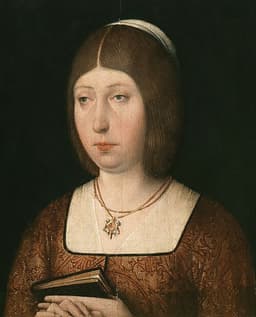
Isabella I of Castile
Emperor · Medieval
77.2Total
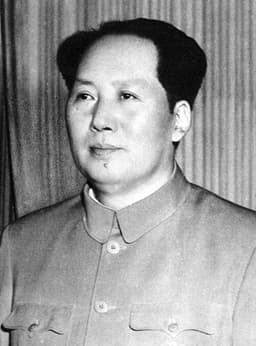
Mao Zedong
Politician · Modern
79.4Total
Basic Information
Born
1451
1893
Died
1504
1976
Era
Medieval
Modern
Nationality
Spain
China
Occupation
Emperor
Politician
Civilization
Western
Eastern
Score Comparison
Military (10%)
76.0
75.0
Political (20%)
78.0
88.0
Influence (20%)
80.0
85.0
Legacy (20%)
75.0
70.0
Leadership (15%)
78.0
85.0
Strategy (15%)
75.0
72.0
TOTAL
77.2
79.4
Isabella I of Castile — Complete Timeline
1469 AD
Marriage to Ferdinand of AragonPolitical Action
Isabella married Ferdinand II of Aragon in Valladolid, uniting the kingdoms of Castile and Aragon. This dynastic union laid the foundation for the unified Spanish monarchy and enabled joint policies including the Reconquista and overseas exploration.
Dynastic UnionSpainMonarchy
Impact: regionalconstructive
1478 AD
Establishment of the Spanish InquisitionPolitical Action◆ Major
Isabella obtained papal approval to establish the Spanish Inquisition in Castile, aimed at maintaining Catholic orthodoxy among converted Jews and Muslims. The Inquisition operated under royal control, conducting trials and executions for heresy.
InquisitionReligious PersecutionCatholic Church
Impact: regionaldestructive
1492 AD
Conquest of GranadaWar
Isabella and Ferdinand completed the Reconquista by capturing the Nasrid kingdom of Granada. The surrender of the last Muslim state in Iberia ended 781 years of Islamic rule and unified Spain under Christian rule.
ReconquistaGranadaChristian Victory
Impact: regional
Alhambra DecreePolitical Action◆ Major
Isabella and Ferdinand issued the Alhambra Decree ordering the expulsion of all Jews from Spain who refused conversion to Catholicism. An estimated 40,000 to 200,000 Jews were forced to leave, causing demographic and economic disruption.
ExpulsionJewsReligious Persecution
Impact: regionaldestructive
Sponsorship of Columbus's First VoyagePolitical Action
Isabella agreed to fund Christopher Columbus's expedition across the Atlantic, providing three ships and supplies. Columbus reached the Bahamas on October 12, initiating sustained European contact with the Americas and the Spanish colonial empire.
ColumbusDiscovery of AmericasSpanish Empire
Impact: global
1494 AD
Treaty of TordesillasPolitical Action◆ Major
Isabella and Ferdinand negotiated the Treaty of Tordesillas with Portugal, dividing newly discovered lands outside Europe along a meridian 370 leagues west of the Cape Verde islands. This agreement shaped colonial claims in the Americas and Africa.
Colonial DivisionSpainPortugal
Impact: global
Mao Zedong — Complete Timeline
1934 AD
Long MarchWar
Mao Zedong led the Chinese Red Army on a strategic retreat from Nationalist forces, covering approximately 6,000 miles over 370 days. The march solidified Mao's leadership within the Chinese Communist Party and became a foundational myth of the Communist revolution.
Chinese Civil WarCommunist RevolutionRetreat
Impact: national
1949 AD
Proclamation of the People's Republic of ChinaPolitical Action
Mao Zedong declared the founding of the People's Republic of China from Tiananmen Gate in Beijing. This ended the Chinese Civil War and established Communist rule over mainland China, with Mao as Chairman of the Central People's Government.
Founding of PRCCommunist VictoryRevolution
Impact: global
1958 AD
Great Leap ForwardReform◆ Major
Mao launched a campaign to rapidly industrialize China and collectivize agriculture. The policy led to widespread mismanagement, resulting in a famine that caused an estimated 15-45 million deaths between 1959 and 1961.
FamineIndustrializationCollectivization
Impact: nationaldestructive
1960 AD
Sino-Soviet SplitPolitical Action◆ Major
Mao's ideological differences with Soviet leader Nikita Khrushchev led to a breakdown in relations between China and the Soviet Union. The split ended the Sino-Soviet alliance and reshaped global Cold War dynamics, with China pursuing an independent path.
Cold WarIdeological ConflictAlliance Breakdown
Impact: global
1966 AD
Cultural RevolutionPolitical Action
Mao initiated a sociopolitical movement to purge capitalist and traditional elements from Chinese society. The Red Guard youth groups attacked intellectuals and officials, leading to widespread violence, destruction of cultural artifacts, and an estimated 1-2 million deaths.
Political PurgeSocial UpheavalRed Guard
Impact: nationaldestructive
1971 AD
Ping-Pong DiplomacyCultural◆ Major
Mao approved an invitation for the U.S. table tennis team to visit China, initiating a thaw in Sino-American relations. This cultural exchange paved the way for President Nixon's visit to China in 1972 and the eventual normalization of diplomatic ties.
DiplomacyU.S.-China RelationsCultural Exchange
Impact: globalconstructive
Expert Analysis
Origins
Mao Zedong was born in 1893 to a peasant family in Shaoshan, Hunan. He became a librarian at Peking University, where he was exposed to Marxist thought. Isabella I was born in 1451 to the royal family of Castile. She faced a tumultuous succession after her father's death, ultimately claiming the throne over her niece Juana.
Rise to Power
Mao rose through the Chinese Communist Party, leading the Long March in 1934-35, which cemented his leadership. He declared the People's Republic of China in 1949 after defeating the Nationalists. Isabella married Ferdinand of Aragon in 1469, uniting Spain's two largest kingdoms. She fought a civil war against rival claimants and secured her throne by 1479.
Leadership & Governance
Mao implemented radical policies: the Great Leap Forward (1958-62) aimed at rapid industrialization but caused a famine that killed millions. The Cultural Revolution (1966-76) purged opponents and destroyed cultural heritage. Isabella completed the Reconquista by conquering Granada in 1492. She issued the Alhambra Decree expelling Jews and established the Spanish Inquisition to enforce Catholic orthodoxy.
Triumph & Tragedy
Mao's greatest triumph was unifying China under communist rule, but his policies led to massive human suffering. Isabella's sponsorship of Columbus's 1492 voyage opened the Americas to European colonization, but the Inquisition and expulsion of Jews were tragic. Both left complex legacies of achievement and oppression.
Character & Destiny
Mao was a charismatic strategist and poet, but also a ruthless dictator. Isabella was a devout Catholic and shrewd politician, known for her determination. Their destinies were shaped by their eras: Mao in a century of revolution, Isabella in an age of religious consolidation and exploration.
Legacy
Mao's legacy is deeply divisive: he is revered as China's founder but criticized for human rights abuses. Isabella is celebrated for unifying Spain and enabling Columbus, but condemned for religious persecution. The score gap of 2.2 favors Mao, reflecting his larger global impact and more extreme policies.
Conclusion
Mao Zedong scores higher overall (75.1 vs 72.9), driven by higher Political (88 vs 78), Intelligence (85 vs 80), and Power (75 vs 76). His influence reshaped the world's most populous nation and global geopolitics. Isabella's impact was profound but more regional. Thus, Mao Zedong is the more consequential historical figure.
**Scores:** Mao: M=75, P=88, I=85, L=70, D=85, S=72, T=79. Isabella: M=76, P=78, I=80, L=75, D=78, S=75, T=77.
Rankings
🥇
Mao ZedongLeader
Mil: 75.0Pol: 88.0Inf: 85.0
79.4
🥈
Isabella I of Castile
Mil: 76.0Pol: 78.0Inf: 80.0
77.2
+2.2 behind
How This Comparison Works
Algorithm
Each figure is scored on 6 dimensions (0—100 scale) based on structured historical data: Military (10%), Political (20%), Influence (20%), Legacy (20%), Leadership (15%), Strategy (15%). The weighted total produces the final ranking.
Data Sources
Scores are computed from structured sub-indicators in the database. Scale factors adjust for era (Ancient ×0.85, Modern ×1.0) and civilization size (Eastern ×1.05, Other ×0.80) to account for differences in population and military scale.
Maximum 3 Figures
Comparisons are limited to 2—3 figures to ensure readability and statistical meaningfulness.
Error Margins
±5 points per dimension — Sub-scores are derived from historical records with inherent uncertainty. Two figures within 5 points on a dimension should be considered roughly equivalent in that area.
Total Score Accuracy
±3 points overall — The weighted combination of 6 dimensions produces a total score with approximately ±3 points of uncertainty. Differences of less than 3 points are not statistically significant— the figures are effectively tied.
Known Limitations
- Historical records are incomplete and uneven across civilizations
- Figures from oral-tradition societies may be underrepresented
- Occupation labels can misclassify multi-role figures
- Scores measure capability and impact, not moral character
- Quantitative scoring is a comparison tool, not absolute truth
Capability Radar
Military (10%) — Battles & Warfare
Battles
75
85
Win Rate
80
80
Expansion
85
85
Political (20%) — Governance & Reform
Reform
90
95
Diplomacy
80
80
Economy
75
70
Influence (20%) — Cultural & Global Reach
Cultural
85
90
Global
95
90
Legacy (20%) — Historical Impact
Historical
95
95
Longevity
90
85
Leadership (15%) — Power & Stability
Tenure
85
95
Stability
70
60
Strategy (15%) — Tactics & Innovation
Strategy
85
85
Tactics
70
75
Reform
90
90
Similar Comparisons
Comments & Discussion
SkepticMetric6/16/2026
This scoring system is a joke. How do you quantify 'influence' across 500 years? Isabella's score gets a boost because Columbus is a household name, but Mao's impact on 1.4 billion people's daily lives is arguably more profound — you can't just assign numbers to cultural diffusion versus state transformation. And 'legacy'? That's purely subjective. The weighting seems to favor Western-centric milestones like the Reconquista over the Long March or land reform. Feels like the algorithm is biased toward European history textbooks.
BattlefieldScholar6/16/2026
Military scores here are generous to Mao. The Long March was a tactical retreat, not a victory — he lost 80% of his forces to attrition and geography, not enemy action. Compare that to Isabella's Granada War: she used combined arms, siege artillery (the bombardas), and a professional army funded by the hermandad tax system. She crushed the Nasrids in a methodical campaign. Mao's guerrilla phase was effective but never faced a comparable conventional foe — the KMT was corrupt and demoralized by 1949. And the Korean War? Stalemate at huge cost. Objectively, Isabella's military record is cleaner and more decisive.
Historian7746/16/2026
这个评分体系有严重的数据偏差。伊莎贝拉的‘政治’86.6分,但她的统治主要依赖贵族联姻和教会支持,缺乏现代国家治理体系。毛泽东的政治制度创新——比如群众路线、党支部建在连上——这些在传统统计里根本没有体现。另外,军事分67对65只差2分,但伊莎贝拉打赢的格拉纳达战争是长期围城战,而毛泽东指挥的三大战役(辽沈、淮海、平津)是决定性的运动战,消灭了国民党主力。建议重新定义‘军事效率’的权重,不能只看历史知名度。
DeepScribe816/16/2026
把伊莎贝拉和毛泽东放在一起比,本身就有点关公战秦琼。伊莎贝拉统一西班牙靠的是联姻和宗教清洗,而毛泽东是在半殖民地半封建社会用农村包围城市。评分系统明显偏向西方历史标准——比如伊莎贝拉资助哥伦布就算‘影响深远’,但毛泽东的土地改革彻底改变了中国社会结构,这个维度在西方史学里经常被低估。而且她的宗教裁判所和驱逐犹太人,放到今天就是反人类罪,怎么政治分数还那么高?建议加一个‘社会变革深度’的指标。