Loading...
This comparison has not been analyzed yet.
One-time AI generation (~1 minute). Scores and timeline are already available below.
Olaf II of Norway vs Xiao Xi
Olaf II of Norway leads by 7.1 pts · 2 figures compared
…
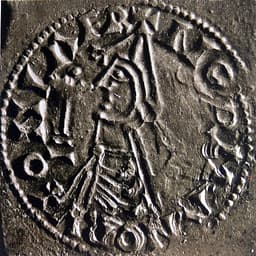
Olaf II of Norway
Emperor · Medieval
46.5Total

Xiao Xi
Emperor · Medieval
39.4Total
Basic Information
Born
995
583
Died
1030
621
Era
Medieval
Medieval
Nationality
Norway
China
Occupation
Emperor
Emperor
Civilization
Western
Eastern
Score Comparison
Military (10%)
40.0
20.0
Political (20%)
45.1
39.4
Influence (20%)
56.7
45.5
Legacy (20%)
40.0
35.0
Leadership (15%)
48.4
49.9
Strategy (15%)
43.3
38.6
TOTAL
46.5
39.4
Olaf II of Norway — Complete Timeline
1015 AD
Became King of NorwayPolitical Action◆ Major
Olaf II became King of Norway after returning from Viking expeditions abroad. He claimed the throne with support from local chieftains and began consolidating power, aiming to unify Norway under a single monarchy and reduce the influence of regional lords.
CoronationNorwayUnification
Impact: regionalconstructive
Introduced Christianity to NorwayCultural◆ Major
Olaf II enforced the Christianization of Norway, using missionaries and laws to replace pagan practices. He built churches, appointed bishops, and suppressed resistance, making Christianity the official religion. This transformation aligned Norway with Christian Europe.
ChristianizationReligionNorway
Impact: regionalconstructive
1030 AD
Defeated at the Battle of StiklestadWar
Olaf II was killed at the Battle of Stiklestad while fighting against a coalition of Norwegian nobles and Danish forces led by Cnut the Great. His defeat was due to betrayal and superior enemy numbers, but his death soon led to his canonization as a saint.
BattleMartyrdomNorway
Impact: regionaltragic
1031 AD
Canonized as Saint OlafCultural◆ Major
Within a year of his death, Olaf II was declared a saint by Bishop Grimkell, with popular veneration spreading rapidly. His canonization was confirmed by the Pope in 1164. Saint Olaf became the patron saint of Norway and a symbol of Norwegian independence.
CanonizationSaintNorway
Impact: regionalconstructive
Xiao Xi — Complete Timeline
618 AD
Proclamation as Emperor of LiangPolitical Action◆ Major
Xiao Xi declared himself emperor of the Liang dynasty in Jiangling, claiming legitimacy as a successor to the Southern Liang. He established a court and ruled over a small territory in the south.
ProclamationLiang DynastySui-Tang Transition
Impact: regional
621 AD
Defeat by Li XiaogongWar◆ Major
Xiao Xi's Liang forces were defeated by the Tang general Li Xiaogong. The defeat led to the collapse of the Liang dynasty and Xiao Xi's capture.
BattleTang UnificationDefeat
Impact: regionaltragic
Execution by TangPolitical Action◆ Major
Xiao Xi was executed by the Tang dynasty after his capture. His death ended the Liang pretender state and furthered Tang consolidation of the south.
ExecutionTang Unification
Impact: regionaltragic
This comparison has not been analyzed yet.
One-time AI generation (~1 minute). Scores and timeline are already available below.
Rankings
🥇
Olaf II of NorwayLeader
Mil: 40.0Pol: 45.1Inf: 56.7
46.5
🥈
Xiao Xi
Mil: 20.0Pol: 39.4Inf: 45.5
39.4
+7.1 behind
How This Comparison Works
Algorithm
Each figure is scored on 6 dimensions (0—100 scale) based on structured historical data: Military (10%), Political (20%), Influence (20%), Legacy (20%), Leadership (15%), Strategy (15%). The weighted total produces the final ranking.
Data Sources
Scores are computed from structured sub-indicators in the database. Scale factors adjust for era (Ancient ×0.85, Modern ×1.0) and civilization size (Eastern ×1.05, Other ×0.80) to account for differences in population and military scale.
Maximum 3 Figures
Comparisons are limited to 2—3 figures to ensure readability and statistical meaningfulness.
Error Margins
±5 points per dimension — Sub-scores are derived from historical records with inherent uncertainty. Two figures within 5 points on a dimension should be considered roughly equivalent in that area.
Total Score Accuracy
±3 points overall — The weighted combination of 6 dimensions produces a total score with approximately ±3 points of uncertainty. Differences of less than 3 points are not statistically significant— the figures are effectively tied.
Known Limitations
- Historical records are incomplete and uneven across civilizations
- Figures from oral-tradition societies may be underrepresented
- Occupation labels can misclassify multi-role figures
- Scores measure capability and impact, not moral character
- Quantitative scoring is a comparison tool, not absolute truth
Capability Radar
Military (10%) — Battles & Warfare
Battles
45
5
Win Rate
50
5
Expansion
40
5
Political (20%) — Governance & Reform
Reform
55
0
Diplomacy
40
5
Economy
30
0
Influence (20%) — Cultural & Global Reach
Cultural
70
5
Global
55
5
Legacy (20%) — Historical Impact
Historical
75
5
Longevity
80
5
Leadership (15%) — Power & Stability
Tenure
35
10
Stability
25
5
Strategy (15%) — Tactics & Innovation
Strategy
35
5
Tactics
40
5
Reform
30
0
Similar Comparisons
Comments & Discussion
No comments yet. Be the first to share your thoughts!