Loading...
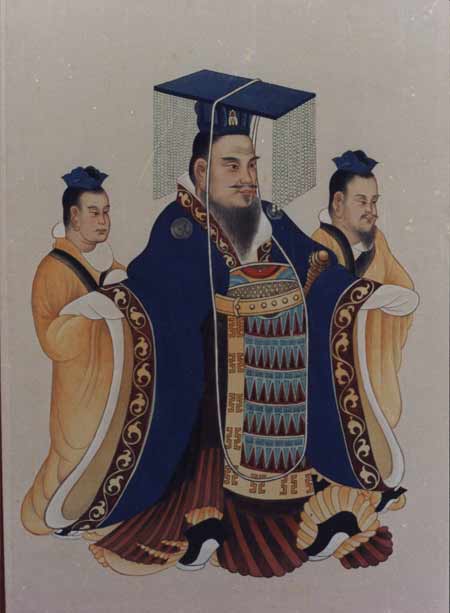
Emperor Wu of Han
AncientEmperorChina-156 — -87
西汉第七位皇帝,在位54年。推行推恩令削弱诸侯,独尊儒术确立儒家正统,北击匈奴,开通西域丝绸之路。
Compare Emperor Wu of Han with another historical figure:
Quick Facts
Born
156 BCE
Died
87 BCE
Country
China
Era
Ancient
Occupation
Emperor
Score Overview
Military (10%)79
Political (20%)72
Influence (20%)65
Legacy (20%)70
Leadership (15%)80
Strategy (15%)69
Total Score71.3
Emperor Wu of Han — Complete Timeline
138 BC
Establishment of the Silk RoadPolitical Action
Emperor Wu dispatched Zhang Qian on a diplomatic mission to the Western Regions, initiating direct contact between China and Central Asian states. This led to the establishment of the Silk Road trade network, facilitating cultural and economic exchange.
Silk RoadDiplomacyTrade
Impact: globalconstructive
136 BC
Promotion of Confucianism as State DoctrineCultural
Emperor Wu established the Imperial Academy and made Confucian texts the basis for civil service examinations. This elevated Confucianism to the official state ideology, shaping Chinese governance and education for two millennia.
ConfucianismEducationBureaucracy
Impact: globalconstructive
133 BC
Campaigns against the XiongnuWar◆ Major
Emperor Wu launched a series of large-scale military campaigns against the Xiongnu confederation, pushing them north of the Gobi Desert. These wars secured the Hexi Corridor and opened the way for trade with Central Asia.
XiongnuExpansionSilk Road
Impact: regional
117 BC
Salt and Iron MonopoliesReform◆ Major
Emperor Wu nationalized the salt and iron industries, placing them under state control to generate revenue for his military campaigns. This policy increased central government power and became a model for later dynasties.
Economic ReformMonopolyRevenue
Impact: national
111 BC
Annexation of the Nanyue KingdomWar◆ Major
Emperor Wu's forces conquered the Nanyue kingdom in modern-day southern China and northern Vietnam. This expanded Han territory to the South China Sea and incorporated the region into the empire.
ExpansionNanyueVietnam
Impact: regional
Detailed Scores
▶View all detailed scores
Military
Strategy
7
Tactics
7
Battles
7
Army Scale
7
War Impact
7
Political
Governance
6
Reform
7
Stability
6
Policy
7
Power
7
Influence
History
8
Global
7
Culture
8
Ideology
8
Legacy
7
People often compare with
See how Emperor Wu of Han stacks up against other historical figures
Popular Comparisons
Emperor Wu of Han vs Qin Shi Huang
vs Qin Shi Huang85
Emperor Wu of Han vs Cyrus the Great
vs Cyrus the Great84
Emperor Wu of Han vs Aurelian
vs Aurelian63
Emperor Wu of Han vs Munmu of Silla
vs Munmu of Silla63
Emperor Wu of Han vs King Gwanggaeto
vs King Gwanggaeto60
Emperor Wu of Han vs Attalus II of Pergamon
vs Attalus II of Pergamon52