Loading...
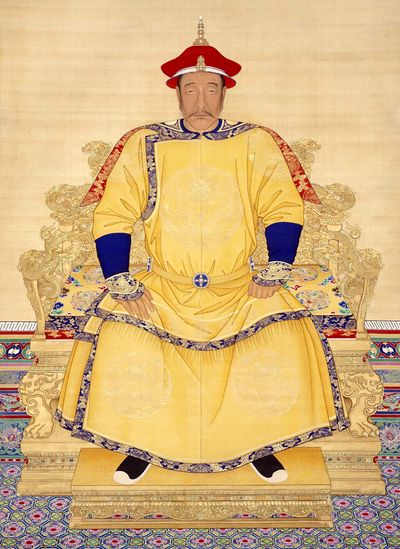
Nurhaci
ModernEmperorChina1559 — 1626
Jurchen chieftain who unified the Manchu tribes, founding father of the Qing.
Compare Nurhaci with another historical figure:
Quick Facts
Born
1559
Died
1626
Country
China
Era
Modern
Occupation
Emperor
Score Overview
Military (10%)80
Political (20%)85
Influence (20%)40
Legacy (20%)84
Leadership (15%)79
Strategy (15%)76
Total Score71.2
Nurhaci — Complete Timeline
1616 AD
Unified the Jurchen TribesWar
Nurhaci completed the unification of the fragmented Jurchen tribes of Manchuria. He organized them into the Eight Banners system, a military and social structure that became the foundation of his power. He then proclaimed the Later Jin dynasty.
JurchenUnificationEight Banners
Impact: regionalconstructive
Proclaimed the Later Jin DynastyPolitical Action◆ Major
Nurhaci proclaimed the establishment of the Later Jin dynasty in Manchuria, claiming legitimacy as a successor to the Jin dynasty. This act formally declared his independence from the Ming dynasty and established a rival state.
Later JinDynastyFoundation
Impact: regionalconstructive
1618 AD
Issued the Seven GrievancesPolitical Action◆ Major
Nurhaci issued the Seven Grievances, a formal declaration of war against the Ming dynasty. The grievances listed alleged Ming injustices against the Jurchens, including interference in tribal affairs and killing of Jurchen leaders. This justified his invasion of Ming territory.
Ming-Qing TransitionDeclaration of WarPropaganda
Impact: regionaldestructive
1619 AD
Battle of SarhuWar
Nurhaci's forces decisively defeated a large Ming army at the Battle of Sarhu. The Ming sent four separate armies into Manchuria, but Nurhaci used interior lines to defeat them in detail. This victory secured his control over Manchuria.
Ming-Qing TransitionBattleManchuria
Impact: regionalconstructive
1626 AD
Defeated by Yuan Chonghuan at NingyuanWar◆ Major
Nurhaci led an invasion of Ming territory but was defeated at the Battle of Ningyuan by Ming general Yuan Chonghuan. The Ming used European-style cannons to repel the Later Jin forces. Nurhaci was wounded during the battle and died shortly after.
Ming-Qing TransitionBattleDefeat
Impact: regionaltragic
Detailed Scores
▶View all detailed scores
Military
Strategy
7
Tactics
7
Battles
7
Army Scale
6
War Impact
7
Political
Governance
8
Reform
8
Stability
8
Policy
8
Power
8
Influence
History
9
Global
8
Culture
9
Ideology
9
Legacy
8
People often compare with
See how Nurhaci stacks up against other historical figures
Popular Comparisons
Nurhaci vs Bayinnaung
vs Bayinnaung69
Nurhaci vs Ablai Khan
vs Ablai Khan63
Nurhaci vs Charles Augustus of Saxe-Weimar
vs Charles Augustus of Saxe-Weimar56
Nurhaci vs Gojong of Korea
vs Gojong of Korea56
Nurhaci vs Emperor Pedro I of Brazil
vs Emperor Pedro I of Brazil56
Nurhaci vs Agustin de Iturbide
vs Agustin de Iturbide55